
Death Penalty

 he official version of Associate Justice Antonin Scalia’s death at a remote Texas luxury resort during the night of February 12-13 is that he died of natural causes, in bed alone and without any witness, time of death unknown. While there’s little forensic evidence to support this or any other conclusion, there’s even less evidence to challenge it. What, after all, is not credible about a 79-year-old, overweight man with heart disease and other medical issues dying in his sleep after overindulging at a dinner party for forty people?

Message to The United Nations, European Union, United States, and all Democratic and Free countries
There are growing concerns that the government of Egypt intends to execute Egypt’s first ever democratically elected President, Mohamed Morsi in the coming weeks. Mr. Morsi along with hundreds of political opponents received the death sentence following what major international human rights organizations described as a hopelessly flawed and politically motivated trials that ignored acceptable minimum international standards.
President Morsi was ousted during the illegal military coup led by the then Defense Minister Abdel Fattah el-Sisi, and has been imprisoned ever since. President Morsi’s death sentence and the impending execution of countless others (students, women, religious scholars, politicians, and academics)involved in working for democracy in Egypt presents a sobering example of the escalating violence and continual human rights abuses perpetrated against the Egyptian people since the Fourth Anniversary of the January 25 Egyptian Revolution earlier this year.
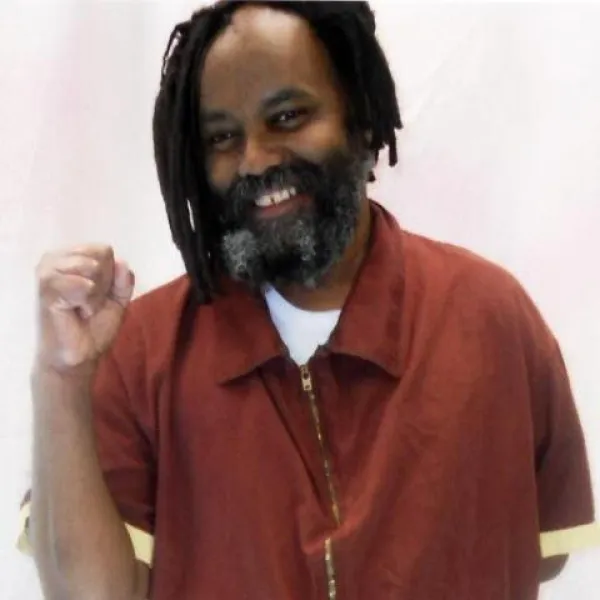
More importantly, Read Mumia. His new book is called Writing on the Wall: Selected Prison Writings of Mumia Abu-Jamal, and it includes commentaries by Mumia from 1982 through 2014. Mumia went ahead and made his prison a school -- a school in history, in politics, and in morality. And his own moral teaching is primarily by example. He teaches the liberating lesson that, if you so choose, you can know right now that never ever will anyone be able to beat you down. You can be cheerful for the rest of your life and rest completely assured that nothing can ever take that away.
Commenting to the Associated Press, Mr. Strickland said he has no intention of placing a moratorium on capital punishment in Ohio.
He also said, according to the AP, "that he is open to new information on the matter, but for now is satisfied that Ohio has a fair and impartial system."
Profile in Lack of Courage
"No person shall purposely, and with prior calculation and design, cause the death of another . . . ." This is the definition of "aggravated murder" in section 2903.01 of the Ohio Revised Code.
An execution is a killing with prior calculation and design. There are approximately 195 men on Ohio's Death Row. Thus when Mr. Strickland denied clemency to Mr. Biros and, at the same time, appeared to shut the door on a moratorium, Ohio missed an opportunity to prevent what could amount to as many as 195 aggravated murders.
Daniel Sturm: You say that you see similarities between Nazi doctors and U.S. execution teams?
Jonathan Groner: At Northwestern University I read many Holocaust books, being Jewish and having gone to Hebrew High School. It was interesting to see how intimately doctors were involved in the Nazi euthanasia program, and eventually in the genocide. When I was a surgery resident, I heard a lecture about Robert Jay Lifton, who studied the corruption of Nazi Germany physicians. Lifton described how the government recruited physicians to kill physically and mentally disabled patients, including the "criminally insane." What struck me was the idea of using healing imagery to justify killing. That stayed with me.
Daniel Sturm: When did you first become critical of the death penalty?
Since the botched execution of Joseph Clark last May, critics of Ohio’s lethal injection protocol have been pointing toward the immanent risk of torture in the execution chamber if a licensed anesthesiologist is not present.
"A humane execution is the ultimate paradox," said Groner at his Columbus Children’s Hospital office. The doctor of pediatric surgery and associate professor at Ohio State University College of Medicine and Public Health said he was troubled to see how the rise in Ohio executions was accompanied by the belief that lethal injections were non controversial. He drew a parallel between lethal injection procedures in the U.S. and concentration camp euthanasia programs in Nazi Germany (see sidebar interview).
Sinclair's essay was written for The Impossible Will Take a Little While: A Citizen's Guide to Hope in a Time of Fear, edited by Paul Rogat Loeb (Basic Books, $15.95), named the #3 political book of 2004 by the History Channel and American Book Association. See www.theimpossible.org
Paul Loeb