
Op-Ed

“It is long past time for . . . a sea change in the United States’ approach to national and human security . . .”
Yes, yes, yes. These words cut to the soul. Can we create a grown-up America? This is how it begins.
The quote is from a letter to President Biden, put forward in early February by the Center for Constitutional Rights and the Center for Victims of Torture and signed by 111 organizations, demanding that the new president shut down, at long last, the prison hellhole at Guantanamo Bay, Cuba.

This month, many are cheering the news that the NRA is now as financially bankrupt as it is morally. Last year, New York Attorney General Letitia James sued four current or former NRA executives for "illegal financial conduct," leading to the gun group's recent declaration of bankruptcy. Among James' charges were that Wayne LaPierre, CEO and executive vice president of the NRA, received "hundreds of thousands of dollars" of complimentary safaris in Africa.
The group said it would reincorporate in Texas after a century in New York.
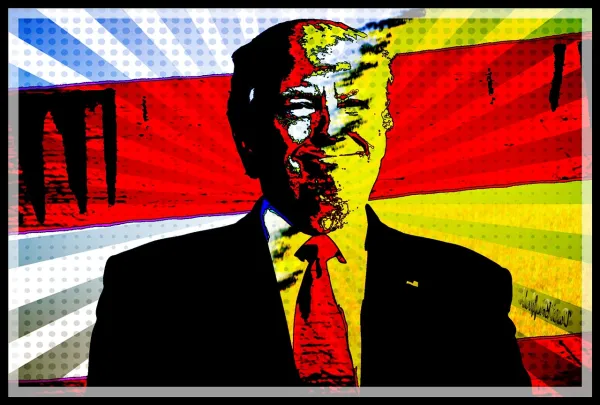
As the New Year asserts itself — a year that begins in global lockdown and political shock-and-awe — an extraordinary question emerges: Are we on the brink of real change?
Are we moving, politically speaking, beyond the small and stupid? Is the era of Trump really over? Assuming that to be the case is far too easy. Trump, after all, was and is part of the change, the breakdown of the status quo. You might say he’s been the coronavirus of American politics — he certainly has been infectious.
But simply “going back to normal” — swearing Biden in, returning to the political clichés we’re used to, appropriating another trillion dollars for national defense and corporate militarism, feigning concern over climate change but essentially ignoring it, yada, yada — leaves us wide open to the looming collapse.
“One major difference between GOP and Dems is that [Republicans] leverage their right flank to gain policy concessions and generate enthusiasm, while Dems lock their left flank in the basement [because] they think that will make Republicans be nicer to them.’”
Alexandria Ocasio-Cortez nailed it once again, tweeting her frustration and despair a few days ago when the Democrats yielded to the Republican Party as the pandemic relief package was being negotiated. This has been the essence of the party’s attitude for virtually half a century, aided by the mainstream media and everything else that embraces words like “centrist” and “moderate” and “bipartisan.”
In other words: Stand for nothing!

“We won't be in a position to make permanent progressive changes until the bad governments are changed permanently into good governments. And all governments are bad governments now and will remain bad governments until we have a global humanity.”
The words are those of Mark Haywood, in an email to me last week about my column, “Embracing Ecological Realism.” I think the words nail it. And I would add that “global humanity” includes a connection to Planet Earth, to life itself. And my intention is to put these words in a political context that is free — so I pray — of cynicism.
The irony is that this is ancient wisdom. We used to know this, once upon a time. Then we got civilized and became conquerors. We are now at the end, or nearly so, of this dark, bloody path. And while global humanity’s next step is uncertain — we must plunge into a new way of being — the wisdom of our fathers and mothers can guide us:
“For instance, an Ojibway friend of mine gave me a sheet of paper entitled ‘Twelve Principles of Indian Philosophy.’ The very first principle on that sheet read as follows: WHOLENESS . . .”

Our post-election hope couldn’t be more fragile.
Does Joe Biden see his mission as merely reclaiming situation normal from Donald Trump? How aware is he of the big, beyond-our-lifetimes future and the crucial need to address climate change? Is he able to acknowledge that human “interests” go well beyond national borders? And if so, how much political traction would he have to have before he could begin turning vision into policy?

Do you like to believe that scientists are studying the evidence – whether in relation to Covid-19 or anything else – and delivering high quality knowledge that can be used to guide public policymaking so that it might better serve the interests of ordinary people?
It is certainly a comforting idea, isn’t it?
After all, we have long been told that science is an ‘evidence-based approach’ to understanding particular phenomena and thus providing accurate guidance on how to proceed to achieve productive outcomes.
Unfortunately, this claim is just propaganda for the unwary.
In his 2005 study of the validity of published medical research, John P. A. Ioannidis, a professor of medicine who also studies scientific research itself, explained why ‘It can be proven that most claimed research findings are false.’ Most? False? Here is what Professor Ioannidis concluded but you can read his entire article, cited below.

Step one: Defeat Trump. OK, now comes the hard part.
We have to take back the country, and what I really mean is take it “forward,” beyond situation normal — endless war, structural racism, consumer culture and ecological devastation — and into what one might call planetary stewardship.
This sounds, of course, absurd, as though there’s any facet of the American status quo, political or economic, that would abandon its interests and embrace a vision-in-progress: of a world that has transcended nationalism, borders and war . . . of a world that has transcended us-vs.-them thinking and dominion over Planet Earth.
Idealism, man! There’s nothing Americans are better at than mocking it. Nonetheless, beyond the mockery, I believe there is an enormous segment of the population that understands the need to create real peace and believes — or wants to believe — in a future that is not caged in the past. Does such a movement have any resonance, any hope of political traction?
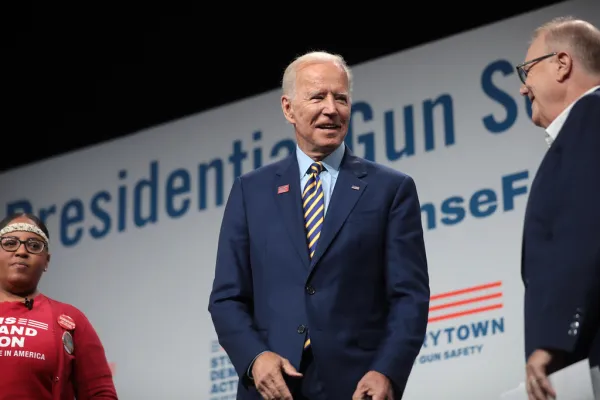
A new term has imposed itself on the conversation regarding the impending presidency of US President-elect, Joe Biden: “The Total Reset”. Many headlines have already promised that the Biden Presidency is ready to ‘reset’ US foreign policy across the globe, as if the matter is dependent solely on an American desire and decision.
While a ‘total reset’ is, perhaps, possible in some aspects of US policies - for example, a reversal of the Donald Trump Administration’s decision to abandon the Paris Agreement on climate change - it is highly unlikely that the US can simply reclaim its position in many other geopolitical battles around the globe.