
Global

You may not know what solarpunk is, but the ideas it is based on may be the best chance our society has for surviving climate change. Solarpunk is a sub-genre of science fiction; it isn’t punk rock. However, like the best punk rock, it is based on challenging society’s status quos and speaking truth to power.
Solarpunk challenges our conceptions of what the future can be. Solarpunk, and the closely related genre of hopepunk, challenge the popular view that the future will be horrible. Take a second to process that…the future might not be horrible. It’s kind of a remarkable idea! Solarpunk combines the concept of a hopeful future with the fact that climate change is happening.
DO THE CORPORATE DEMS PREFER TRUMP TO BERNIE?
As Bernie Sanders shows escalating strength at the grassroots, we explore 2020s electoral realities with two GREAT activists: JOEL SEGAL and BOB FITRAKIS.
Both long-time associates of the legendary Detroit Congressman John Conyers, Bob and Joel have unique in/outsider grasps on how the electoral system and the Democratic Party really work.
Bob is now an amicus attorney in the pivotal cases surrounding Ohio’s nuke bailout repeal, in which the atomic industry is conspiring to destroy the referendum process by physical force.
Like Bob, Joel is integral to the nationwide grassroots movement to protect the integrity of the 2020 election and prevent it from again being stolen.
As we ramble through the realities of the corrupt corporate Democrats and our compromised electoral process, we grapple with the fact that this campaign will determine the fate of human life on this Earth.
Don’t miss the outcome!!!
MP3: https://mcdn.podbean.com/mf/download/35qyix/GPAWH_122619.mp3

When presidential candidate Sen. Bernie Sanders addressed a Dec. 21 California campaign rally he railed against “more extreme weather - Venice, Italy is underwater.” But with an overflowing crowd of more than 14,000 people assembled on the sand and boardwalk, the democratic socialist’s supporters flooded that other Venice - L.A.’s bohemian beach known for weightlifters, tattoo parlors, skimpily-clad sidewalk skaters and street performers.
Beneath a sunny sky the masses listened for about three hours to the candidate and his advocates, including local musicians, activists, politicians, Prof. Cornel West, actor Tim Robbins and Congresswoman Alexandria Ocasio-Cortez, the “Squad’s” socialist superstar. The Grammy Award-winning Mexico City-born brother/sister duo Jesse & Joy performed original songs and covered John Lennon’s “Imagine” in Spanish and English. They urged people to “vote hate out of office, together we’re stronger.” Joy insisted: “Remember to register.”

What is Gaza to us but an Israeli missile, a rudimentary rocket, a demolished home, an injured child being whisked away by his peers under a hail of bullets? On a daily basis, Gaza is conveyed to us as a bloody image or a dramatic video, none of which can truly capture the everyday reality of the Strip - its formidable steadfastness, the everyday acts of resistance, and the type of suffering that can never be really understood through a customary glance at a social media post.
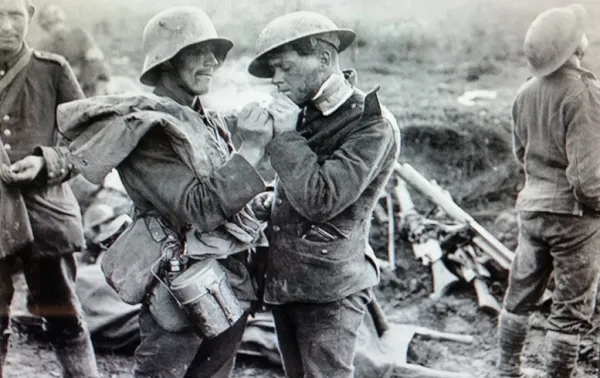
“Good morning; Good morning,” the General said
When we met him last week on our way to the line.
Now the soldiers he smiled at are most of ‘em dead,
And we’re cursing his staff – (those) incompetent swine.”
– An excerpt from Siegfried Sassoon’spoem “The General”, commenting on the standard use of World War I frontline soldiers as “cannon fodder”
“…the ones who call the shots (in war) won't be among the dead and lame,
And on each end of the rifle we're the same” -- John McCutcheon, from his powerful antiwar (and therefore censored-out) song “Christmas in the Trenches”
“The first casualty, when war comes, is truth”. -- Hiram Johnson (1866-1945)- a Progressive Republican US Senator from California, who died on Aug. 6, 1945, the day the United States dropped an atomic bomb on Hiroshima.
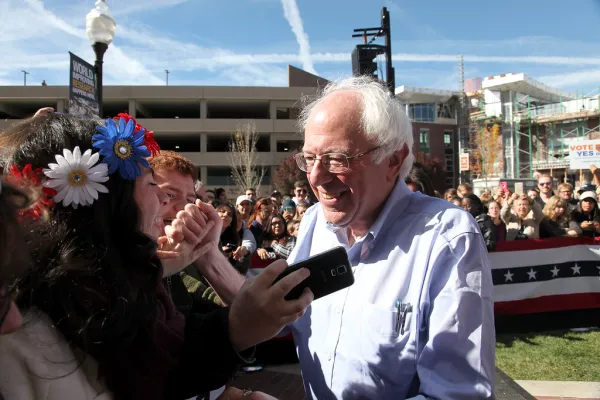
For the United States, oligarchy is the elephant—and donkey—in the room. Only one candidate for president is willing to name it.
Out of nearly 25,000 words spoken during the Democratic debate last Thursday night, the word “oligarchy” was heard once. “We are living in a nation increasingly becoming an oligarchy,” Bernie Sanders said, “where you have a handful of billionaires who spend hundreds of millions of dollars buying elections and politicians.”
"The essence of a propaganda system is repetition. To be effective, it doesn’t require complete uniformity—only dominant messaging, worldviews and assumptions."
Sanders gets so much flak from corporate media because his campaign is upsetting the dominant apple cart. He relentlessly exposes a basic contradiction: A society ruled by an oligarchy—defined as “a government in which a small group exercises control especially for corrupt and selfish purposes”—can’t really be a democracy.
The super-wealthy individuals and huge corporations that own the biggest U.S. media outlets don’t want actual democracy. It would curb their profits and their power.

______________________________________________________________________
“5G networks will become the connecting digital tissue for drones, autonomous vehicles, blockchains, the “internet of things”, supply chains, smart homes, smart meters, smart appliances, smart buildings, and smart cities.” – James Grundvig
“Each of these EMF (electromagnetic frequency) effects will lead to existential threats to our survival … In mice, EMF led to a drop in reproduction to essentially zero. … 5G will incur much higher frequencies and pulsations to that of being in a microwave.” -- Dr Martin Pall
“EMF and RF waves corrupt human DNA. They contribute to the environmental impact of autism, Parkinson’s disease, cancers, and low sperm count.” – Dr Fiorella Belpoggi, director of research at the Cesare Maltoni Cancer Research Center
“The WHO/International Agency for Research on Cancer (IARC) has classified radiofrequency electromagnetic fields as possibly carcinogenic to humans.” – Dr Belpoggi

Three years ago, the United Nations Security Council passed Resolution 2334. With fourteen members voting in favor and one abstention, the Resolution was the equivalent of a political earthquake. Indeed, it was the first time in many years that Israel was roundly condemned by the international body for its illegal settlement policies in the Occupied Palestinian Territories. Unlike previous attempts at holding Israel accountable, this time the Americans did nothing to protect its closest ally.