
Global

The European Union's parliament is due to undergo elections later this month, and many poll projections across the troubled continent suggest that extreme right and fascist parties are set to make large gains. The Europe-wide elections will take place across all 28 member states in two weeks, an event which many now fear is going to give power and legitimacy to parties running on platforms of racism, sexism, homophobia and fascism.
While Europe's habitual problem of far right extremism never disappeared completely. For years, the EU had made it seem as if it was at least contained, with overtly racist parties gaining very few seats in the European Parliament or legislative bodies in their own countries. Since the global financial crash in 2008, however, the economic hardships of austerity and unemployment have led to a sharp increase in support for the extreme right across Europe, even in the more economically stable northern countries like France and the UK.

BANGKOK, Thailand -- The U.S. Agency for International Development (USAID) used "technological mercenaries" in a dumb, secret, illegal assault against Cuba's government and unsuspecting population, comparable to the strategy of deceptive Nazi propaganda, according to Cuban Ambassador Victor Ramirez Pena. "ZunZuneo, in the two years that it was in operation, didn't have enough time to do what it wanted, which was to subvert the order in Cuba," Ambassador Pena said in an interview, referring to USAID's Internet-based social media site named ZunZuneo "It was working on profiling people," in Cuba who had no idea that USAID was sucking up their personal data by secretly hosting and spying on their accounts, to later spam them with anti-communist and pro-American propaganda, he said. "That is something that nobody should be doing because it's illegal by U.S. law, it's illegal by international regulations," Ambassador Pena said. "Does one have to accept that the continuous use of deceit, lies -- as Goebbels said -- to make it a truth, is something that we have to accept?
Sterling and Bundy are embarrassing, but real threat to equal rights is from Supreme Court, Congress


The Amazing Spider-Man 2, the inevitable, simply titled sequel to 2012’s The Amazing Spider-Man, is less snore-inducingly tedious than the first installment, but that’s a pretty low bar. ASM was terrible. ASM2 is good, but not great.
The problem with ASM2 is that the action scenes are excellent. Andrew Garfield is a better Spider-Man than he is a Peter Parker, and his delivery of the superhero’s trademark banter is pitch-perfect. Those scenes are exciting, they’re clear, and they’re well-directed. How is that a problem? They’re far too little of the movie, and it makes the rest of it even worse by comparison.
Peter’s relationship with Gwen Stacy (played by Emma Stone) is every bit as boring to watch in this movie as it was in the first. It takes up less of it, but it manages to suck the life out of every scene where Peter’s not in a mask. They spend the entire movie being on-again-off-again while Peter stalks Gwen creepily from the rooftops. It’s hard to tell if the problem is mediocre writing or mediocre chemistry between the actors, but there’s definitely a problem.
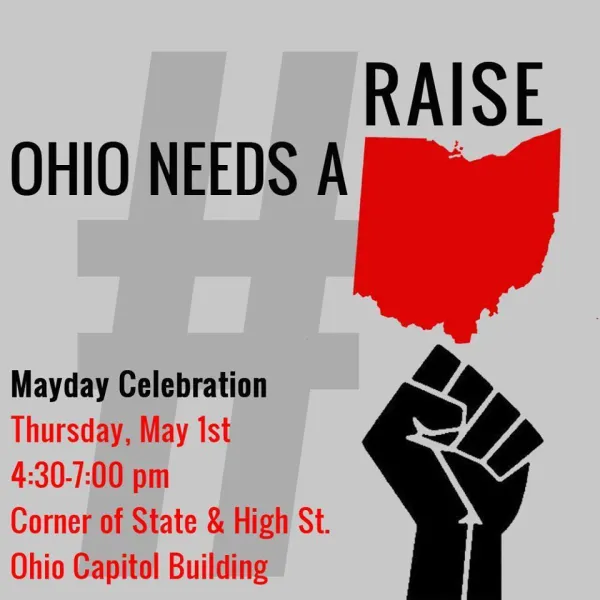
Central Ohio Workers Celebrate May Day to Tell Columbus:
#OhioNeedsARaise, Announce Formation of
Central Ohio Worker Center
What: #OhioNeedsARaise – May Day Celebration
When: Thursday May 1,2014
4:30pm - Rally and March through downtown Columbus, Ohio
Where: Corner of State and High Streets - SW side of the Capitol Building
Who: Workers will be speaking on their struggle to survive and support themselves and their families on low wages.