Advertisement


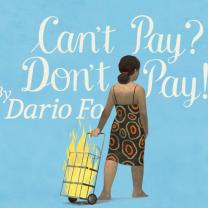
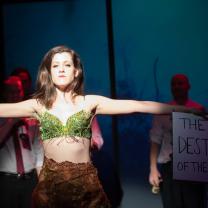
The Actors’ Gang’s production of Can’t Pay? Don’t Pay! is a synergy of Hollywood slapstick a la the Three Stooges and American TV show s like I Love Lucy, The Honeymooners and Roseanne crossed by and infused with the anarchist and socialist politics of Mikhail Bakunin, Pierre-Joseph Proudhon and Karl Marx. This merry madcap Marxist mash-up puts the “commie” into sitcom. To paraphrase the Stooges’ Curley: “Moe! Larry! Che!”


[NOTE: For those unfamiliar with Frida Kahlo’s life, this review may contain plot spoilers.]


If Howard Zinn penned “People’s Histories” and Oliver Stone filmed “Untold Histories,” Latinx playwright Odalys Nanin’s modus operandi is to write (or rewrite?) allegedly biographical plays about famous women revealing their same sex affairs. I previously saw Nanin’s stage exposes purporting that Greta Garbo and Marilyn Monroe indulged in Sappho hanky-panky. Some may regard this as a breakthrough, disclosing the hitherto concealed, unvarnished lesbian truth. Some may react with puritanical disbelief and outrage that their beloved sex goddess has been thusly tarred and defamed. Still others could respond with a collective yawn, musing “that’s so 20th century” and “so what? Who Cares?” Take your pick.


More than ever, Bernie Sanders is public enemy number one for power elites that thrive on economic injustice. The Bernie 2020 campaign is a direct threat to the undemocratic leverage that extremely wealthy individuals and huge corporations constantly exert on the political process. No wonder we’re now seeing so much anti-Bernie rage from leading corporate Democrats -- eagerly amplified by corporate media.

In American politics, hell hath no fury like corporate power scorned.

State of the city sign in front of West High School

Columbus has been truly a “Tale of Two Cities” to emphasize the true meaning of this year’s State of the City Address. While Columbus has been touted in success stories and innovations, there is still that one-third of the community that feels like they are shut out of the entire loop. Columbus Mayor Andrew J. Ginther’s State of the City Address was no different, as two protesters made their voices loud and clear early on in the speech.

The theme of Ginther’s Address, held at historic Columbus West High School in Westgate, was centered about equity. Ginther addressed the auditorium at the beginning of the evening by saying, “Tonight, I share to you my ‘Equity Agenda,’ an agenda that calls out racism and discrimination where it exists, and my plans to address it as your Mayor.”

Ginther said, “Equity is the cornerstone of my administration, tonight, I will lay out what we will be doing this year, and over the next four years, to continue to grow this city and also to assure that we stop racism and discrimination, wherever we see it.” 

Rogue Machine’s West Coast premiere of award winning British playwright Mike Bartlett’s Earthquakes in London is, according to Rogue’s artistic director and the drama’s co-director John Perrin Flynn, “quite simply, the best play I have read about global warming.” This three hour-ish, UK-set tour-de-force takes a deep dive into the pressing subject of climate - as well as family - crisis. It is an epic play that goes back and forth in time and is mainly for more daring theatergoers and environmentalists who take their drama and politics seriously.


With the caveat that said ticket buyers have slept well the night before and hence can be very alert and pay close attention to the complex characters and storylines that shift on theatrical tectonic plates. For example, the pivotal role of the climate scientist father, Robert, is played by Paul Stanko as a young man and then in his maturity by Ron Bottitta. Robert is being wooed by energy companies, so we see him

before and after - but this might confuse some viewers.


Civil LibertiesEnvironmentImmoralityNonviolent ActivismNorth America

Indigenous people in Canada are giving the world a demonstration of the power of nonviolent action. The justness of their cause — defending the land from those who would destroy it for short term profit and the elimination of a habitable climate on earth — combined with their courage and the absence on their part of cruelty or hatred, has the potential to create a much larger movement, which is of course the key to success.


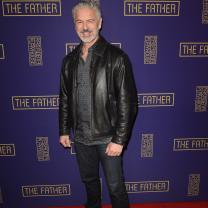
Alfred Molina renders a devastating depiction of dementia in Florian Zeller’s award winning The Father. Ably directed by Jessica Kubzansky, this one-act Alzheimer-palooza is staged in what is usually described as a “cinematic” way, with intercutting and perhaps even montage used to indicate Andre’s (Molina) increasingly fragmented, confused perception of reality. The lighting and sound designers, respectively Elizabeth Harper and John Zalewski, adroitly enhance the loss of his bearings, with David Meyer’s shape shifting sets adding to Andre’s sense of mental mayhem.


At one point race is effectively used for shock value - not in a cultural, ethnic sense but in a visual way that jolts the senses. Andre is also always looking for his watch, which he accuses caregivers (as a convenient ruse to sack them, so he can maintain his ephemeral sense of independence) and others of stealing. But in contrast to, say, Rolexes, Andre’s watches are more akin to Salvador Dali’s melting timepieces, symbolizing the distortion of the passage of time.


Pages

Subscribe to Freepress.org RSS