
Op-Ed
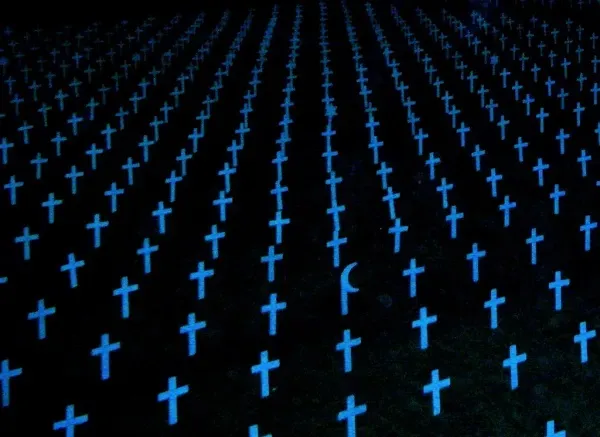
Perhaps the primary value of war – from the point of view of national leaders and their loyal followers – is that it places 100 percent of the blame for whatever’s wrong on the other guy: the enemy. And thus there’s no alternative but to kill “him,” which nowadays amounts to slaughtering and dismembering anybody and everybody who lives in his sector of the planet, including children . . . though that part isn’t said out loud.
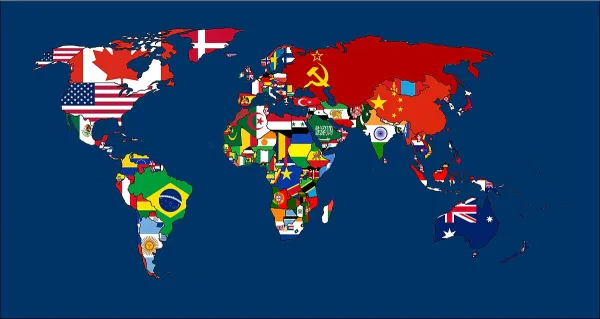
It would have been outlandish to suggest that a small region like Gaza, seemingly bereft of significant natural resources, political will of its own, and let alone sovereignty, would become the world’s most significant geopolitical spot on earth.
The ongoing Israeli war on Gaza and the legendary resistance of the Palestinian people, however, have changed our calculation - or perhaps miscalculation - regarding what a besieged nation can achieve, in terms of collective resistance, in fact changing the rules of the game altogether.
However, it is still early to fully fathom the surely significant possible outcomes of the current upheaval resulting from the Gaza war and Resistance.
While Israel and the United States are desperate to return to the status quo model, which existed in the Middle East prior to October 7, the newly emerging Palestinian leadership is keen on introducing a new era of international relations, namely new geopolitical players, who could, in turn, rope in new allies, with their own political ambitions and economic interests.
“Red Rover, Red Rover, let Bobby come over!”
I can feel the wind on my face, the gravel at my feet – oh so minutely, but with enough realness to pull me back seven decades, into one of the earliest moments of my becoming.
For some reason I find myself, at age 77, pondering such moments – not simply random memories from childhood but, as I say, moments of my becoming: openings of awareness that were entirely unexpected and utterly personal and thus, oh so quietly secret. This is me?
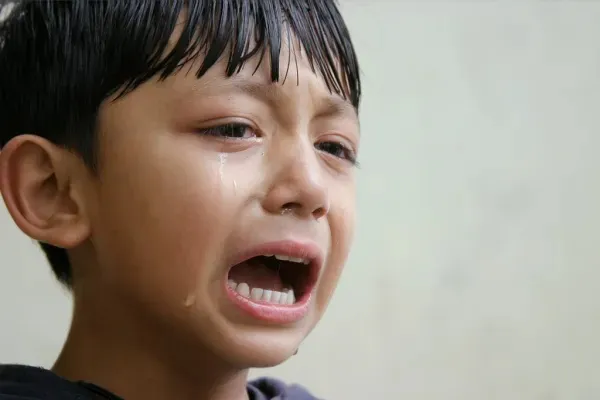
I think my sudden fascination with such moments shimmers beyond me. I am continually confronted with the abstract statistics of war dead – in particular, the murder of children, each of whom was in the process of becoming himself or herself until they became the tactical victims of a geopolitical game about which they knew nothing.
“Red Rover, Red Rover . . .”
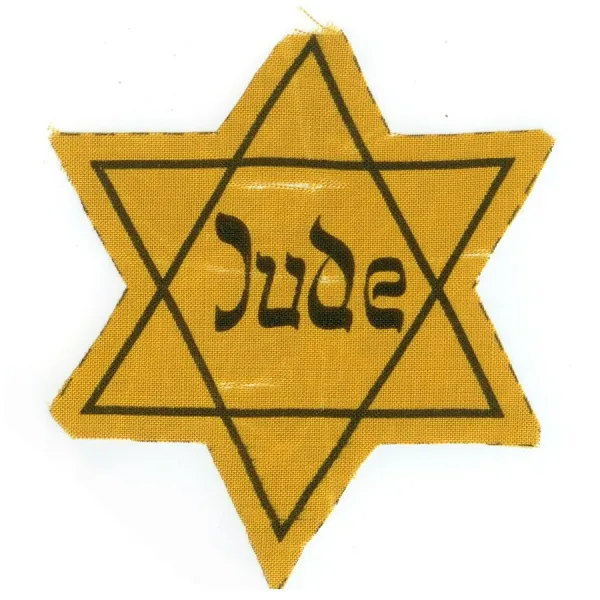
In a 2002 interview the former Israeli government minister Shulamit Aloni was asked by Amy Goodman: “Often when there is dissent expressed in the United States against policies of the Israeli government, people here are called antisemitic. What is your response to that as an Israeli Jew?” Shulamit Aloni replied “Well, it’s a trick, we always use it. When from Europe somebody is criticizing Israel, then we bring up the Holocaust. When in this country [the US] people are criticizing Israel, then they are antisemitic.” She added that there is an “Israel, my country right or wrong” attitude and “they’re not ready to hear criticism.” Antisemitism, the Holocaust and “the suffering of the Jewish people” are exploited to “justify everything we do to the Palestinians.”
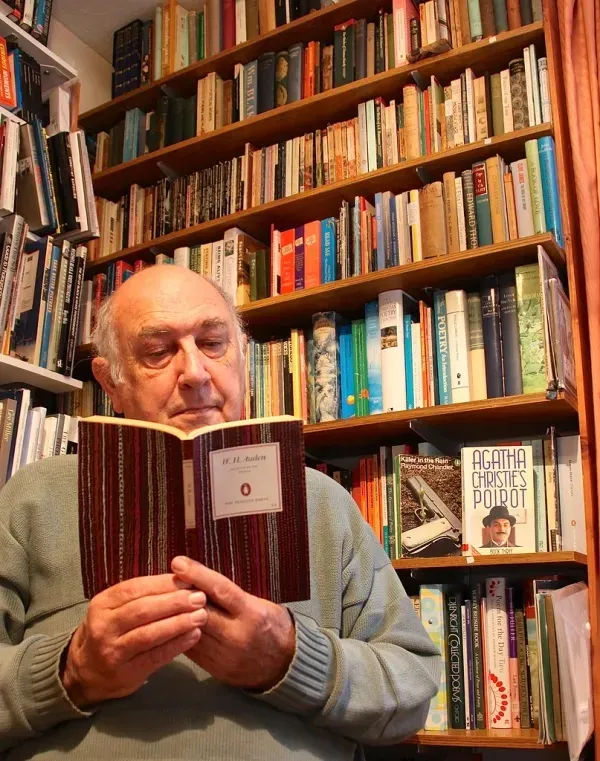
What’s ordinary about life suddenly becomes sacred. This is my definition of poetry — my deepest plunge into being alive.
It seems more relevant than ever, as innocent blood flows in the wars being waged by military-political bureaucracies across the planet. How many more stunned facial expressions will I see on YouTube, of parents who have just lost their children, their spouse, their siblings?
As I have noted, I have recently released an album of spoken-word poetry, plus crazy artwork, thanks to my good friends Andy Mitran and Scott Wills. Much of the poems go back to an earlier period of my life, shortly after the death of my wife from pancreatic cancer. At the time, my daughter was not quite 12 years old. Dad and teenage daughter — those were the days! (We both survived, I’m happy to say.)
There are a number of blatant ways for terrorist organizations – by which I mean national governments – to justify committing mass murder.
Once you start killing, it’s hard to stop. But you have to justify what you’re doing – a process humanity has been engaged in since the dawn of civilization. We call it “war,” which turns mass murder into a necessary abstraction and gives us a far simpler way of dealing with conflict than . . . oh my God, understanding counter points of view and creating solutions rather than enemies.
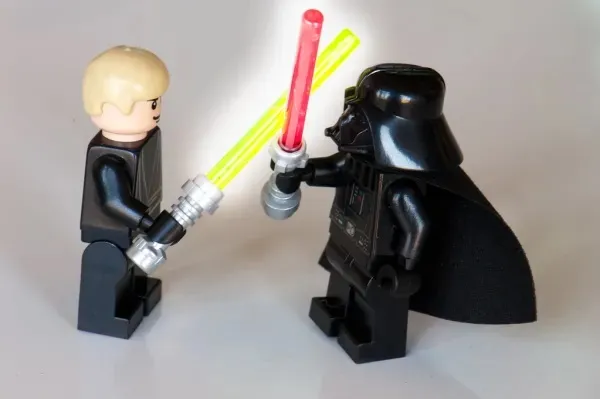
Paradoxically, Good and Evil are in complete agreement at least about one thing: The only way to deal with conflict is through violence.
The last thing either side wants is for this to be questioned — no matter this is the nuclear age and the future of life itself is up for grabs.
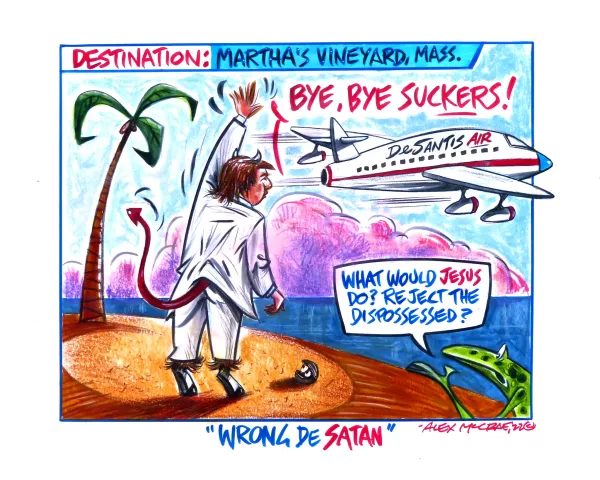
So anxious are Evangelicals for the second coming of the Lord by God, a zombie apocalypse, many anxious MAGA disciples are rushing headlong into Armageddon with their offering of not one, but two heirheads apparent: The Orange Jesus, Trump the Terrible vs. The Satanist DeSantis. I have been told by some that the Orange one has been overheard to say: There for the Grace of God, go I,” Or, was it… Whither God goes’, go I. I forgot which.
In one corner, we have the” “Second Coming” Donald Trump suggested that he is second not only to Jesus but Abraham Lincoln as well. As the television pundits might say, “There’s a lot to unpack here.” Replace Jesus with Satan and you’ll get no argument from me.
New GOP Motto: Ignorance is Bliss and we are the Blissful Party
Trump is not a Christ idol, unless we think of him as the idol rich. He’s more into creating Hell on Earth. Here, Heil for chaos, callowness and cruelty.
For U.S. mass media, Henry Kissinger’s quip that “power is the ultimate aphrodisiac” rang true. Influential reporters and pundits often expressed their love for him. The media establishment kept swooning over one of the worst war criminals in modern history.
After news of his death broke on Wednesday night, prominent coverage echoed the kind that had followed him ever since his years with President Richard Nixon, while they teamed up to oversee vast carnage in Southeast Asia.
The headline over a Washington Post news bulletin summed up: “Henry Kissinger Dies at 100. The Noted Statesman and Scholar Had Unparalleled Power Over Foreign Policy.”
But can a war criminal really be a “noted statesman”?

to stroke the crime
as though it were my child,
to cup my hands
around the horror
and prevent it from going out?
These words are a fragment of a poem I wrote a nearly a quarter of a century ago, after reading about the arrest of Marilyn Lemak, who had murdered her three children — ages 7, 6 and 3 — by overdosing them with prescription medication, then strangling them in their beds. The motive: Her husband was breaking up with her; he’d begun dating. After the killings, she also tried to commit suicide by overdosing and slashing her wrists, but the try failed. She called the police on herself. This was in 1999.
Why do I feel the urge to stroke the crime as though it were my child?