
Op-Ed
Something happened on Tuesday, as I began researching this column — I wound up having to give myself a COVID test.
A good friend had just tested positive and, well, we had recently gotten together. I needed to see if I was OK. I note this not because there was bad news — I tested negative — but because . . . well, I’m not quite sure. I had never self-administered a COVID test before, or had any such test at all in several years. I felt fine. I didn’t feel sick. Of course I’m OK, I had whispered to myself as I inserted the swab into my nostril. But the test results could be a shock — that’s the whole point of taking it.
Even though there was no shock, I still felt as though something had grabbed my soul. I was unable, in the aftermath, to calmly push forward as an intellectual and delve into my chosen column topic: the narrowly averted government shutdown (and whatever it might have meant). My emotional space felt hollow. The column simply wasn’t there. Now what?
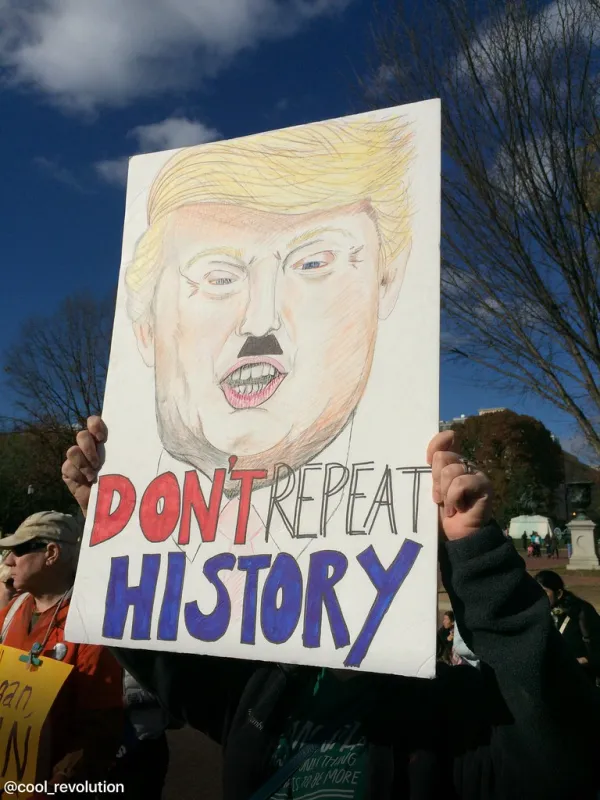
A megalomaniac is a pathological egotist, someone with a psychological disorder who exhibits symptoms like delusions of grandeur and an obsession with greatness, power or wealth.
A sociopath is a person whose behavior is antisocial, often criminally greedy, and who lacks a sense of moral responsibility, empathy or social conscience. Sociopaths never sincerely apologize nor are they capable of exhibiting remorse for wrongs that they have committed.
A narcissist is person who has an inflated sense of their own importance, a deep need for admiration, sexual gratification, applause and a lack of empathy for others.
A paranoid person or group exhibits excessive or irrational suspiciousness and distrustfulness of other individuals or groups.
A xenophobe is a person who is fearful or contemptuous of that which is foreign, especially of strangers or of people from different countries or cultures.
A demagogue is a political leader who seeks support by appealing to popular desires and prejudices rather than by using rational argument.
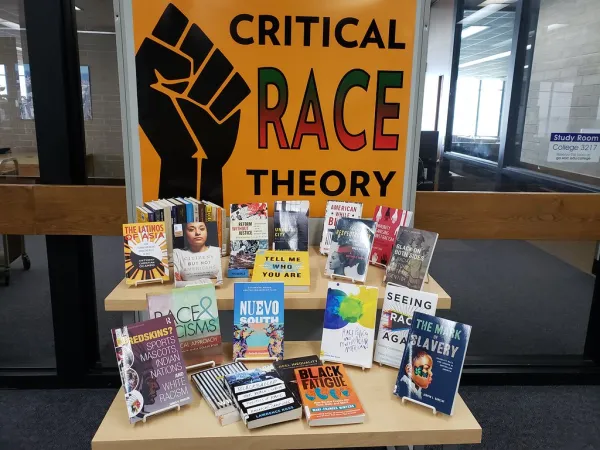
If the right gets its way, maybe in a decade or two, the United States will be free of its slave-owning past.
All gone – gone with the wind. It’s just not taught anymore. Yeah, we had a civil war – about “states’ rights” – and then we moved on: We conquered the West, saved the world first from the Nazis, then from the commies, and remain the greatest country ever. Hurray for capitalism! Any questions?
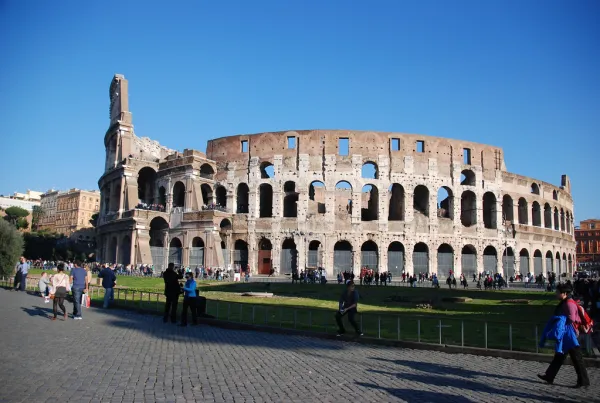
‘Panem et circenses’, said the Romans - ‘Bread and circuses’.
This maxim served the Romans well. In times of crisis and whenever they needed a distraction from military defeats or political infighting at the highest levels, they simply entertained the masses.
Caroline Wazir wrote an article in The Atlantic in 2016, linking entertainment and the need for political validation in the Roman Empire.
“The Exotic Animal Traffickers of Ancient Rome” is a good summation of how thousands of rare animals - at least rare for the Romans - were transported to Rome to be butchered at the Colosseum.
The practice was used in the early years of the Roman Empire to win approval for ambitious emperors and, during the age of decadence, to distract from the failures of struggling Caesars.
Ultimately, the entire exercise had little to do with entertainment for its sake and everything to do with distraction.
As I trek toward the Great Unknown, as life’s struggles seem to intensify, some odd questions keep recurring.
Art — what is it again? Why does it matter? How does it matter? What does it mean to be “good” at it?
That last question, in particular, can cut like barbed wire — especially if you’ve been swimming all your life in a sense of mediocrity, having learned that the Temple of Art is the home of the blessed elite. There’s Mona Lisa, then there are scribbles and doodles: baby stuff. End of discussion. Your grade is C-minus. Welcome to consumer culture.
So why do I care about art? Indeed, why now? As I grow older (by which I mean “old”), I refuse, refuse, refuse to retire: to quit writing, to quit believing I’m doing something that matters . . . to quit believing that humanity is collective and, at the deepest levels of our being, we all participate in this collective. This is what I call art, even though I don’t know what I mean by that. Or at least I don’t mean something that’s simple and certain, or even particularly serious — at least not in an academic sense. Serious can be fun.
Realizing that I’ve been taking something for granted — one grain of infinity — is never an abstraction. It generally happens by whack and wallop.
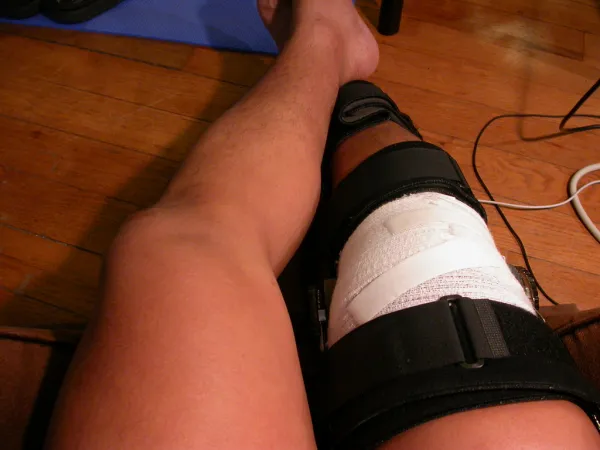
Oh yeah, the knee. The knee. It’s kind of important.
A crucial part of the realization process is acknowledgment. Maybe even learning something. So, pardon the details I’m about to reveal, but I’m trying to figure out what I may have just learned these past few days, even as I call out to the universe: “Enough!” I don’t want any more life lessons for a while. (Come on, I’m only 77.)
So what happened was, my long-time buddy, Malcolm — we’ve been best friends since 1967 — came to town for a visit last week. Wow, cool. Two long-time-ago hippies on their own in Chicago. The world felt wide open. And I was host. However, the day of his arrival — as I lay in bed that morning — my right knee woke me up with a piercing poke in my consciousness. No, not again!
At first, I admit, I was a bit flattered to learn that online entrepreneurs are selling study guides for my new book. I thought of CliffsNotes from long ago, helping fellow students who were short on time or interest to grasp the basics of notable works. Curiosity quickly won. I pulled out my credit card, paid $9.99 plus tax for one of the offerings, and awaited its arrival in the mail.
The thin booklet got off to a reasonable enough start, explaining with its first sentence, “The U.S. media coverage that makes it easier to sell wars to the public, as well as the often-hidden cost of civilian casualties from errant U.S. attacks, are all harshly criticized by journalist Solomon.” That wasn’t a bad sum-up of my book.
But the study guide’s second sentence was not nearly as good: “He guarantees that when Russia designated Ukrainian communities during the new attack, the U.S. media was everyone available and jumping into action with compassionate, piercing revealing.” Rereading that sentence a few times didn’t improve it, and I began to worry.
“The greatest danger to human civilization and the planet is the inability to believe that tomorrow can be different . . .”
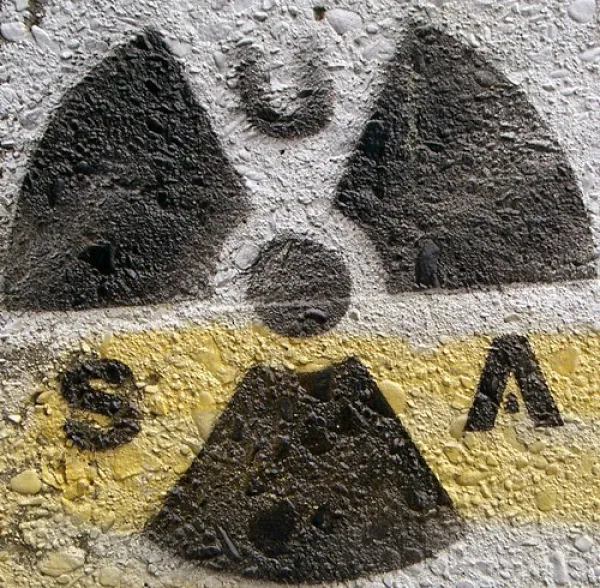
So writes Derek Johnson of the Global Zero movement, an organization committed to a world free of nuclear weapons. Let’s put it this way: If we can cooperate in our own collective suicide — a.k.a., nuclear war — surely, surely we can cooperate in creating a world that transcends such a possibility. Or are cynicism, war and profit so thoroughly worked into the human social structure that I’m kidding myself? You can’t put the genie back in the bottle, people say, superstitiously (it seems) condemning themselves, or at least their children, to inevitable self-annihilation.
As the heatwave intensifies across the country, as workers exposed to the heat collapse on the job in increasing numbers — some of them die — Gov. Greg Abbott of Texas has signed a law nullifying local ordinances in the state that require ten-minute heat and water breaks for those who work in the sun.
Water is life! Yeah, so what, says Abbott and those who support this law. Critics call it the Death Star Law. Texas Rep. Greg Casar, who recently staged a nine-hour thirst strike on the steps of the U.S. capital in protest of such laws — such indifference to the health and lives of so many American workers — said that Abbott, along with other GOP governors like Ron DeSantis, “are participating in the cruelty olympics, trying to outdo each other.”

Donald Trump is a man of many words. All of them no more than a few syllables. I know he speaks the English language, one word after another. But does he have to speak it so poorly?
The blood that runs through my brains has a rich DNA past with tributaries in many European and far flung places. I dip my verbal oars into the wondrousness of words as I try to decipher exactly what Trump is trying to say, for better or for verse. Just listen as he murders the spoken word and insidiously replaces it with sewer talk. Filling our brains with farce words, farce thoughts, farce gobbledegook. Is he just trying to butcher our brains? Yes conclusively, can we blame the entire decline and fall of the American Empire on Donald Judas Trump.