
Global
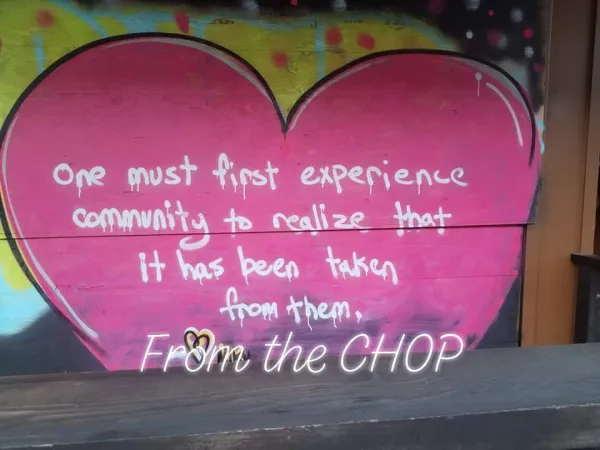
SEATTLE, WA. The Seattle federal judge's restraining order banning tear gas, pepper spray, rubber bullets and concussion grenades put Seattle on the cusp of a potential historical turning point. Seattle has had the option to turn away from police violence after the judge's order, making the judge's order banning indiscriminate use of weapons on peaceful protesters a key to such a historic transformation. But the use yesterday of rubber bullets and the brandishing of pepper spray in violation of the judge's order are evidence of police resistance to this change.
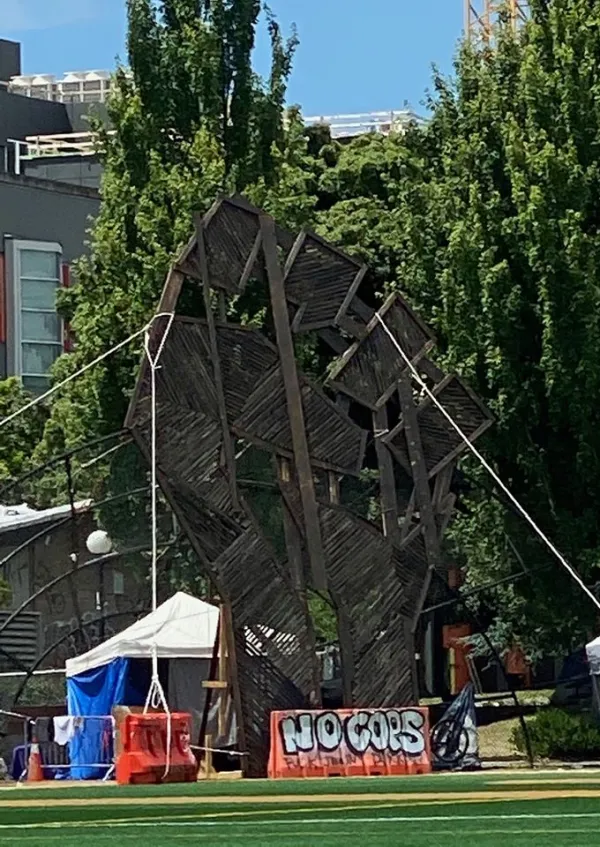
The size of the Seattle Police Autonomous Zone or SPAZ increased overnight somewhat, as police tape advanced to eliminate a key vantage point from which to photograph the Black Power fist sculpture.
Largely unreported at this point are the internal battles within Seattle city government for the soul of Seattle, which for the time being seem to have been won by police in defiance of both the federal judge's order and of some of the more conciliatory statements of the mayor.
As the summer sun rose on Wednesday morning (July 1st) Christopher Columbus was banished from the courtyard at City Hall. What also could be replaced is the name of our city, but that could take years.
The questions now being asked are, what should replace either?
One answer is not so difficult, the other far more challenging. But perhaps necessary if “Columbus” wants to remain a Midwest boomtown and attract young people, who have been trending more and more progressive even before Trump.
City Council President Shannon Hardin on Twitter has asked for suggestions regarding what to replace the Columbus statue with. He specifically said “art,” not a historical person.
Tasked with replacing the statue is the Columbus Art Commission, and Hardin has promised it will be a “public process.” Hopefully that will be the case when it comes to changing our police department.
“Council is focused on eradicating systemic racism, police misconduct and social injustice through every means possible,” wrote Hardin in the tweet announcing suggestions to replace the Columbus statue.
As a sociologist, my area of specialty is the study of social movements. Specifically, I am interested in how social movements represent themselves visually. In other words, protest art is something I can really geek out on.
However, being neither an artist nor someone who has been able to attend protests due to health concerns, I knew I would miss part of the story if I wrote this one on my own. To get more perspective, I decided to talk to a better-informed friend.
Claressa Dalloway is an artist who has been actively involved in many of the protests in downtown Cbus. As such, she is familiar with events as they took place in the height of the protest in May and early June. We decided that the best way to interact with the art was to pick a point near the Statehouse, and just start walking.
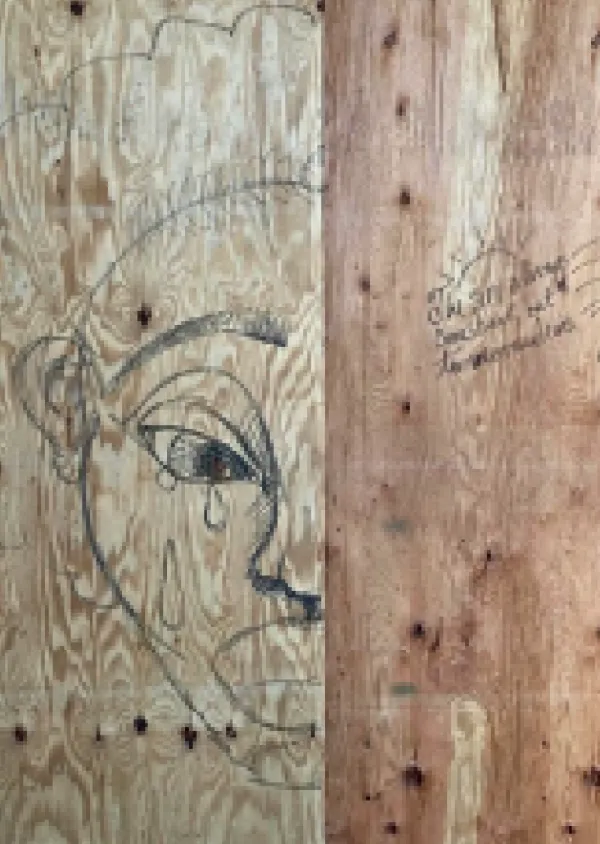
FIRST ART PIECE: FACE CRYING - ABOVE
JB: “So, here is one. What do you think about this one?”
CD: “A lot of the windows are boarded up, so a lot of the art that is similar to this.
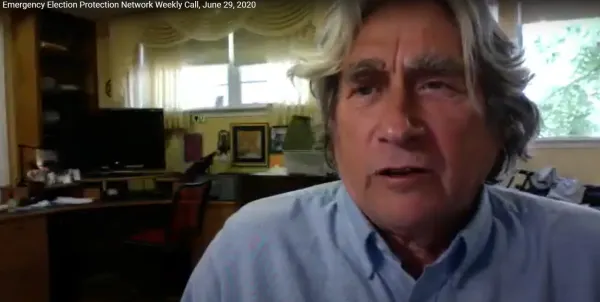
 he 2020 election will be decided by 3 factors: Registration Rolls, Vote by Mail, and Ballot Counting.
How effectively a national grassroots election-protection upheaval can affect them will decide the fate of the Earth.
THE REGISTRATION ROLLS have been stripped of 16 million or more citizens mostly of youth and color, but many have been re-registered.
Election Protection (EP) activists must fight to make voter registration as easy and fair as possible, contact and re-register the disenfranchised, confirm the registrations of those who think they’re registered but are not, and register millions of new voters, especially among those who have just marched for racial justice and police reform.
VOTE BY MAIL (VBM) has successfully provided paper ballots in Colorado, Utah, Washington, Oregon & Hawaii. All states have always provided absentee ballots. But the virus could force 2020 VBM totals from 5% overall to 40-80%, overwhelming unprepared counties & states.
Freelance journalist for PeterbCollins.com
At approximately 5:30 AM Wednesday an advancing phalanx of police brandishing batons and pepper spray canisters enjoined by a federal judge and reportedly using rubber bullets also banned by the same judge, cleared out the the 4 block Capitol Hill Organized Protest (CHOP) zone as well as nearby Cal Anderson park.
Topple a few statues, remove some iconic names from American institutions . . . and the ghosts of the past start to escape from history, filling the present moment. It’s called awareness.
Too much awareness can feel like chaos. Not surprisingly, a lot of people would prefer to stick with the old historical narrative, the one that’s so tried and true: This is the land of the free, the home of the brave, the birthplace of democracy. God bless America! (And forget about slavery, Native American genocide, racism, packed prisons, nukes, endless war, etc.)
The question of the moment is whether this narrative is gone for good. Are we merely in the process of making some superficial adjustments or has the national soul truly torn itself open? Will we stop short — once again — of creating a society of compassionate equality? Will we eventually (as soon as possible) retreat to another narrative of American exceptionalism and . . . uh, white power? Or are we in the process of real change?
The past month’s activism has changed a great deal. One thing it’s helped with is brushing aside the tired old argument over whether government should be big or small. In its place we have the much more useful argument over whether government should prioritize force and punishment, or focus on services and assistance.
If we want local and state governments that provide experts in de-escalating conflict, professionals to assist those with drug addictions or mental illness, and skilled experts at handling traffic or responding to various sorts of emergencies, the funding is easily and logically found. It’s sitting in the oversized budgets for armed policing and incarceration.
The most commonly reported mainstream media account of the creation of the Coronavirus suggests that it was derived from an animal borne microorganism found in a wild bat that was consumed by an ethnic Chinese resident of Wuhan. But there appears to be some evidence to dispute that in that adjacent provinces in China, where wild bats are more numerous, have not experienced major outbreaks of the disease. Because of that and other factors, there has also been considerable speculation that the Coronavirus did not occur naturally through mutation but rather was produced in a laboratory, possibly as a biological warfare agent.