
Global


Investors are pondering where to put their money this week after the sudden decline in the assessed value of presidential candidate Joe Biden.
On Wall Street and in other corporate quarters where financiers were heavily invested in Biden, hopes have eroded in recent days amid reduced investor confidence. Some prominent donors began to openly question the wisdom of devoting more capital to the national marketing campaign for the former vice president.
After the leading blue chip closed sharply lower at the end of last week, even declaring “my time is up,” many top investors felt overexposed and looked for shelter. Gathering new topline data and considering several prospectuses that had been previously submitted, investors are now reassessing assets and liabilities as well as potential growth in market share during the next quarter and beyond.

You’d think a publisher with this many names could check for glaring errors in its books: “Currency, Crown Publishing Group, Penguin Random House LLC.” And you’d be right. So this isn’t an error. It’s a lie accepted as a desirable myth:
“Today it’s widely accepted that meritocracy and aristocracy have become one and the same. The lords of the universe are not sitting on trust funds. . . . [M]ost of the new lords achieved perfect or near-perfect scores on their SATs at age sixteen or seventeen. . . . We now live in a world where the highest-IQ people earn the greatest financial rewards.”
The author is Rich Karlgaard. The book is an otherwise perfectly reasonable one called Late Bloomers. Its topic is the United States, so the word “world” quoted above should not be taken literally. The book is chock full of criticism of how SATs are used. But the statements quoted above are not satirical. They are meant quite straightforwardly, and they are false. They are presented without any footnotes or citations. So, here are some:

The US government’s treatment of immigrant children not only shocks the conscience, it is also in chronic, blatant violation of US law. The US government’s deliberate, unlawful cruelty to its child hostages was vividly illustrated by government attorney Sarah Fabian, a self-described mother, as she tried to explain to the disbelieving three judges of the US Ninth Circuit Court of Appeals how the US government could say it held children in “safe and sanitary” conditions as required by law. Fabian’s stunning performance went viral, showing her defending conditions in which the government deprives its child-prisoners of soap, toothpaste, toothbrushes, or beds.
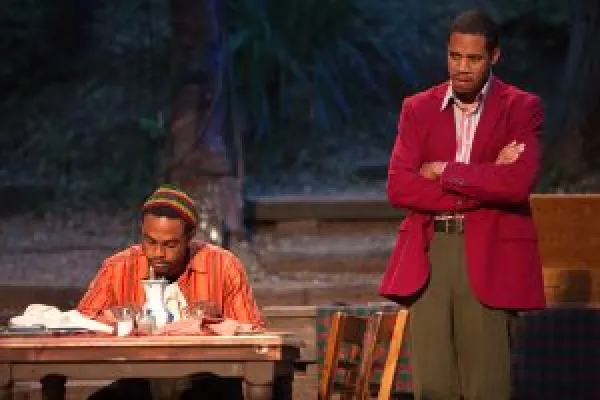
Will Geer’s Theatricum Botanicum’s current production of An Enemy of the People is not to be confused with CNN’s chief White House correspondent Jim Acosta’s book The Enemy of the People: A Dangerous Time to Tell the Truth in America or the new Trump biography by Jonathan Swift entitled Enema of the People [LOL!]. Rather, WGTB’s two-acter is a version of iconoclastic Norwegian playwright Henrik Ibsen’s 1882 comedy drama, freely adapted by the Topanga amphitheater’s Artistic Director Ellen Geer.
Co-directed by Geer and Melora Marshall, this Enemy is re-set in the presumably fictitious town of South Fork, South Carolina in 1980. By moving the time and location of Ibsen’s work from 19th century southern Norway a century later to the Southern USA during the presidential race between Democrat Pres. Jimmy Carter and GOP candidate Ronald Ray-gun, this WGTB iteration opens Enemy up to an exploration of issues of greater relevancy for today’s theatergoers.

On Wednesday, the first 10 of the 20 Democrats whom the corporate media is permitting into what they call debates were asked what the greatest threat to the United States is. A worthy and funny answer would have been “MSNBC.” Another worthy and funny answer would have been “Donald Trump,” which was in fact Jay Inslee’s answer — and he made clear elsewhere in the event that climate collapse is also his answer. A worthy answer, though nobody would have understood it, would have been “nationalism.” But the correct answer would have been U.S. promotion of environmental collapse and nuclear war. Cory Booker, unprincipled hypocrite though he is, came close with climate change and nuclear proliferation, but it’s not just the proliferation; it’s also the U.S.-led arms race and threat of first use. Tulsi Gabbard got it half right with nuclear war. Elizabeth Warren and Beto O’Rourke got it half right with climate change. Julián Castro got it half right and half bonkers with climate change and China. Similarly John Delaney with nuclear weapons and China. Tim Ryan went full-on loony with just China.

These aren’t people. These are animals.”
These words alone set off the alarm — the fascism alarm, you might say. Donald Trump is by no means the sole source of America’s democracy nosedive, but he’s its current, deeply troubling manifestation.

The following report is by no means exhaustive -- only illustrative. There may well be a Democratic member of Congress near you not included here who serves corporate interests more than majority interests, or has simply grown tired or complacent in the never-ending struggles for social, racial and economic justice as well as environmental sanity and peace. Perhaps you live in a district where voters are ready to be inspired by a progressive primary candidate because the Democrat in Congress is not up to the job.
It isn’t easy to defeat a Democratic incumbent in a primary. Typically, the worse the Congress member, the more (corporate) funding they get. While most insurgent primary campaigns will not win, they’re often very worthwhile -- helping progressive constituencies to get better organized and to win elections later. And a grassroots primary campaign can put a scare into the Democratic incumbent to pay more attention to voters and less to big donors.
__________________________________________

Donald E. McInnis’s book, She’s So Cold, is painful to read. McInnis was the defense attorney for one of three boys falsely accused of killing one of the boys’ sister. Much of the book is recreation of police interrogations that were videotaped, and of a court hearing.
This was one of those cases the mass media love and for which they effectively convict the accused in the minds of the public. This was in 1998 in San Diego, and the original victim’s name was Stephanie Crowe. But there were more victims, including Stephanie’s brother, two of his friends, and the three boys’ families. The trauma willfully and knowingly inflicted on them by the police and prosecutors was limited by the fact that so-called “confessions” by two of the three boys were videotaped. I haven’t watched the videos, but reading them is like watching violence in slow motion.

A new film by Will Watson, called Soldiers Without Guns, ought to shock a great many people — not because it utilizes a yet more gruesome form of violence or bizarre form of sex (the usual shockers in movie reviews), but because it recounts and shows us a true story that contradicts the most basic assumptions of politics, foreign policy, and popular sociology.
Trailer Here: https://youtu.be/ImwipiavM8k
Bougainville Island was a paradise for millennia, inhabited sustainably by people who never caused the rest of the world the slightest trouble. Western empires fought over it, of course. Its name is that of a French explorer who named it for himself in 1768. Germany claimed it in 1899. In World War I, Australia took it. In World War II, Japan took it. Bougainville returned to Australian domination after the war, but the Japanese left piles of weapons behind — possibly the worst of the many forms of pollution, destruction, and lingering effects a war can leave in its wake.