Global

 hen you stop to think about it, can you tell the difference between Russian disinformation bots and Fox News? Actually, that’s a serious question.
Special Counsel Robert Mueller’s February 16 indictment of people and organizations associated with Russia offers a loose definition of Russian disinformation bots that seems equally accurate as a description of what Fox News has been doing since 1996:
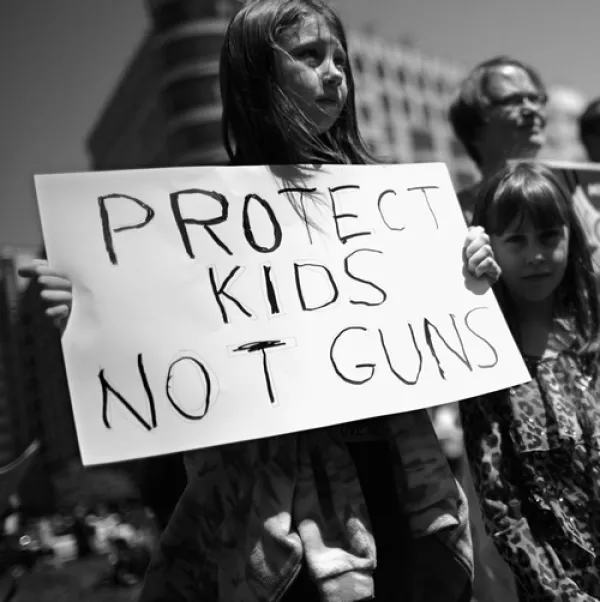
The power of mass demonstrations to mobilize activism and move those in positions of power is minimized, first and foremost, by those opposed to popular power. Do not listen to them. Make them listen to us!
Can you give two days to stop the slaughter of innocents and the shameless profiteering from their blood? If you can give more, so much the better. But by giving two days, you will guarantee that others will give more. You will be part of building the necessary momentum, the key ingredient in social change.
BANGKOK, Thailand -- The U.S. government's National Human Genome
Research Institute (NHGRI) is studying if every American baby should
undergo extensive DNA sequencing and analysis at birth, while China
and other countries are more advanced toward that goal despite reports
of human rights violations.
DNA, the double helix of deoxyribonucleic acid, can reveal a
person's physical and psychiatric health, identity, relatives and
other details.
But databases of people's DNA could enable governments, police,
hackers, corporations, forgers and others to abuse the information.
Sequencing or identifying details of DNA could also be used to
create bioweapons to kill ethnic groups or individuals.
"I do know that if you look in the last 15 years, the investment in
genomics in particular have been more substantial in countries like
China, South Korea, Singapore, and even places like Brazil," NHGRI
Director Eric D. Green said in an interview.
"Support for biomedical research in the United States has not
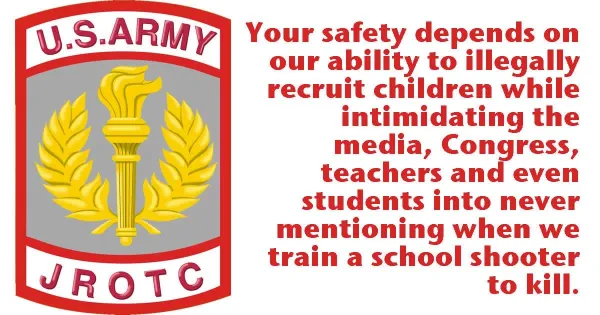
I asked my Facebook page which high school teacher they’d least like to have had a gun in their desk.
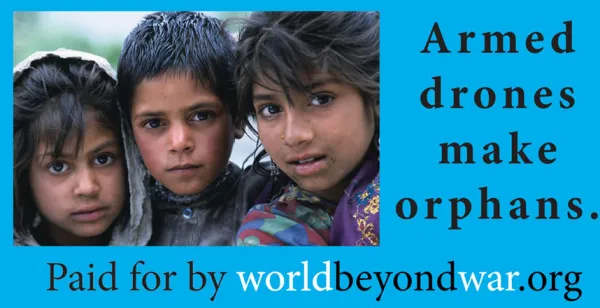
World Beyond War has been raising funds for and renting billboards in opposition to war. We’ve run into censorship from numerous billboard companies but persevered, and more billboards are on their way.
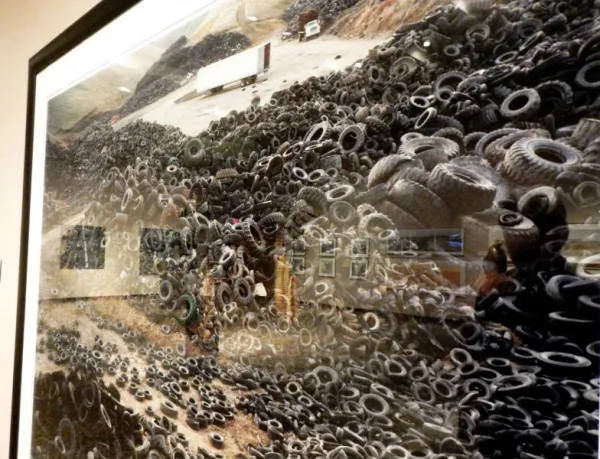
Is Earth the largest garbage dump in the Universe? I don’t know. But it’s a safe bet that Earth would be a contender were such a competition to be held. Let me explain why.
To start, just listing the types of rubbish generated by humans or the locations into which each of these is dumped is a staggering task beyond the scope of one article. Nevertheless, I will give you a reasonably comprehensive summary of the types of garbage being generated (focusing particularly on those that are less well known), the locations into which the garbage is being dumped and some indication of what is being done about it and what you can do too.
But before doing so, it is worth highlighting just why this is such a problem, prompting the United Nations Environment Programme to publish this recent report: ‘Towards a pollution-free planet’.
"Every gun that is made, every warship launched, every rocket fired signifies - in a sense - a theft from those who hunger and are not fed, those who are cold and are not clothed. This world in arms is not spending money alone. It is spending the sweat of its laborers, the genius of its scientists, the hopes of its children...This is not a way of life at all in any true sense. Under the threatening cloud of war, it is humanity hanging on a cross of iron."
This quote was from one of our countries most Distinguished Generals and Presidents, Dwight D. Eisenhower. Unfortunately, there are great profits in guns, warships, and rockets, and little profit in feeding our hungry children, clothing our cold children, and most importantly providing the educational, medical, mental, and social-net services that will give our children (yes, "our" children) a chance to succeed in our ever-more disconnected world. Our bloated military - industrial complex, with its huge profits, has taken over our lives and taken over our money, leaving little of our tax money for providing a safety-net for our children.
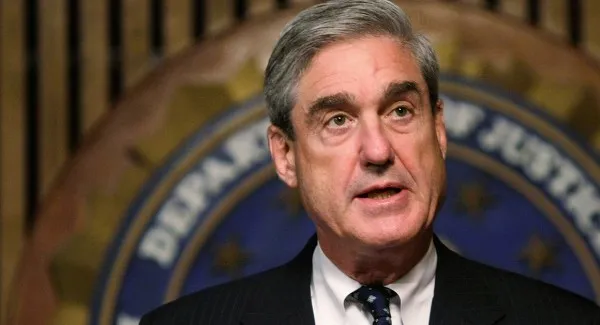
It’s hard to know where to begin. Last Friday’s indictment of 13 Russian nationals and three Russian companies by Special Counsel Robert Mueller was detailed in a 37 page document that provided a great deal of specific evidence claiming that a company based in St. Petersburg, starting in 2014, was using social media to assess American attitudes. Using that assessment, the company inter alia allegedly later ran a clandestine operation seeking to influence opinion in the United States regarding the candidates in the 2016 election in which it favored Donald Trump and denigrated Hillary Clinton. The Russians identified by name are all back in Russia and cannot be extradited to the U.S., so the indictment is, to a certain extent, political theater as the accused’s defense will never be heard.

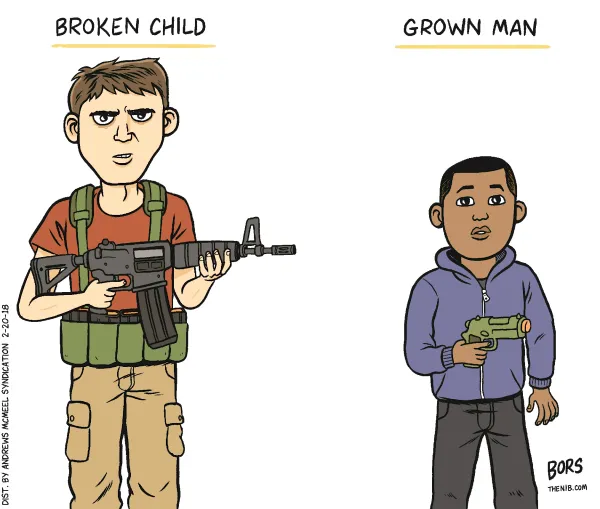
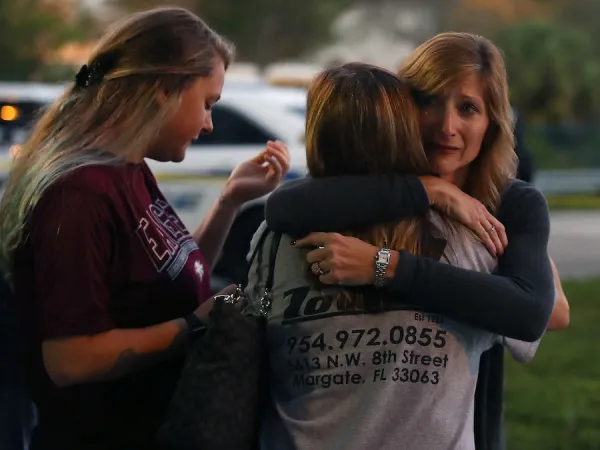
The cries of terror and disbelief continue. Teenagers lie down in front of the White House to protest the nation’s tepid, stalled gun-control legislation. Parents grieve for their children and stare at the wound carved into the American soul. Assault rifles have more rights than schoolchildren.
A movement simmers, or so it seems, a week after the latest deadly school shooting: seventeen people killed at Marjory Stoneman Douglas High School in Parkland, Florida, many more injured. A disturbed loner — yet another one — is arrested.
It’s not simply violence, but wildly profound violation, yet again, yet again, of the deepest of human values: Life is sacred.
Isn’t it?
How can this keep happening?