
Global

Actor/playwright Tom Dugan’s superb award winning one-man show Wiesenthal is a must-see for anyone who loves great acting, writing, drama, human rights and/or Jews, plus hates fascism, crimes against humanity, war and atrocities. For almost 90 minutes sans intermission Dugan flawlessly incarnates Simon Wiesenthal, the greatest postwar Nazi hunter, who as a private entity tirelessly helped track down up to 1,100 Hitlerian war criminals and torturers from his cramped office in Vienna.
Dugan’s mesmerizing saga is set there, although as the title character he spins tales that transport us throughout Europe’s concentration camp archipelago (which Simon describes as “when barbarism met technology”) to Buenos Aires where the Final Solution’s über-bureaucrat, Adolf Eichmann, was hiding out and back to Austria, where Anne Frank’s captor lived in plain sight. Indeed, Wiesenthal’s peregrinations take us through the heart of darkness that, he fears, is harbored somewhere deep within the inner labyrinths of all men.

Most plays I review are full-length narrative works, so this critic is used to that familiar format, just like I prefer to read complete novels or nonfiction books over reading short stories. So I wasn’t a fan of short dramas and comedies - that is, not until I went to see the Actors’ Gang’s Angels, Devils and Other Things, and their head spinning show made a true believer out of me. Where else can one find a purgatory presided over by a sort of maitre d’ deciding who gets seats at the great bistro in the sky - or down below?

Some 360,000 Americans now work in the solar industry, more than in nukes and coal combined. In fact, more Americans are now working in California’s solar industry than are digging coal nationwide. And the U.S. wind business now employs more than 100,000 people.
But President Donald Trump wants to change that. He has already slammed the solar industry’s growth by slapping a 30 percent tariff on imported Chinese panels, slowing installations nationwide.
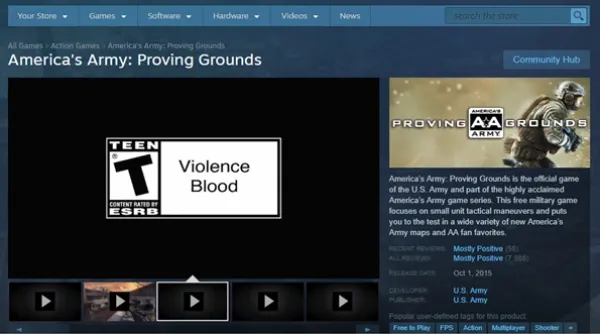

Nik Cruz, the Parkland shooter, and Dimitrios Pagourtzis, the Santa Fe shooter, uploaded these photos on to their Instagram account of their favorite pastime – First-person shooter games.
Both Nik Cruz, the Parkland shooter, and Dimitri Dimitrios Pagourtzis, the Santa Fe shooter, were emotionally distraught because of girls who rejected their advances. They were both outcasts in their respective high schools. They both played video games that simulated war. In his Facebook bio, Dimitri showed interest in joining the US Marine Corps “starting in 2019.” Nik Cruz felt more at home with the Army.
This is not a cheap shot. The military recruits gamers from the virtual world.

The first memory I have of Wendy’s was in the mid 1970’s in Albuquerque, New Mexico. My mother told me of a new restaurant in Old Town that served square hamburgers. She loved that they had a salad bar – the old-style salad bar where you had the option of one serving or all you can eat, but everyone cheated. They served a delicious burger with fresh lettuce and tomatoes. It’s a good memory of my mom who was born in the country but called herself a “city girl.” She considered Wendy’s to be “city living.”
More recently in 2013, a friend of mine and local Columbus worker’s rights activist Rubèn Castilla Herrera gave a talk. He held up a tomato and contemplated, how did the tomato in his hand arrive in Columbus? Who picked it? He and his family were pickers of fruit and vegetables in his youth. He was working with an organization called the Coalition of Immokalee Workers (CIW) and their struggle for justice in the fields and their goal for Fair Food. The CIW formed to combat the historical mistreatment of these farm workers in the work place.


Friends, I want to tell you the very disturbing news of a new corporate-driven scheme to poison you, your family and your pets with radioactive waste.
Aqua Salina is a product you can purchase by the gallon at Lowe’s or a hardware store right now. It’s also sold in huge quantities to department of transportation regional garages for use as a de-icer. It’s bottled in the Cleveland area by an owner of several oil and gas wells. Aqua Salina has been sold for several years.

Such gentle abhorrence! It almost doesn’t seem like racism.
“But they’re also not people that would easily assimilate into the United States, into our modern society. They’re overwhelmingly rural people in the countries they come from — fourth, fifth, sixth grade educations are kind of the norm. They don’t speak English, obviously that’s a big thing. They don’t speak English. They don’t integrate well, they don’t have skills.”
Why bother keeping these words of John Kelly alive? There’s so much bigger news out there than the White House chief of staff’s outpouring of ignorance and pseudo-empathy last week, during an interview on NPR.
“They’re not bad people,” he said. “They’re coming here for a reason. And I sympathize with the reason. But the laws are the laws.”
World BEYOND War has just released an updated 2018 mapping of militarism in the world. The map system can be explored and adjusted to display what you’re looking for, as well as display precise data and its sources at http://bit.ly/mappingmilitarism
Here are some examples of what it can show:
Where wars are present that directly and violently killed over 1,000 people in 2017:
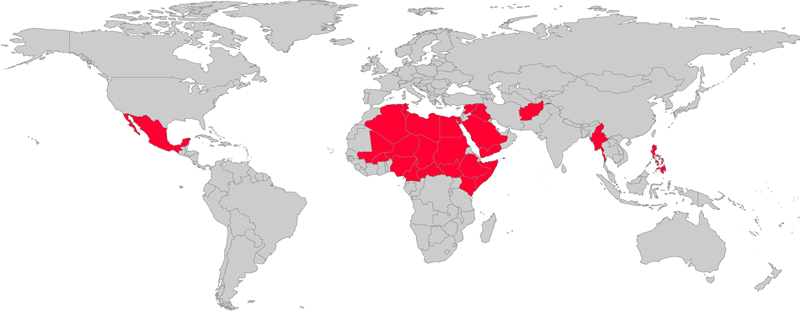
Where wars are present and where wars come from are two different questions. If we look at where money is spent on wars and where weapons for wars are produced and exported, there is little overlap with the map above.
Here’s a map showing countries color-coded based on the dollar amount of their weapons exports to other governments from 2008-2015:

Here is a little known but extremely relevant fact: The first campaign to “Stop the Stigma of Mental Illness” was launched many years ago by the psycho-pharmaceutical industry (Big Pharma) that makes tens of billions of dollars annually by selling unaffordable, often highly addictive, brain-altering drugs that are then promoted by psychiatrists and family physicians as being necessary for the rest of the drug-taking patient’s lives.
Why doesn’t that surprise anybody? The norm for all capitalist enterprises is to make money by hook or by crook.
With a seemingly altruistic agenda of understanding and compassionately dealing with unfortunate people that are somehow different than the rest of us, the fact is that the campaign is all about marketing a product rather than ending the “stigma” of so-called “mental illnesses”.

I’ve written many hundreds of columns. The one below has caused me the most uncertainty about going public with it.
I’m accustomed to writing about facts, quotes, documented history, while offering assessments. But this piece extrapolates from the current zeitgeist, going into realms of events that must be speculative and—until too late—unprovable.
Diary
So lucky to be here. Tiny island of dreams.
The serenity is unbelievable, except I want to believe it. Bluest waves with silver froth. Sun through the palms is damn near orgasmic. And solitude! If I can’t finish the book here, it’ll be my own fault.
***Sort of knew I shouldn’t bring the shortwave. That’ll teach me to donate to NPR. Just can’t resist a “thank you gift.” Will crank it tomorrow.
***Wish I hadn’t turned on the radio. BBC World Service all there is. Downbeat.
Swim, then write. Plenty of sunblock. As for writer’s block, perish the thought.
***Latest newscast unnerving. Need to concentrate. I blow this deadline, I’m seriously screwed.