Global

Los Angeles, March 13, 2017 – The Los Angeles Workers Center and HollywoodProgressive.com are co-presenting the revolutionary classic Potemkin.
Based on a true story, Sergei Eisenstein’s 1925 Potemkin is a stirring account of the mutiny by sailors aboard the Battleship Potemkin who refuse to eat maggoty meat and the mass strike by workers supporting them during Russia’s 1905 Revolution is widely considered to be Soviet cinema’s greatest masterpiece. The terrifying Odessa Steps scene encapsulates czarist brutality, while Potemkin’s theme of triumphant solidarity expresses the essence of Russia’s three revolutions, symbolized by pounding waves. (75 minutes.)
What: Battleship Potemkin screening.
When: Friday, 7:30 p.m., March 24, 2017.
Where: The L.A. Workers Center, 1251 S. St. Andrews Place, L.A., CA 90019.
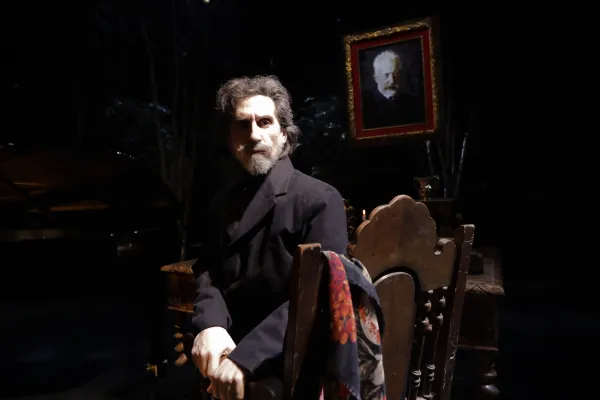
Actor/playwright/musician Hershey Felder’s stock in trade is a musicalized (uh, is that a word? If not, it is now) version of the one-man show. This triple threat dazzles audiences with his live depictions of musicians to the accompaniment of his own virtuoso piano playing. But Felder’s plays are far more than being solely solo concerts. Felder not only regales theatergoers with the sounds of talents such as George Gershwin, but engages auds with his vivid portrayals of the artists, unfolding their private and public lives.


For months now, our country has endured the tacit denigration of American ingenuity. Countless statements -- from elected officials, activist groups, journalists and many others -- have ignored our nation’s superb blend of dazzling high-tech capacities and statecraft mendacities.
Fortunately, this week the news about release of illuminating CIA documents by WikiLeaks has begun to give adequate credit where due. And not a moment too soon. For way too long, Russia has been credited with prodigious hacking and undermining of democracy in the United States.
Obama . . . Trump.
Could there be a bigger contrast — in attitude, style, comportment, philosophy? What irony that the two names are now linked in history: Donald Trump forever the successor to Barack Obama, forever the orange-haired blot on his legacy, forever the surrealistic next chapter of the American narrative.
At the superficial level of news and understanding, this is never going to compute. And the way the Trump presidency has begun — white nationalism cozying up with the generals and Wall Street — seems to raise the worst fears possible.
Before this contrast disappears completely into the global chaos the Trump presidency seems bent on creating (that is to say, the new normal), I have a small, cautious observation to make: Maybe Trump is just what we need.
Until I remember that I, too, am a human being, I have been with increasing frequency drawn to the conclusion that human beings have evolved with such an obsession with other individual humans that they simply cannot attribute proper importance to far-reaching policies.
If you want to excite a crowd, you don't tell them that virtually every official in Washington is in complete and harmonious agreement on massive military spending, more nuclear weapons, occupying Afghanistan, bombing Iraqis, bombing Syrians, bombing the hell out of Yemenis, and drone murdering at will. That's about as interesting as subsidizing fossil fuels and rendering the earth uninhabitable. Who cares!
If you want some sign of life out of an audience, you tell them that a particular politician is an idiot or a clown or a racist or a sadist or a misunderstood saint. Now, that has value. That has meaning.


Ojibwe Nation tribal member Winona LaDuke - Ralph Nader’s vice presidential candidate on the Green Party ticket in 2000 - appeared Feb. 23 at the 4th Native Women in Film Film Festival, where an anti-pipeline documentary about LaDuke world premiered. Another indigenous rights movement notable - Pearl Means, widow of American Indian Movement leader Russell Means - flew in from North Dakota to co-present the documentary she executive produced, End of the Line: The Women of Standing Rock at the filmfest at Laemmle’s Monica Film Center in Santa Monica, California.
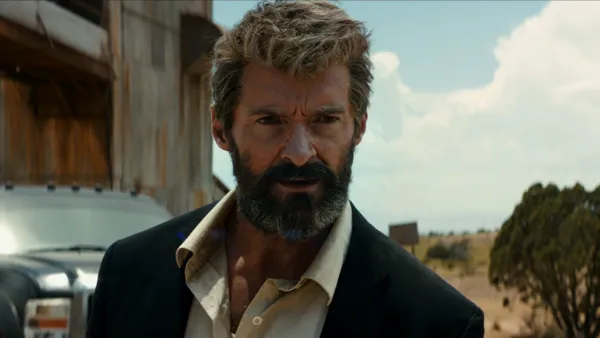
Let’s just get this much out of the way: Yes, Logan is a really, really good movie. And it’s finally the movie the character deserves.
For most superheroes, for your Captain Americas and your Batmans, an explosion-laden PG-13 summer blockbuster is perfect. Most superheroes are best served by stories where they can punch some villains around a bit and then hand them over to the authorities – or watch, angst-filled, as they oh-so-tragically fall to their deaths.
But Wolverine, who first appeared as a villain for the Hulk, who was one of the original comic book anti-heroes, is not that kind of superhero. With unbreakable metal claws and a healing factor that makes him nearly impossible to kill, his power set is better suited to a slasher movie monster. He’s the best he is at what he does, and what he does is hunt people down and murder them, then struggle with the psychological fallout of being what he is.