
Global
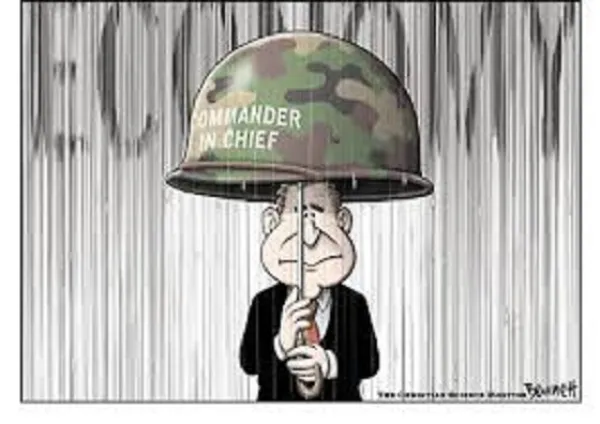
Maybe it’s the phrase — “commander in chief” — that best captures the transcendent absurdity and unaddressed horrors of the 2016 election season and the business as usual that will follow.
I don’t want to elect anyone commander in chief: not the xenophobic misogynist and egomaniac, not the Henry Kissinger acolyte and Libya hawk. The big hole in this democracy is not the candidates; it’s the bedrock, founding belief that the rest of the world is our potential enemy, that war with someone is always inevitable and only a strong military will keep us safe.
In a million ways, we’ve outgrown this concept, or been pushed beyond it by awareness of global human connectedness and the shared planetary risk of eco-collapse. So whenever I hear someone in the media bring “commander in chief” into the discussion — always superficially and without question — what I hear is boys playing war. Yes, we wage war in a real way as well, but when the public is invited to participate in the process by selecting its next commander in chief, this is pretend war at its most surreal: all glory and greatness and hammering ISIS in Mosul.


BANGKOK, Thailand -- China is achieving fresh diplomatic successes in
Thailand and the Philippines, thanks to security arrangements which
blocked Hong Kong's pro-democracy dissident Joshua Wong from visiting
Bangkok in October and an unexpected anti-U.S. spiral in Manila
impacting President Obama's Asian "pivot."
China eyes Thailand as a modern, southwest overland commercial
route to the vast Indian Ocean, where navies from the U.S., India and
elsewhere are preparing to counter-balance Beijing's advances.
"Since relations with Myanmar [Burma] soured, China has looked to
Thailand for a route from southwest China to the sea, particularly to
the Indian Ocean," said Thailand-based political analyst and author
Chris Baker, 68, in an interview.
"All of mainland Southeast Asia has come under heavy Chinese
influence through trade, investment, and migration. But this is not
colonialism. It's just having a very powerful neighbor.
"The current military junta in Thailand does not know how to handle
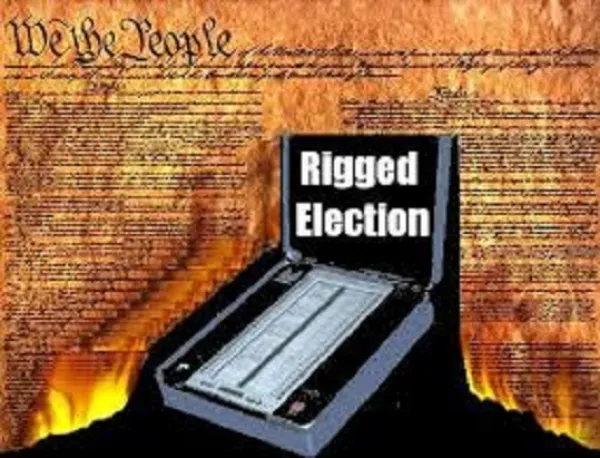
The 2016 Republican presidential primary was rigged. It wasn't rigged by the Republicans, the Democrats, Russians, space aliens, or voters. It was rigged by the owners of television networks who believed that giving one candidate far more coverage than others was good for their ratings. The CEO of CBS Leslie Moonves said of this decision: "It may not be good for America, but it's damn good for CBS." Justifying that choice based on polling gets the chronology backwards, ignores Moonves' actual motivation, and avoids the problem, which is that there ought to be fair coverage for all qualified candidates (and a democratic way to determine who is qualified).
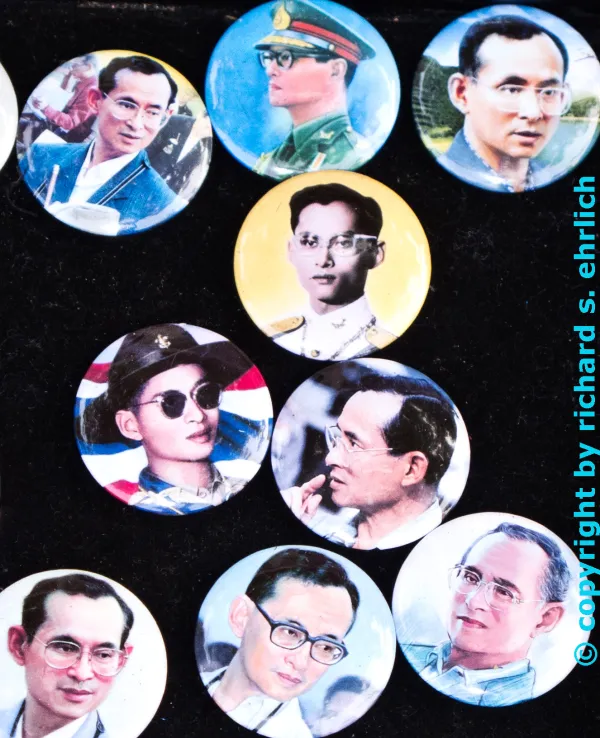
BANGKOK, Thailand -- King Bhumibol Adulyadej's death at age 88 on
October 13 has plunged Thailand into the deepest political and
emotional trauma in the lifetime of its people, breaking millions of
hearts, creating an unpredictable leadership situation for the
military government, and prompting widespread fear and pessimism about
this often violent nation's future.
"Dear all Thai people, His Majesty the King Bhumibol Adulyadej, the
Ninth of His Dynasty, has passed away," announced Prime Minister
Prayuth Chan-ocha on national TV several hours after the monarch's
death.
"Long live His Majesty the King of the New Reign," he said,
indicating King Bhumibol's only son, 64-year-old Crown Prince Maha
Vajiralongkorn, will be confirmed as Thailand's new monarch.
In 1972, when he was Crown Prince Vajiralongkorn, he became the
royal heir in a ceremony that was later engraved onto a commemorative
currency note, showing the younger man kneeling in front of his
enthroned father.


At first glance, Hillary Clinton's speeches to Goldman Sachs, which she refused to show us but WikiLeaks claims to have now produced the texts of, reveal less blatant hypocrisy or abuse than do the texts of various emails also recently revealed. But take a closer look.
Clinton has famously said that she believes in maintaining a public position on each issue that differs from her private position. Which did she provide to Goldman Sachs?
Yes, Clinton does profess her loyalty to corporate trade agreements, but at the time of her remarks she hadn't yet started (publicly) claiming otherwise.
I think, in fact, that Clinton maintains numerous positions on various issues, and that those she provided to Goldman Sachs were in part her public stances, in part her confidences to co-conspirators, and in part her partisan Democratic case to a room of Republicans as to why they should donate more to her and less to the GOP. This was not the sort of talk she'd have given to labor union executives or human rights professionals or Bernie Sanders delegates. She has a position for every audience.
At first glance, Hillary Clinton's speeches to Goldman Sachs, which she refused to show us but WikiLeaks claims to have now produced the texts of, reveal less blatant hypocrisy or abuse than do the texts of various emails also recently revealed. But take a closer look.
Clinton has famously said that she believes in maintaining a public position on each issue that differs from her private position. Which did she provide to Goldman Sachs?
Yes, Clinton does profess her loyalty to corporate trade agreements, but at the time of her remarks she hadn't yet started (publicly) claiming otherwise.
I think, in fact, that Clinton maintains numerous positions on various issues, and that those she provided to Goldman Sachs were in part her public stances, in part her confidences to co-conspirators, and in part her partisan Democratic case to a room of Republicans as to why they should donate more to her and less to the GOP. This was not the sort of talk she'd have given to labor union executives or human rights professionals or Bernie Sanders delegates. She has a position for every audience.

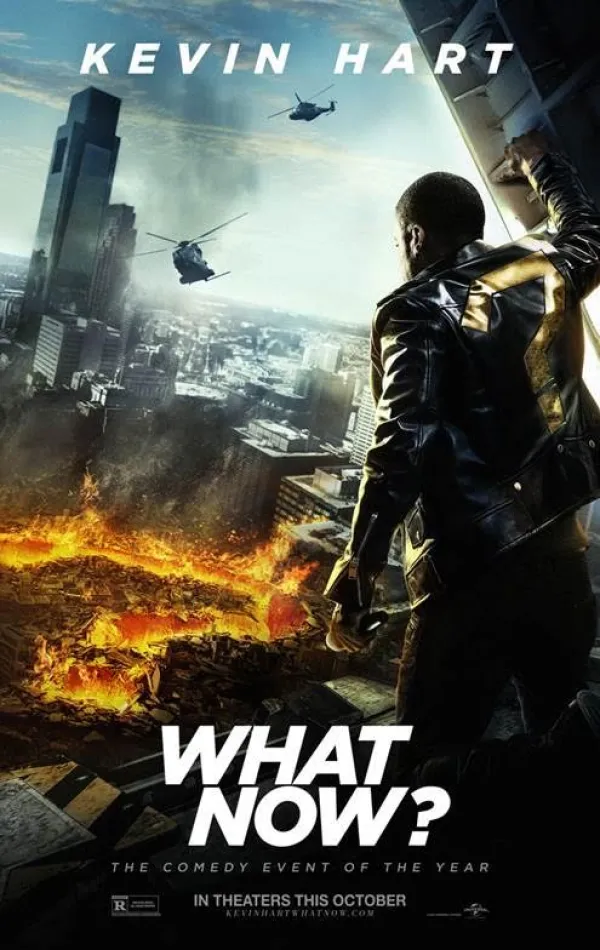
For fans of hilarious, often off-color comedy, Kevin really can’t wait: So head on down to the multiplex to laugh your head off at Kevin Hart: What Now? Much of it is a concert film in the tradition of Richard Pryor and Eddie Murphy’s earlier forays into this category of semi-documentary filmmaking of a live performance by a comedian. However, Hart’s standup routines are wittily sandwiched between an opening credit montage and sequences that are rib-tickling genre spoofs featuring Halle Berry, Don Cheadle and Daily Show and Hangover alum Ed Helms (as a token Caucasian?).
There are some inventive sight gags in the opening scene that are reminiscent of visualizations Woody Allen previously spoofed, although Hart, who also executive produced What Now? (which was directed by veteran Hart helmer Leslie Small), does so in an original way. But most of this film is shot in a sports stadium (which I am deliberately not naming in order to avoid giving a corporate plug) where an animated, at all times engaging Hart delivers a number of his routines.