
Global
FOR IMMEDIATE RELEASE: Hart for Congress Committee
The CIA is out of control. The spy agency has admitted to conducting a covert hacking and file destruction operation against the Senate Intelligence Oversight Committee that was investigating allegations of prior illegal CIA acts. The CIA’s conduct constitutes a blatant and unacceptable act of intimidation against the critical civilian oversight of its operations. As CIA Director Brennan has confessed to hacking the Senate Oversight Committee computers, probable cause exists to believe the CIA has engaged in criminal and unconstitutional attacks on the very core of our representative government. This is unacceptable.
The CIA is out of control. The spy agency has admitted to conducting a covert hacking and file destruction operation against the Senate Intelligence Oversight Committee that was investigating allegations of prior illegal CIA acts. The CIA’s conduct constitutes a blatant and unacceptable act of intimidation against the critical civilian oversight of its operations. As CIA Director Brennan has confessed to hacking the Senate Oversight Committee computers, probable cause exists to believe the CIA has engaged in criminal and unconstitutional attacks on the very core of our representative government. This is unacceptable.
So the Republican Party pulled it off. On Friday, March 7 Ohio Libertarian governor hopeful Charlie Earl and his Lt. Governor Steve Linnabary found out they were no longer candidates. Through thuggish and authoritarian tactics the Republicans managed to knock the gubernatorial candidates of both the Ohio Libertarian and Ohio Green Parties off the 2014 primary ballot.
How did they do it?
Like any two-bit dictator, they did it by usurping the U.S. Constitution and simply outlawing all minor parties in the state of Ohio. It is very difficult to get signatures for a candidate when your party has been banned from the ballot.
In legal terms, it is called “irreparable harm.”
Before he was banished from the ballot, Earl was polling at 6% of the vote. Political pundits across the state speculated that he might cost John Kasich to lose his re-election bid. The day Earl initially announced for governor, a Republican Party Senator introduced a bill that would kill all minor parties in Ohio.
Critics aptly nicknamed the bill “The John Kasich Re-Election Protection Act.”
How did they do it?
Like any two-bit dictator, they did it by usurping the U.S. Constitution and simply outlawing all minor parties in the state of Ohio. It is very difficult to get signatures for a candidate when your party has been banned from the ballot.
In legal terms, it is called “irreparable harm.”
Before he was banished from the ballot, Earl was polling at 6% of the vote. Political pundits across the state speculated that he might cost John Kasich to lose his re-election bid. The day Earl initially announced for governor, a Republican Party Senator introduced a bill that would kill all minor parties in Ohio.
Critics aptly nicknamed the bill “The John Kasich Re-Election Protection Act.”
Image
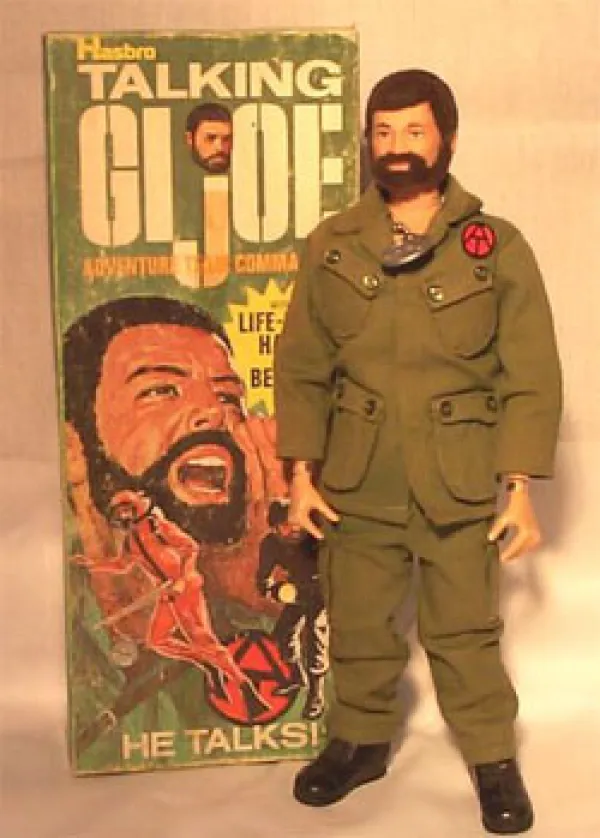
The iconic GI Joe line of military-inspired toys is celebrating its 50th anniversary this year, but recent news suggests toymaker Hasbro is planning to mark the occasion by killing off the brand.
The official GI Joe Con recently announced that Hasbro wouldn’t be attending the show. This news came as a huge surprise, since Hasbro has always been at the official convention to give fans a preview of the coming year. The reason for this turned out to be both simple and very significant: Hasbro no longer has a “GI Joe brand team,” the group responsible for planning, designing and marketing the toys. The toy line is dead.
With its inherent ties to the US military, GI Joe has always been affected by American politics. Though the original 12” action figure was hugely popular when it was first introduced in the 1960s, growing cultural dissatisfaction with the war in Vietnam led Hasbro to make the line more adventure-oriented in the 70s. By the 80s, GI Joe was pretty much science fiction. They were still ostensibly an elite unit of US military specialists, but they were different enough not to scare off parents who remembered Vietnam.
Who knows, soon we might see headlines and cable TV shows asking: "Is Dianne Feinstein a whistleblower or a traitor?"
A truthful answer to that question could not possibly be “whistleblower.” It may already be a historic fact that Senator Feinstein’s speech on March 11, 2014 blew a whistle on CIA surveillance of the Senate intelligence committee, which she chairs. But if that makes her a whistleblower, then Colonel Sanders is a vegetarian evangelist.
In her blockbuster Tuesday speech on the Senate floor, Feinstein charged that the CIA’s intrusions on her committee’s computers quite possibly “violated the Fourth Amendment.” You know, that’s the precious amendment that Feinstein -- more than any other senator -- has powerfully treated like dirt, worthy only of sweeping under the congressional rug.
A tidy defender of the NSA’s Orwellian programs, Feinstein went on the attack against Edward Snowden from the outset of his revelations last June. Within days, she denounced his brave whistleblowing as “an act of treason” -- a position she has maintained.
A truthful answer to that question could not possibly be “whistleblower.” It may already be a historic fact that Senator Feinstein’s speech on March 11, 2014 blew a whistle on CIA surveillance of the Senate intelligence committee, which she chairs. But if that makes her a whistleblower, then Colonel Sanders is a vegetarian evangelist.
In her blockbuster Tuesday speech on the Senate floor, Feinstein charged that the CIA’s intrusions on her committee’s computers quite possibly “violated the Fourth Amendment.” You know, that’s the precious amendment that Feinstein -- more than any other senator -- has powerfully treated like dirt, worthy only of sweeping under the congressional rug.
A tidy defender of the NSA’s Orwellian programs, Feinstein went on the attack against Edward Snowden from the outset of his revelations last June. Within days, she denounced his brave whistleblowing as “an act of treason” -- a position she has maintained.
White flight, corporate flight . . .
I grew up just outside Detroit and have felt an ache in my heart for this bleeding city for so many years now. It’s long been one of the country’s designated loser cities, beginning in the 1960s, when change hit it hard. The phrase at the time was “urban blight,” a social cancer with unexamined causes that, in the ensuing years, has gotten progressively worse.
A year ago this week, the city, which is predominantly African-American, lost its self-governance when the Republican governor of Michigan appointed an emergency financial manager, an overboss with powers superseding that of all elected officials — including the ability to rewrite laws, break contracts, privatize services and much more — on the premise that only an autocrat could straighten out the city’s disastrous finances. Four months later, Detroit made headlines as the largest city to file for Chapter 9 bankruptcy, but of course it wasn’t “the city” that did so; it was the emergency manager.
The city, in all its soul and complexity, had been reduced to a single voice: the voice of austerity and, of course, corporate interests.
I grew up just outside Detroit and have felt an ache in my heart for this bleeding city for so many years now. It’s long been one of the country’s designated loser cities, beginning in the 1960s, when change hit it hard. The phrase at the time was “urban blight,” a social cancer with unexamined causes that, in the ensuing years, has gotten progressively worse.
A year ago this week, the city, which is predominantly African-American, lost its self-governance when the Republican governor of Michigan appointed an emergency financial manager, an overboss with powers superseding that of all elected officials — including the ability to rewrite laws, break contracts, privatize services and much more — on the premise that only an autocrat could straighten out the city’s disastrous finances. Four months later, Detroit made headlines as the largest city to file for Chapter 9 bankruptcy, but of course it wasn’t “the city” that did so; it was the emergency manager.
The city, in all its soul and complexity, had been reduced to a single voice: the voice of austerity and, of course, corporate interests.
The frontrunner to become the next president of the United States is playing an old and dangerous political game -- comparing a foreign leader to Adolf Hitler.
At a private charity event on Tuesday, in comments preserved on audio, Hillary Clinton talked about actions by Russia’s President Vladimir Putin in the Crimea. “Now if this sounds familiar, it’s what Hitler did back in the ’30s,” she said.
The next day, Clinton gave the inflammatory story more oxygen when speaking at UCLA. She “largely stood by the remarks,” the Washington Post reported. Clinton “said she was merely noting parallels between Putin’s claim that he was protecting Russian-speaking minorities in Crimea and Hitler’s moves into Poland, Czechoslovakia and other parts of Europe to protect German minorities.”
Clinton denied that she was comparing Putin with Hitler even while she persisted in comparing Putin with Hitler. “I just want people to have a little historic perspective,” she said. “I’m not making a comparison certainly, but I am recommending that we perhaps can learn from this tactic that has been used before.”
At a private charity event on Tuesday, in comments preserved on audio, Hillary Clinton talked about actions by Russia’s President Vladimir Putin in the Crimea. “Now if this sounds familiar, it’s what Hitler did back in the ’30s,” she said.
The next day, Clinton gave the inflammatory story more oxygen when speaking at UCLA. She “largely stood by the remarks,” the Washington Post reported. Clinton “said she was merely noting parallels between Putin’s claim that he was protecting Russian-speaking minorities in Crimea and Hitler’s moves into Poland, Czechoslovakia and other parts of Europe to protect German minorities.”
Clinton denied that she was comparing Putin with Hitler even while she persisted in comparing Putin with Hitler. “I just want people to have a little historic perspective,” she said. “I’m not making a comparison certainly, but I am recommending that we perhaps can learn from this tactic that has been used before.”
Under the absurd guise of “fairness,” Ohio Secretary of State Husted announced statewide uniform times for early voting for the 2014 fall general election. Unlike in past elections, there will be no early voting on Sundays. The Republicans who dominate Ohio politics, like Jon Husted, are targeting black, poor, elderly and young voters for disenfranchisement. Just like “Driving While Black” (DWB) has become a well-known acronym, so it is joined by “Voting While Black” (VWB).
Husted is not a born-again fundamentalist acting on old-time “day of rest” principles in barring a Sabbath voting day. Rather, he’s prohibiting it because black preachers have urged their congregations to vote on Sundays after church services.
These well-known “Souls to the Polls” crusades should be applauded in a democratic society. Instead, Husted and his Republican Inane Clown Posse close down voting at the times most convenient for voters.
Husted is not a born-again fundamentalist acting on old-time “day of rest” principles in barring a Sabbath voting day. Rather, he’s prohibiting it because black preachers have urged their congregations to vote on Sundays after church services.
These well-known “Souls to the Polls” crusades should be applauded in a democratic society. Instead, Husted and his Republican Inane Clown Posse close down voting at the times most convenient for voters.
Image

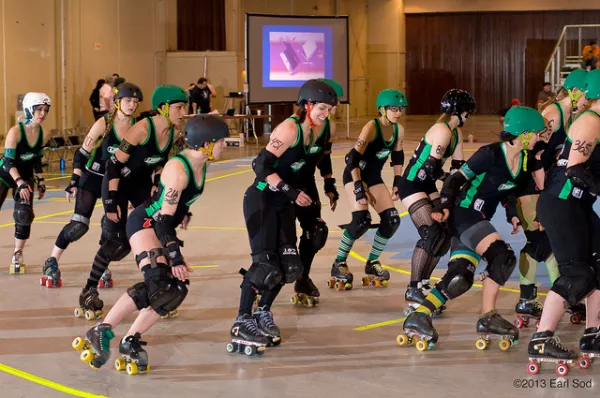
The Lausche Center was the scene of two hard fought victories for Columbus' own hometown heroines on March 8 against 39th ranked Nashville's Music City Roller Girls. Both Ohio's charter team, the OHRG All Stars, and their B-Team, Gang Green, showed their tenacity and endurance as they fought their way to second half wins in front of a near capacity crowd of more than 750 cheering fans.
The first bout of the night saw the two all-star teams face off in what was slated to be a classic struggle of offense versus defense but turned into something very different. Nashville brought a solid offense built around jammers Chelsea Daggers and Ann T. Histamine as well as a new defensive tactic of stacking up on the inside line and blocking OHRG's jammers in tandem.
The first half began neck and neck through the eighteenth jam with the lead changing hands four times and the score nearly tied at 46 to 47 with Nashville in the lead. Nashville's Phantom Power scored 14 points during a power jam in the nineteenth with Ohio's Outta My Wayman in the penalty box and momentum shifting to Music City.
Image
On March 8th, the Ohio Roller Girls (OHRG) will begin their season with a slam. The season opener will be a home bout against Nashville Roller Girl and may be a classic struggle. OHRG has not played against Nashville since 2010 when they were defeated handily despite predictions of a victory. Nashville started the season ranked 39 in the world but lost their season opener to Evansville Indiana by nearly 50 points in a close contest.
Nashville has made it to the playoffs in the past but does not have the playoff record that OHRG does.
The bout looks to be a classic battle between offensive and defensive minded teams. According to OHRG nine year veteran Amy Spears, who skates under her own name, Nashville can be expected to rotate players through the jammer position. The Nashville team has “Veteran Skaters, this should be a good game.” Spears continued by saying their rotation tactics give their team “a lot of breadth.” Nashville does feature memorable offensive players, including jammer Four Leaf Roller, who was termed “Very Strong.”
22nd Ranked Ohio will focus on their defense according to both Spears and OHRG veteran Bratislava Bruiser, or Bruiser for short.
Image

Abbey Gray had a season she thought she could never top last year. As a sophomore for the Otterbein University women’s track and field team, Gray set school indoor records in the 60 meter dash (8.01 seconds) and 60 meter hurdles (9.14).
However it took Gray all of five meets this winter to reset those records. The graduate of Waynesfield-Goshen High School topped her hurdle record by running a 9.02 in a preliminary heat of the SPIRE Indoor Track and Field Championships Jan. 31 and Feb. 1 in Geneva, Ohio. She then reset the hurdle record (8.97) and the 60 dash record (7.98) at the All-Ohio meet Feb. 15 at Otterbein.
“When I came in as a freshman, I saw all the upper classmen and you think about being that good one day,” says Gray, who is ranked 11th nationally in the 60 hurdles in the Feb. 26 NCAA Division III Event Report. “To (have a school record) feels really incredible.”
This winter Gray has avoided the injuries that slowed her down her previous two seasons with Otterbein.