
Local
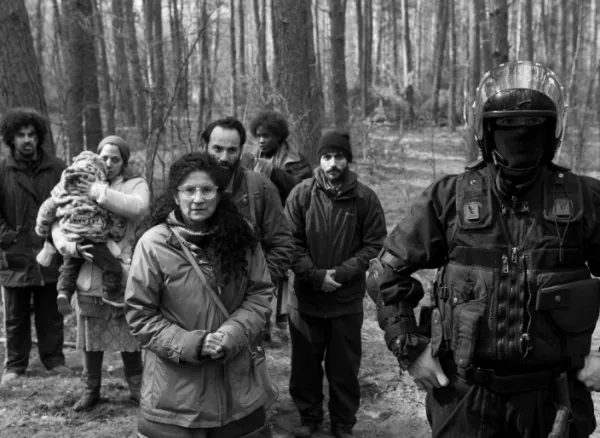
The life of a migrant is an unending battle for survival.
That was the message delivered by 2023’s Io Capitano, the story of two Senegalese teens’ perilous attempt to reach Europe. And it’s a message that comes across even more terrifyingly in Agnieszka Holland’s Green Border.
The acclaimed director sets her tale in a specific time and place: the border between Poland and Belarus in 2021. The year is significant because that’s when Belarusian dictator Alexander Lukashenko encouraged desperate people from around the world to travel to his communist country, where they supposedly would be guaranteed safe passage to Poland and the rest of the European Union.
As the film opens, we meet several people who’ve taken advantage of Lukashenko’s offer by catching a flight to Belarus. Among them are Bashir and Amina (Jalal Altawil and Dalia Naous), a Syrian couple who are traveling with an older relative and three young children. There’s also Leila (Behi Djanati Atai), an Afghan teacher fleeing Taliban persecution.
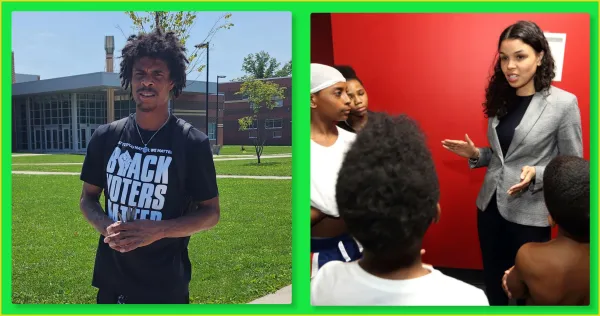
Columbus “heat islands” are in full effect for yet another summer, but many in the community may not be aware there’s a burgeoning movement of young African American activists who are focusing their attention to climate change and seeking to reverse the damage it’s doing to our urban neighborhoods.
Kwesi Low is one of these activists (pictured above on left). He works with former Congressional candidate Morgan Harper to help run her grassroots organization Columbus Stand Up. The 41-year-old also helped run her 2020 Democrat primary campaign against Joyce Beatty, kickstarting his transition from purely community organizing to electoral politics.
Intriguing and eye-opening is how that primary in some ways mirrors the impact climate change is having on urban neighborhoods. Low admits Morgan underperformed in Ohio’s urban areas where support should have been overwhelming, but never materialized.
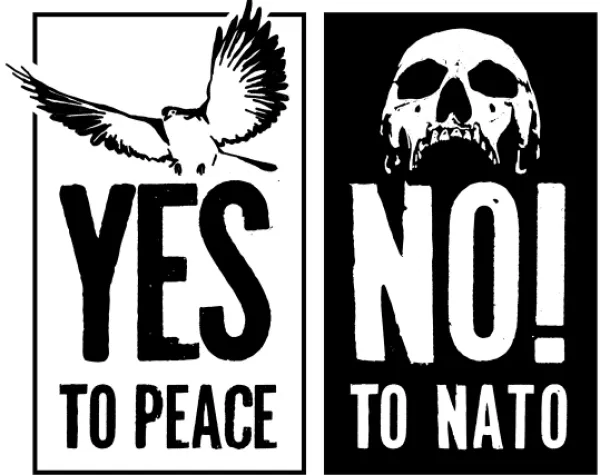
World BEYOND War is part of a large coalition that has organized a peace summit on July 6 in Washington, D.C. and a rally at the White House on July 7. These events are happening just prior to the NATO summit that begins on July 9.
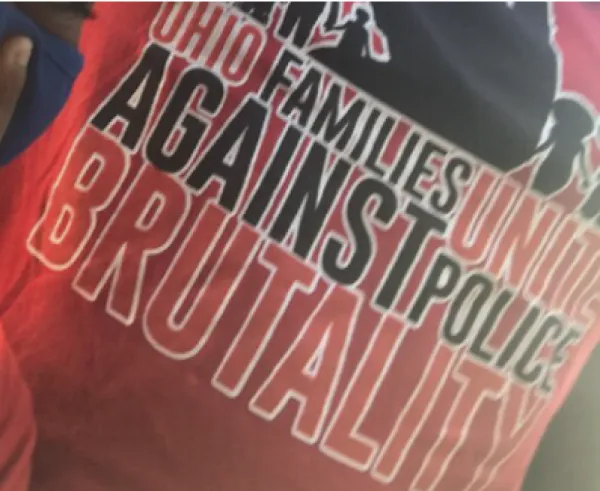
Early Saturday evening on June 29, members of the Dayton Police Department chased, shot down, and ultimately killed a teenager. The shooting occurred moments after they sped into the Negley Place neighborhood, where multiple young people were gathered outside. Families were present and outside all along the neighborhood streets.
Officers have not released the names of those who fired their weapons, nor have they released many details other than heavily edited and redacted body camera footage.
Rather than invite the Bureau of Criminal Investigation to review the officers’ conduct, as is proper procedure following an officer-involved shooting in the community, the Dayton Police Department has asked close ally Montgomery County Sheriff’s Office to review the incident, and has promised to conduct an internal investigation.
Ohio Families Unite Against Police Brutality, The FUDGE Foundation, Black Lives Matter Dayton, and OFUPAC have the following demands – 1. BCI must be invited in to investigate the conduct of DPD both during the July 29 incident and following.
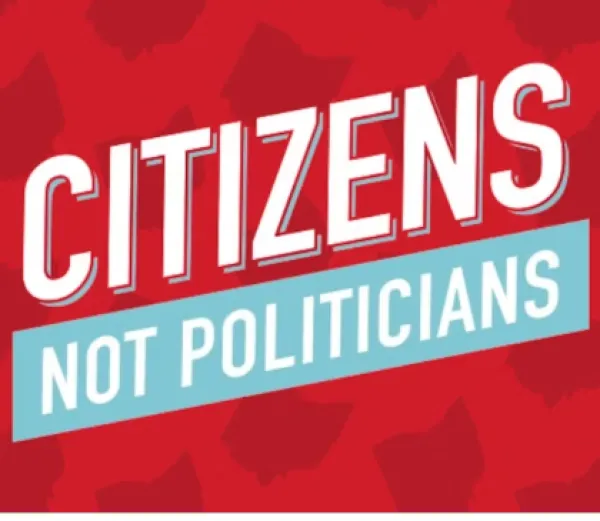
Monday, July 1, 2024, 12:00 – 1:00 PM
Location: Ohio Statehouse, 1 Capitol Square, Columbus, Atrium.
Ohioans from across the state are coming together to demand an end to gerrymandering and ensure that our voting districts are drawn by citizens, not politicians. Join us as we rally at the Ohio Statehouse Atrium to celebrate the accomplishment of delivering the required signatures to the Ohio Secretary of State's Office to put the Citizens Not Politicians amendment on the Nov. 5th ballot.
This historic event will feature hundreds of volunteers from across Ohio gathering to send a message to the gerrymandering Ohio politicians who work in the People's House. The rally will be headlined by retired Ohio Supreme Court Chief Justice Maureen O'Connor and other leaders of our diverse, nonpartisan coalition. Doors open at 11:30. Arrive early to come through security. Rally begins at 12.
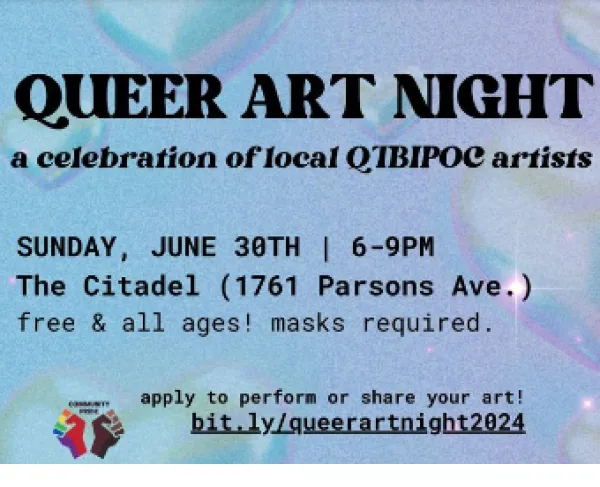
Sunday, June 30, 6pm, The Citadel, 1761 Parsons Ave.
Join Community Pride for an evening of artistic expression and celebration of local artists at Queer Art Night!
Queer Art Night is a heartfelt showcase of the incredible talents across Columbus’ QTBIPOC community. The lineup features a range of musicians, performers, live artists, and more who will fill the night with their amazing creative energy.
Whether you’re an art enthusiast or just looking for a space to connect, Queer Art Night welcomes folks for a night highlighting the power of art in our community. There will also be a community art piece we will encourage attendees to contribute to — so come out and bring a friend!
Accessibility Information
• Masks are required throughout the space and will be provided at the door. We ask that if folks need to unmask for drinks/food that they do so outside. Our safety team will be reminding folks to remain masked, and if you cannot respect this, you will be asked to leave. There will also be signage posted.
• There will be two air purifiers in the space. We will run these in the space for an hour prior to the attendees’ arrival.
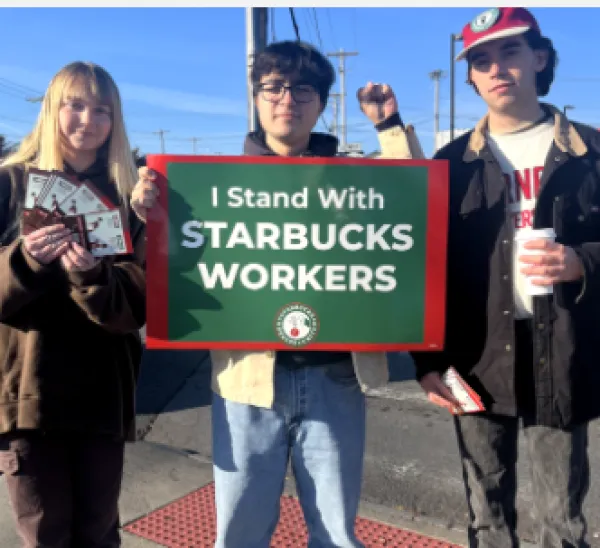
With dozens of union wins over the past two months, a wave of Starbucks worker victories continued Wednesday as workers at the Reynoldsburg location at 8070 E Broad Street voted to join Starbucks Workers United. They joined partners at twenty stores who voted to join this week and more than 10,500 workers at more than 430 stores nationwide who have unionized with Starbucks Workers United in the past three years. With a vote of 10-2, partners at the store became the 22nd Starbucks location in Ohio to join Starbucks Workers United.
"If I go to my manager for help, nothing happens. If we all go together, Starbucks has no choice but to listen- that’s why we’re unionizing." said Ash Wearly (he/him), a barista at the East Broad store.
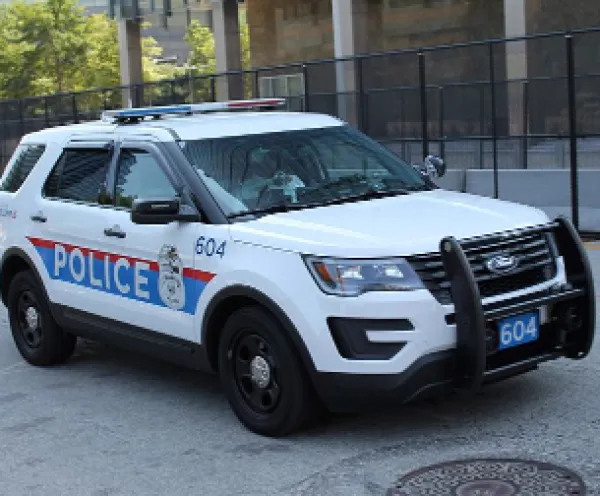
On Monday, July 1, the City of Columbus will put a local activist on trial for alleged jaywalking and obstruction of official business. These charges are part of an ongoing practice of the City’s police department and City Attorney's office in retaliatory targeting of local activists with pretextual charges when they advocate for human rights.
As reported in the Columbus Free Press in 20201, and as captured on police body camera footage in March of 20242, Columbus Police officers repeatedly admit to a policy of targeting peaceful protesters exercising their First Amendment rights.
Elizabeth Andromeda, who uses an electric wheelchair due to quadriplegia, is a familiar presence at peaceful protests in Columbus. She has previously faced charges for peaceful actions taken in protest of violent efforts to evict encampments of unhoused residents in Columbus. Despite the illegitimate nature of the charges, the City Attorney's office has chosen to pursue the case.
Mx. Andromeda maintains her innocence and expects to be acquitted on July 1st.
Mx. Andromeda makes the following statement:
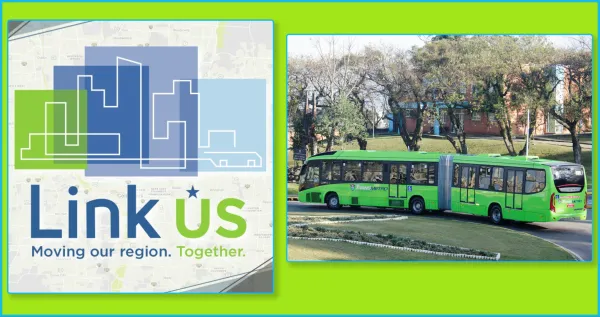
“No Rail, No Vote” was recently posted to r/Columbus Reddit, foreshadowing a potential grassroots effort to derail the Central Ohio Transit Authority (COTA)’s November 0.75 percent sales tax levy for rapid transit bus corridors or Bus Rapid Transit (BRT).
The LinkUS Mobility Initiative is the billion(s) dollar plan to increase Columbus’s public transit mobility options other than motor vehicles so to address the huge population spike regional leaders are predicting over the next twenty to thirty years. Estimates have varied widely, from $2 to $8 billion, on what the final LinkUS cost to taxpayers will be.
Initiated in 2020 by both COTA and the Mid-Ohio Regional Planning Committee (MORPC), the plan has designs on five Columbus corridors, such as West Broad and Olentangy River Road.
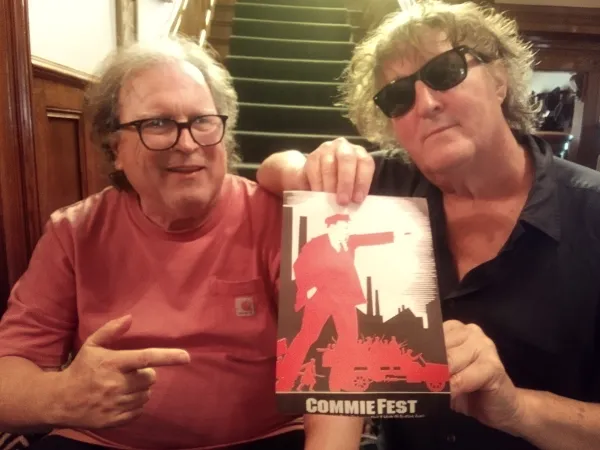
Listen to "Everybody Knows with Dr. Bob and Dan-o" on WGRN 91.9FM on Fridays at 11pm or streaming at wgrn.org.
They play tunes by bands that have performed at past Community Festivals and talk about their experiences.
Free Press Network radio archive.