
Local

While regulators catch them venting gas for 60 hours straight, the company pushes "chemical recycling" pilot with East Palestine chemical.
HEBRON, OH — In case you missed it, the Buckeye Environmental Network is exposing a critical public health failure in Licking County. Freepoint Eco-Systems has been slapped with its third air permit violation in a single year by the Ohio EPA.
While this company quietly admitted to illegally venting volatile chemicals 79 times, they are simultaneously seeking to expand their facility to "recycle" PVC—a process involving the same toxic chemical behind the East Palestine disaster.
THE FACTS MEDIA OUTLETS ARE MISSING:
1. A 60-Hour Chemical Release This wasn't a minor leak. Between February and June 2025, Freepoint bypassed their mandatory vapor combustors 79 separate times.
One single event lasted 59 hours—nearly two and a half days of continuous, unpermitted venting to an open flare.
This is the third time in 12 months they've been cited (previous violations were for excessive particulate matter).
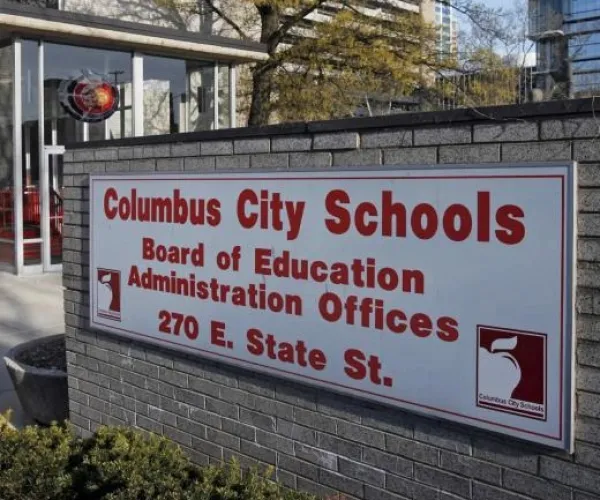
Republicans aren’t the only people who support private schools in Ohio.
The Columbus City Schools (CCS) Board of Education also wants to make private schools the best they can be. Need proof?
There are lots of cuts that the Board of Education are talking about to save money, but they keep ignoring the two most obvious. They ignore these two choices, because not to, would affect the administrators in the Central Office (over 250 full-time plus their support staff).
On December 8, 2019, the former superintendent got the paperwork approved for CCS to pay the retirement contribution for everyone in the Central Office. That means that every year since 2019 an additional 5-6 million dollars have gone into the pockets of the administrators in the Central Office instead of helping the students. Now with budget cuts on the horizon the entire Board of Education has suddenly forgotten this selfish decision.
Showing how selfish and greedy they are? That’s a great way to help promote Columbus private schools!
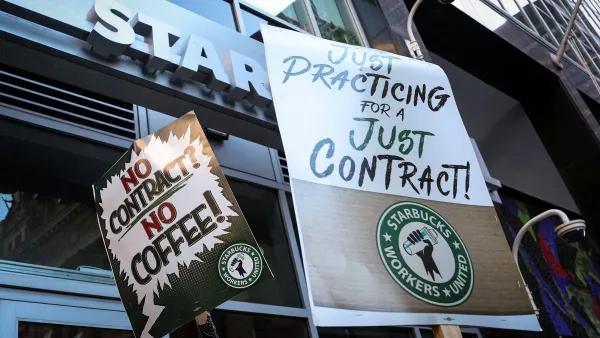
Tuesday, Nov 25th from 8am - noon
8070 E Broad St
Join Starbucks union baristas in Central Ohio!
Starbucks Workers across The United States have been fighting for a union contract for four years. In 2024 we started contract negotiations with the company and reached agreements that address many of our biggest issues. However, Starbucks has stalled negotiating increases to our wages and we have reached a critical moment in our campaign requiring a massive strike across our 600+ unionized stores, starting on Red Cup Day. The holiday is both Starbucks highest grossing season, as well as one of the most financially stressful for workers.
There are 19 Unionized Starbucks stores in Columbus, accounting for almost one third of the company owned locations. Your donations will support striking workers and greatly offset our financial burdens during this critical moment. Please give what you can and help support workers fighting for their rights!
The weather is looking dreary so make sure to layer up and bring an umbrella/raincoat.

In an election that signaled both political and generational change, longtime Hilliard resident Nadia Rasul emerged as the top vote-getter in the November 4, 2025 City Council race securing one of four open seats and becoming the first Muslim woman ever elected to Hilliard’s council.
Rasul’s victory was decisive and historic, but according to her, the reason she won was simple: “People want to feel heard.”
In an interview following the election, Rasul said that many Hilliard residents feel their voices come too late in the decision-making process. By the time citizens deliver public comments, the council has often already signaled how it intends to vote.
“That’s why people are frustrated,” she said. “They want a city government that listens before decisions are made.”
Haga clic aquí para español
Unless you’ve recently been abducted by ICE you already know about Columbus City Councilmember Emanuel Remy and the $84,700 paid to his staff member for his verbal abuse (our tax dollars mind you, not his). He has lost the trust of the people he is supposed to represent, but ran unopposed on November 4 thanks to the gerrymandered “At-Large” voting system where all competition is crushed without mercy… but you’re missing something.
One of the last independent journalists in Columbus, D.J. Byrnes AKA “The Rooster,” broke the story before the November 4 election. If you subscribe to his online news you would know about it (you should). Would that news have affected the Vogel vs. Ross District 7 race? Yes, it would have.
So what did all of the corporate-owned media outlets do about it? Didn’t they do their civic duty to inform the people of Columbus all about what a terrible person Emanuel Remy has been?
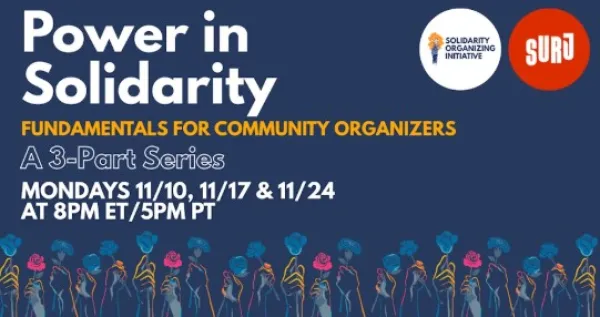
Monday, November 24, 2025, 8:00 – 9:15 PM
Register here
Join Showing Up for Racial Justice (SURJ) and the Solidarity Organizing Initiative (SOI) for Power in Solidarity — a powerful, three-part training series designed to ground you in the tools and practices that build real community power.
Together, we’ll explore:
Organizing 101: The fundamentals of community organizingShared Interest Storytelling: Connecting through values and experiencesListening & 1:1s: How to build trust and bring people into the workRunning Effective Meetings: Tools to strengthen your organizing spacesThis series is great for:
Monday, November 24, 2025, 8:00 – 9:15 PM
Register here
Join Showing Up for Racial Justice (SURJ) and the Solidarity Organizing Initiative (SOI) for Power in Solidarity — a powerful, three-part training series designed to ground you in the tools and practices that build real community power.
Together, we’ll explore:
Organizing 101: The fundamentals of community organizingShared Interest Storytelling: Connecting through values and experiencesListening & 1:1s: How to build trust and bring people into the workRunning Effective Meetings: Tools to strengthen your organizing spacesThis series is great for:

Sunday, November 23, 2025 - 1:15pm
Old First Presbyterian Church, 1101 Bryden Rd., Columbus
We are hosting a third community coversation on immigration and our response.
Collaboration with Black Men Build, Interfaith Association of Central Ohio, and others.
Meal provided.

There wasn’t a secret handshake. No incense or candles.
On a whim, I attended a meeting of the Columbus Democratic Socialists of America meeting on November 22. I had no idea what to expect, but I knew I was not satisfied with how Franklin County or the Columbus city government had been making decisions. To my surprise, I was surrounded by a diverse group of about a hundred other people who felt the same way.
Sitting in front of me was the legendary Joe Motil, former candidate for mayor. Sitting to my right was Jesse Vogel, former candidate for City Council District 7 (who won the voters of District 7, but still lost the election). And behind me sat Kate Curry-Da-Souza who ran as an independent in the primary for District 7 City Council.
Everyone had different, but authentic complaints.

Haga clic aquí para español
A Pickaway County resident spoke out last night against re-zoning for the Anduril Arsenal-1 Hypersonic Missile plant proposed for his community, warning that a munitions facility in central Ohio could be a target in future wars.
Free Press reporters attended the Pickaway County, Madison Township Zoning Commission meeting Thursday, November 20, observing a presentation by proponents of re-zoning requests by Anduril plant representatives and witnessed the adamant remarks from the opposition.