
Environment
 his year’s Earth Day summit (April 22) and Joe Biden’s pledge to halve American carbon emissions by 2030 come with the 35th commemoration (April 26) of the Chernobyl catastrophe.
Together they evoke atomic power’s epic failure in at least 80 different ways:

“Only when the last tree has died, the last river has been poisoned and the last fish has been caught will we realize we cannot eat money.” -- Cree Indian Proverb
“Oh Beautiful for smoggy skies, insecticided grain,
For strip-mined mountain's majesty above the asphalt plain.
America, America, man sheds his waste on thee,
And hides the pines with billboard signs, from sea to oily sea.” ~George Carlin
“We do not inherit the earth from our ancestors, we borrow it from our children.” ~ Native American Proverb
“Always drink upstream from the herd.” -- from “A Cowboy’s Guide to Life”

A new report, published on 14 March, 2021 in the Royal Swedish Academy of Sciences' journal Ambio, points out that humanity is hurtling towards destruction unless we have the collective wisdom to change course quickly. Here is a link to the article:
https://link.springer.com/article/10.1007/s13280-021-01544-8
The Ambio article was written as part of the preparation for a meeting of Nobel Prize winners to discuss the state of the planet. The virtual meeting will be held on April 26-28, 2021.
We must achieve a steady-state economic system
A steady-state economic system is necessary because neither population growth nor economic growth can continue indefinitely on a finite earth. No one can maintain that exponential industrial growth is sustainable in the long run except by refusing to look more than a short distance into the future.
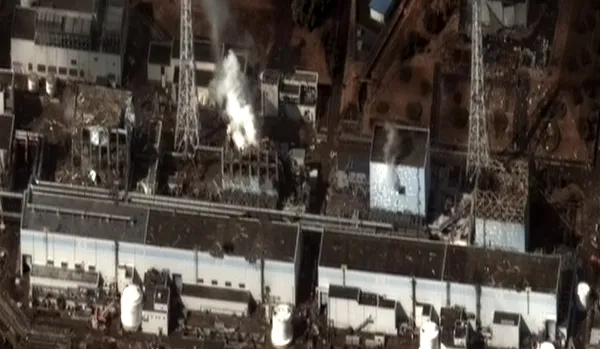
Fukushima Daiichi’s multiple nuclear reactor meltdowns started ten years ago. They are not over. They are not even close to over. Nuclear disasters don’t ever end. The radioactive danger slowly decays over decades, during which it needs constant safety management until radiation measurements are below “acceptable levels.” That’s still not safe.
Fukushima continues to be a low-level nuclear disaster, as it has been for ten years. The initial explosive accident has been mitigated, but the danger has never been fully contained. Recent news from Fukushima is hardly reassuring.

The cornerstone of every social structure is its belief system, and those who control and benefit the most from the system have one primary job: Keep its myths and scapegoats viable.
That explains the emergence, in recent weeks, among right-wing politicians and media hacks, of a truly bizarre and unexpected scapegoat: the evil windmill!
In the wake of the winter storm that shut down the Texas power grid and deprived much of its population of electricity, warmth and drinkable water, these hacks and pols have been desperate to divert public awareness from basic facts, such as the utter failure of the state’s deregulated power grid to winterize and remain functional in difficult weather, and — ultimately far worse — the looming ecological collapse caused in large part by ongoing fossil fuel extraction and consumption.

With all the media hoopla last week about the Perseverance rover, frequently unreported was that its energy source is plutonium—considered the most lethal of all radioactive substances—and nowhere in media that NASA projected 1-in-960 odds of the plutonium being released in an accident on the mission.
“A ‘1-in-960 chance’ of a deadly plutonium release is a real concern—gamblers in Las Vegas would be happy with those odds,” says Bruce Gagnon, coordinator of the Global Network Against Weapons and Nuclear Power in Space.
Indeed, big-money lotteries have odds far higher than 1-in-960 and routinely people win those lotteries.
Further, NASA’s Supplementary Environmental Impact Statement (SEIS) for the $3.7 billion mission acknowledges that an “alternative” power source for Perseverance could have been solar energy. Solar energy using photovoltaic panels has been the power source for a succession of Mars rovers.

 or decades, The New Yorker has set a high bar for journalistic excellence.
Graced by its signature brand of droll, sophisticated cartooning, the magazine’s exquisitely edited screeds have reliably delivered profound analyses of the world’s most pressing issues.
But in a breathless, amateurish pursuit of atomic energy, the editorial staff has leapt into a sad sinkhole of radioactive mediocracy.
The latest is Rebecca Tuhus-Dubrow’s shallow, shoddy “Activists Who Embrace Nuclear Power,” yet another tedious plea that we learn to love the Peaceful Atom.
For at least a century, countless scientific pioneers have exposed the murderous realities of nuclear radiation. Legendary researchers like Marie Curie, Alice Stewart, Rosalie Bertell, Helen Caldicott, John Gofman, Ernest Sternglass, Thomas Mancuso, Karl Z. Morgan, Samuel Epstein, Robert Alvarez, Arnie Gundersen, Amory Lovins, and others have issued vital warnings.

A report advocating rocket propulsion by nuclear power for U.S. missions to Mars, written by a committee packed with individuals deeply involved in nuclear power, was issued last week by the National Academies of Sciences, Engineering and Medicine.
The 104-page report also lays out “synergies” in space nuclear activities between the National Aeronautics and Space Administration and the U.S. military, something not advanced explicitly since the founding of NASA as supposedly a civilian agency in 1958.
The report states: “Space nuclear propulsion and power systems have the potential to provide the United States with military advantages…NASA could benefit programmatically by working with a DoD [Department of Defense] program having national security objectives.”’
The report was produced “by contract” with NASA, it states.
The National Academies of Sciences, Engineering and Medicine (NAS) describe
themselves as having been “created to advise the nation” with “independent, objective advice to inform policy.”
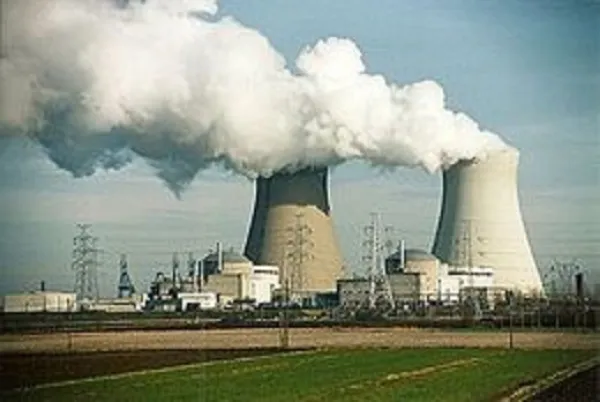
Of all the daunting tasks Joe Biden faces, especially vital is the inspection of dangerously embrittled atomic reactors still operating in the United States.
A meltdown at any one of them would threaten the health and safety of millions of people while causing major impact to an already struggling economy. The COVID-19 pandemic would complicate and add to the disaster. A nuclear power plant catastrophe would severely threaten accomplishments Biden is hoping to achieve in his presidency.
The problem of embrittlement is on the top of the list of nuclear power concerns. The “average age”—length of operation—of nuclear power plants in the U.S., the federal government’s Energy information Agency, reported in 2019 was 38 years.
Now, in 2021, the “average age” of nuclear power plants in the U.S. is 40 years—the length of time originally seen when nuclear power began in the U.S. for how long plants could operate before embrittlement set in.

The U.S. Nuclear Regulatory Commission held a “public meeting” today on what it titled “Development of Guidance Documents To Support License Renewal For 100 Years Of Plant Operation.”
Comments from the “public” were strongly opposed to the NRC’s desire for it to let nuclear power plants run for a century.
“I request you pause and consider before you go ahead on this reckless path,” testified Michel Lee, chairman of the New York-based Council on Intelligent Energy & Conservation Policy.
“Our position and that of our constituents is a resounding no,” declared Paul Gunter, director of the Reactor Oversight Project at the national organization Beyond Nuclear.
“It’s time to stop this whole nuke con job,” said Erica Gray, nuclear issues chair of the Virginia Sierra Club. There is “no solution” to dealing with nuclear waste, she said. It is “unethical to continue to make the most toxic waste known to mankind.” And, “renewable energy” with solar and wind “can power the world.”
Jan Boudart, a board member of the Chicago-based Nuclear Energy Information Service, spoke, too, of the lack of consideration of nuclear waste.