
Environment
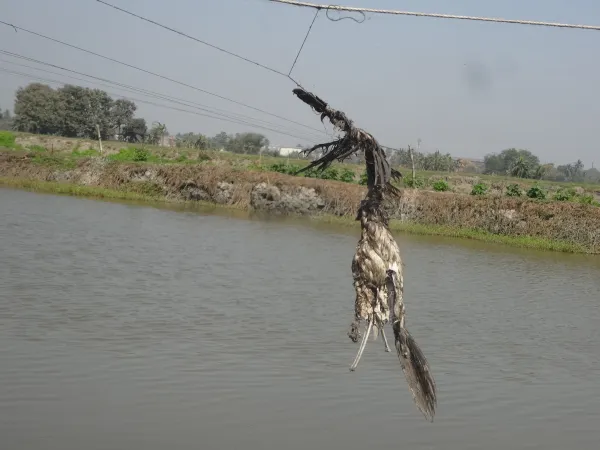
In August 2010, the secretary-general of the UN Convention on Biological Diversity, Ahmed Djoghlaf, warned that ‘We are losing biodiversity at an unprecedented rate.’ According to the UN Environment Program, ‘the Earth is in the midst of a mass extinction of life’ with scientists estimating that ‘150-200 species of plant, insect, bird and mammal become extinct every 24 hours’ which is nearly 1,000 times the ‘natural’ or ‘background’ rate. Moreover, it ‘is greater than anything the world has experienced since the vanishing of the dinosaurs nearly 65m years ago.’ See ‘Protect nature for world economic security, warns UN biodiversity chief’.
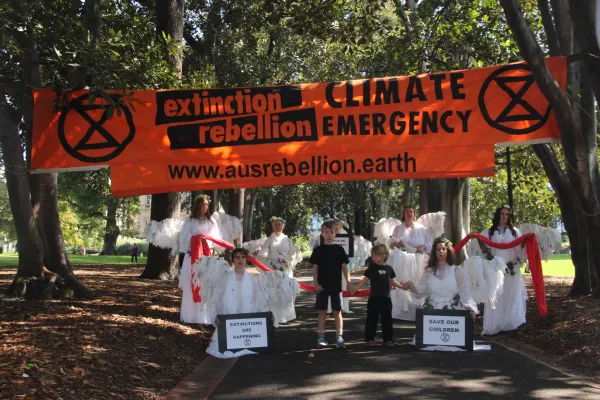
As the greenhouse gas emissions of human society push the earth towards catastrophic climate change, rates of extinction in the biosphere will certainly become higher.
Are humans threatened with extinction?
What about our own species? Are we too threatened with extinction?
There are certainly several threatened catastrophes that might greatly reduce the global population of humans. In a thermonuclear war, followed by nuclear winter, a large part of the world's population might perish.
I would like to announce the publication of a new book, in which I have tried to sketch human history, from earliest times until the present, against a cosmic backdrop. The book may be downloaded and circulated free of charge from the following link:
http://eacpe.org/app/wp-content/uploads/2020/11/A-History-of-the-Earth-by-John-Scales-Avery.pdf
The place of humans in nature
According to modern cosmology, the universe is almost unimaginably vast. It is estimated that there are 1,000,000,000,000,000,000,000 stars in the observable universe. Of these, many stars have planets on which life is likely to have developed. Thus our earth and its life forms are by no means unique.
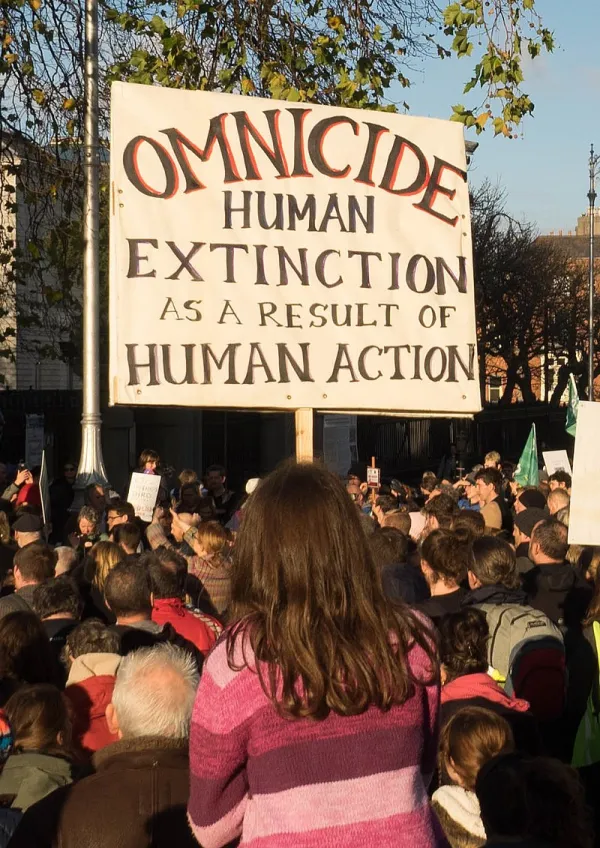
At what is arguably the most important time in human history, with Homo Sapiens confronted by an enormous range of violent challenges that threaten our very survival, the only question of any genuine importance is this: Can we craft and implement a strategy to end the violence, particularly in each and all of its extinction-threatening dimensions, to ensure that humanity has a chance to thrive on planet Earth indefinitely into the future? But few are asking that question.
And, unfortunately, if one candidly considers the evidence in several critical domains – notably the threat of nuclear war, the deployment of 5G technology, the collapse of biodiversity and the climate catastrophe – there is little genuine room for optimism. This, of course, is not a reflection on the efforts of those committed to the attempt but it is a measure of the enormity of the task given the almost endless violence perpetrated by so many human inhabitants of Earth.
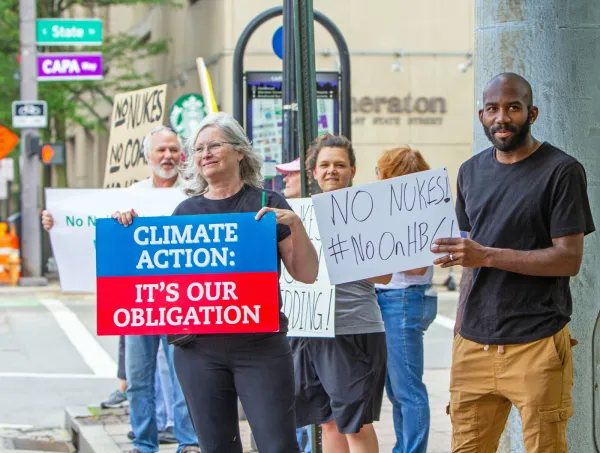
Hi folks,
SInce the House and Senate have thus far refused to allow for public testimony on HB6 repeal legislation, we're joining with other groups calling for repeal to host our own online community hearings.
Starting next week, our coalition had scheduled three online hearings. These hearings will allow anyone that wants to, anywhere in the state, an opportunity to make their voice heard.
We will be sending out an email alert to recruit for the hearings and doing additional outreach but in the meantime, you can register for one of the hearings here:
https://www.eventbrite.com/e/ohioans-speak-out-repeal-house-bill-6-registration-125218430697
Below are the dates for currently scheduled online hearings
Wednesday, October 21 from 12 to 1:30 PM
Tuesday, October 27 from 5:30 to 7:30 PM
Thursday, October 29 from 5:30 to 7:30 PM

Two time scales
The central problem which the world faces in its attempts to avoid catastrophic climate change is a contrast of time scales. In order to save human civilization and the biosphere from the most catastrophic effects of climate change we need to act immediately. Fossil fuels must be left in the ground. Forests must be saved from destruction by beef or palm oil production.
These vitally necessary actions are opposed by powerful economic interests, by powerful fossil fuel corporations desperate to monetize their underground “assets”, and by corrupt politicians receiving money the beef or palm oil industries.
However, although some disastrous effects climate change are already visible, the worst of these calamities lie in the distant future. Therefore it is difficult to mobilize the political will for quick action. We need to act immediately, because of the danger of passing tipping points beyond which climate change will become irreversible despite human efforts to control it.
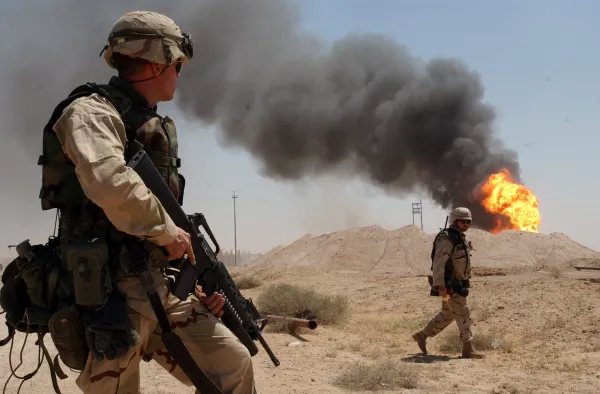
As we start the 21st century and the new millennium, our scientific and technological civilization seems to be entering a period of crisis. Today, for the first time in history, science has given to humans the possibility of a life of comfort, free from hunger and cold, and free from the constant threat of infectious disease. At the same time, science has given us the power to destroy civilization through thermonuclear war, as well as the power to make our planet uninhabitable through pollution and overpopulation. The question of which of these alternatives we choose is a matter of life or death to ourselves and our children.
The crisis of civilization, which we face today, has been produced by the rapidity with which science and technology have developed. Our institutions and ideas adjust too slowly to the change. The great challenge which history has given to our generation is the task of building new international political structures, which will be in harmony with modern technology. At the same time, we must develop a new global ethic, which will replace our narrow loyalties by loyalty to humanity as a whole.
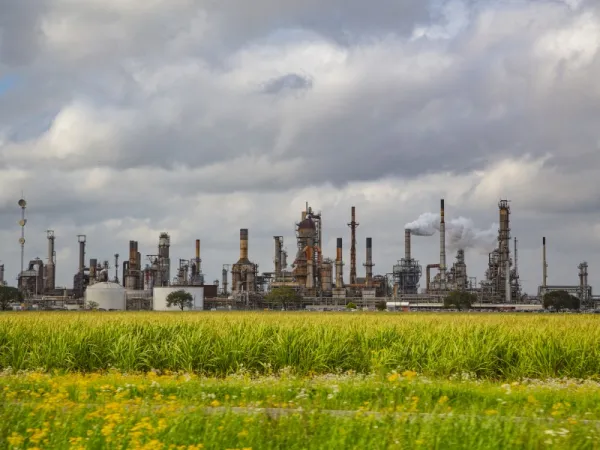
Shut up and let corporate America — and also, for that matter, corporate Taiwan — get on with its business. We have ethane to crack and plastic to produce. We dare not let America run out of shopping bags!
Environmental racism? Don’t be ridiculous.
This is the message the activists of Louisiana’s “Cancer Alley” — a heavily industrialized, 85-mile strip of land along the Mississippi River, between New Orleans and Baton Rouge — have gotten from the local powers that be regarding their determination to prevent the construction a gigantic, highly toxic, 14-plant plastics-production complex in their midst.
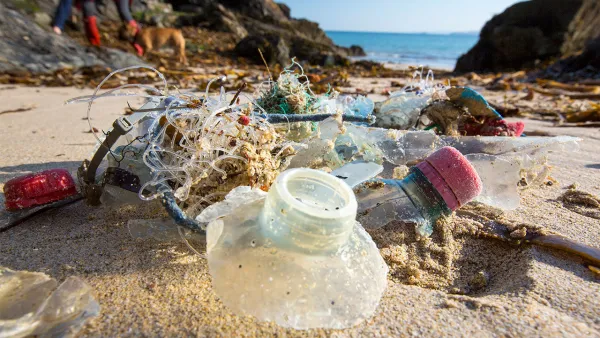
“Plastics!”
Yeah, it’s everywhere ... not just in grocery store aisles and department stores and every other commercial outlet you can think of, not to mention your own cupboards and closets and trashcans, but on the grass and on the sidewalks, in the landfills, in the lakes and rivers, in the oceans. And it doesn’t go away. Ever.
You know, it doesn’t biodegrade. And “the vast majority of all plastic made up to now, will likely not be recycled,” Zoë Schlanger writes at Quartz. “And it will exist virtually forever, crumbling into microplastics that show up most everywhere scientists look for them.”

Amidst an astonishing billion-dollar nuke reactor corruption scandal, one of the world’s richest wind resources—the key to Ohio’s economic and ecological future—is being trashed by a single sentence.
According to the American Wind Energy Association, Ohio is being robbed of $4 billion worth of industrial development, thousands of jobs, and a wealth of cheap, emissions-free energy by a single easily-removable clause in the Ohio Code.
How? In 2014, without public hearings, pro-fossil/nuke legislators slipped into law a requirement that wind turbines be sited at least 1300 feet from property lines. The previous requirement was 600 feet. There are no meaningful economic, ecological, or health/safety imperatives served by the additional set-back footage. No other state has such a requirement.
But by vastly expanding the land required for turbine siting, that single sentence stopped some $4 billion in pre-approved northern Ohio wind farm development.