
Environment
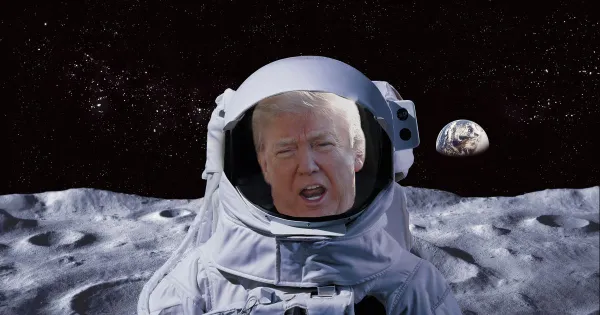
The Commander-in-Chief, President Donald Trump, has announced a new mission into the realm of martial excess. It is one is that will surely enrich the aerospace industry while spreading the global battlefield to a new dimension.
Trump is calling for the creation of a new Space Force as a sixth branch of the U.S. military, to militarize the heavens.
“It is not enough to merely have an American presence in space,” Trump told a meeting of the National Space Council in mid-June. “We must have American dominance in space.”
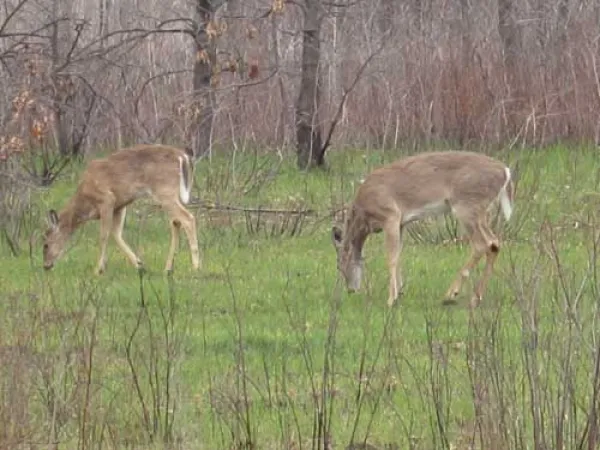
It's happening on commercial deer farms in Michigan, Wisconsin, Illinois, Iowa and Pennsylvania. Hundreds of captive deer stricken with the dreaded chronic wasting disease (CWD) are being euthanized.
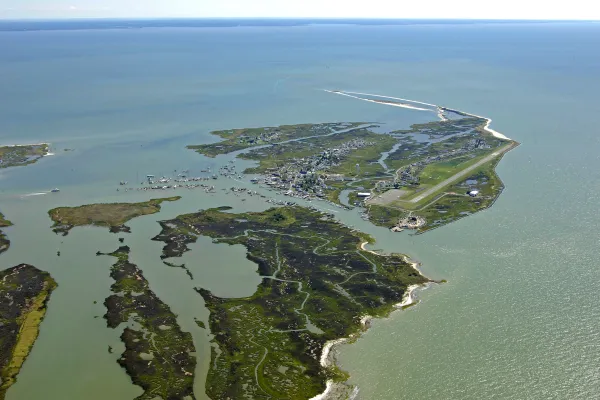
It’s nice to look down on the poor foolish residents of Tangier Island, a little speck of land sinking into the Chesapeake Bay. Some 87% of the residents who voted in 2016, voted for Trump. The Mayor of Tangier says that being mayor is only his second job; his first is killing some of what remain of the crabs in the Bay. Residents imagine that the U.S. government will save their island from going under by building a wall. They imagine that Trump will make that happen. Yet Trump famously told the mayor on the phone that there was nothing to worry about, that the island is not actually in any danger. Residents of Tangier say that they know what’s coming, but that they leave it up to “the Lord.”
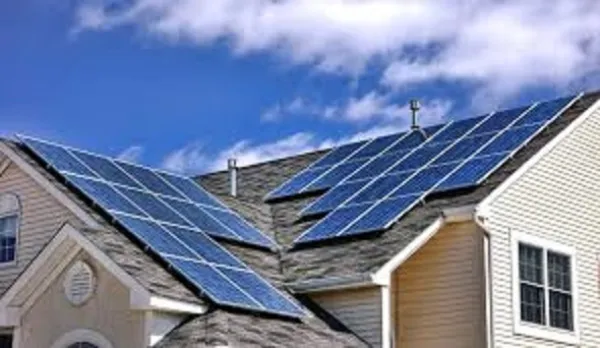
Some 360,000 Americans now work in the solar industry, more than in nukes and coal combined. In fact, more Americans are now working in California’s solar industry than are digging coal nationwide. And the U.S. wind business now employs more than 100,000 people.
But President Donald Trump wants to change that. He has already slammed the solar industry’s growth by slapping a 30 percent tariff on imported Chinese panels, slowing installations nationwide.


Friends, I want to tell you the very disturbing news of a new corporate-driven scheme to poison you, your family and your pets with radioactive waste.
Aqua Salina is a product you can purchase by the gallon at Lowe’s or a hardware store right now. It’s also sold in huge quantities to department of transportation regional garages for use as a de-icer. It’s bottled in the Cleveland area by an owner of several oil and gas wells. Aqua Salina has been sold for several years.
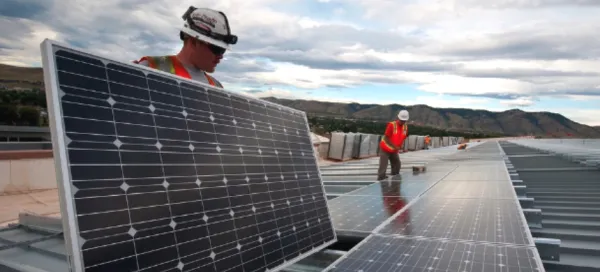
 uerto Rico has made history by becoming — briefly — the largest US territory or state to be powered almost entirely by renewable energy.
The corporate media has done all it can to black the story out.
The rising grassroots movement to totally rebuild Puerto Rico’s electric supply system with renewable energy and locally owned micro-grids poses a serious threat to the centralized, fossil-based corporate elite.
But two hurricanes and two human-error blackouts have opened the door to systemic change.
Here’s how:
Last September, Hurricane Irma blew through the Caribbean, passing over enough of Puerto Rico to plunge tens of thousands of people into darkness. Many of them are still without power.
Then Hurricane Maria shredded the island’s electric grid and blacked out its 3.4 million residents virtually in toto.
The island had two large wind farms, one of which was severely damaged. The other survived, but had no grid through which to distribute its electricity.
Some solar arrays on the island were also severely damaged.
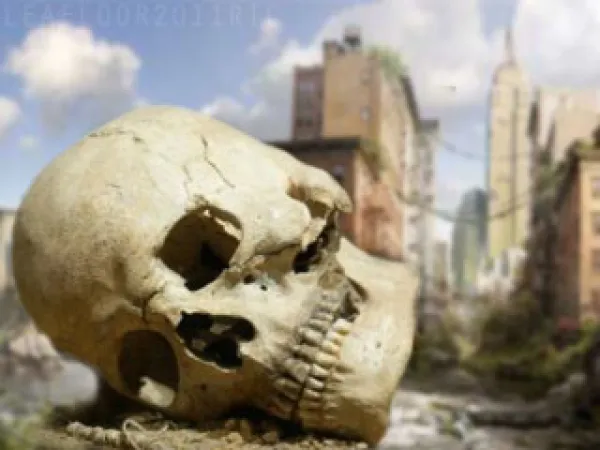
Anyone reading the scientific literature (or the progressive news outlets that truthfully report this literature) knows that homo sapiens sapiens is on the fast track to extinction, most likely some time between 2025 and 2040.
For a taste of the evidence in this regard focusing on the climate, see ‘Climate Collapse and Near Term Human Extinction’, ‘What They Won’t Tell You About Climate Catastrophe’, ‘Release of Arctic Methane “May Be Apocalyptic,” Study Warns’ and ‘7,000 underground [methane] gas bubbles poised to “explode” in Arctic’.
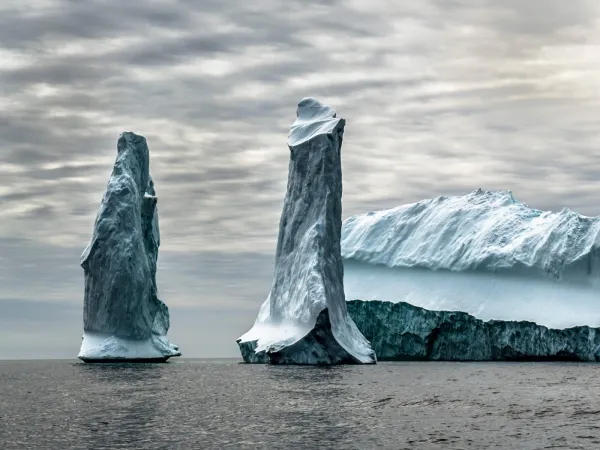
How close, how intimate, have you ever gotten with Greenland?
A new documentary called Stella Polaris, directed by Yatri Niehaus — part of Chicago’s tenth annual Peace on Earth Film Festival — takes you on a meditative journey to this lonely, extraordinary island, to its melting ice, its rampaging waters and crumbling glaciers, where climate change is a part of daily life, and where the native people have wisdom and heart to offer the rest of us.
It begins with a slow meditation on the beauty of the ice. Then, six minutes in, a wall of ice suddenly crashes into the ocean.
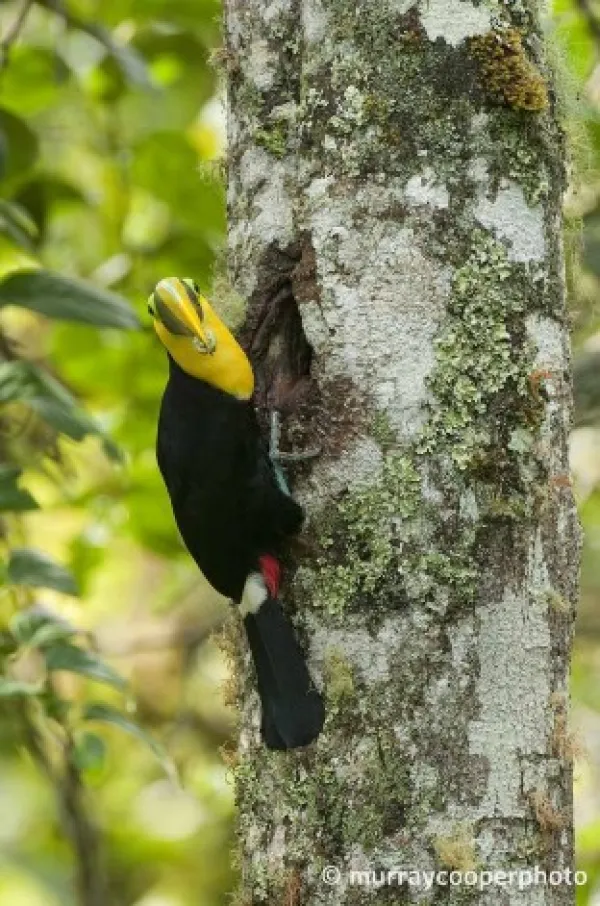
The tropical Andes of Ecuador are at the top of the world list of biodiversity hotspots in terms of vertebrate species, endemic vertebrates, and endemic plants. Ecuador has more orchid and hummingbird species than Brazil, which is 32 times larger, and more diversity than the entire USA.
In the last year, the Ecuadorean government has quietly granted mining concessions to over 1.7 million hectares (4.25 million acres) of forest reserves and indigenous territories. These were awarded to transnational corporations in closed-door deals without public knowledge or consent.
This is in direct violation of Ecuadorean law and international treaties, and will decimate headwater ecosystems and biodiversity hotspots of global significance. However, Ecuadorean groups think there is little chance of stopping the concessions using the law unless there is a groundswell of opposition from Ecuadorean society and strong expressions of international concern.
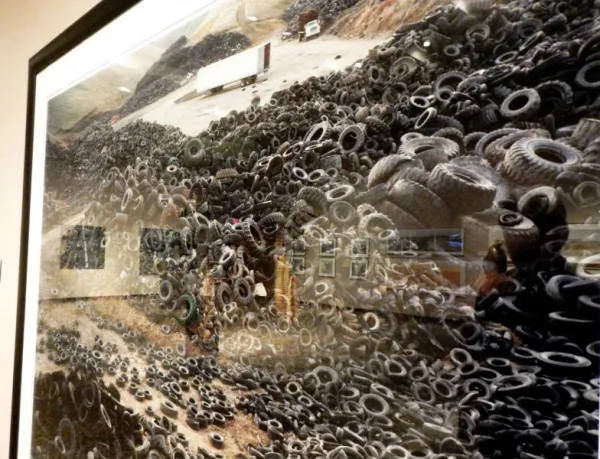
Is Earth the largest garbage dump in the Universe? I don’t know. But it’s a safe bet that Earth would be a contender were such a competition to be held. Let me explain why.
To start, just listing the types of rubbish generated by humans or the locations into which each of these is dumped is a staggering task beyond the scope of one article. Nevertheless, I will give you a reasonably comprehensive summary of the types of garbage being generated (focusing particularly on those that are less well known), the locations into which the garbage is being dumped and some indication of what is being done about it and what you can do too.
But before doing so, it is worth highlighting just why this is such a problem, prompting the United Nations Environment Programme to publish this recent report: ‘Towards a pollution-free planet’.