
Environment
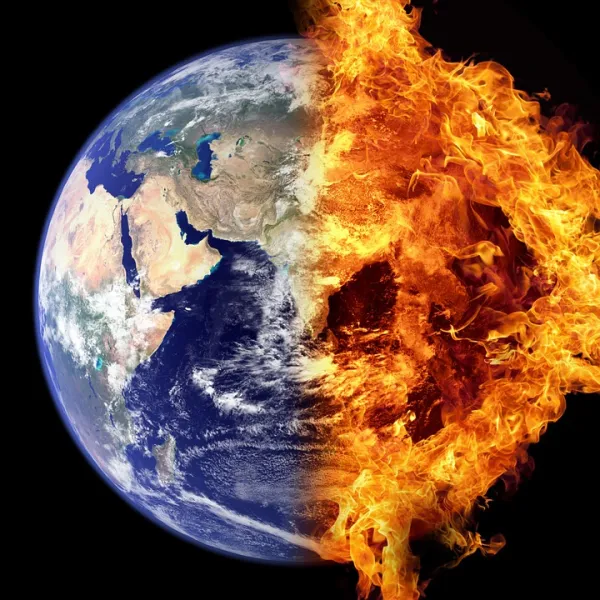
In honor of Earth Day, Ohio Republicans and Donald Trump in the White House have unleashed a two-prong attack to destroy clean air and clean water in the Buckeye State.
Ohio House Republicans destroy renewable energy
The Ohio House Republicans pushed through a bill ending government assistance for renewal wind and solar power in Ohio. By a 65 to 29 vote, House Bill 114 passed and will now go on to the Senate. Governor John Kasich vetoed similar legislation in December 2016. There were 66 House Republicans and it only takes 60 to override a veto. It would take 20 votes to override a Kasich veto in the Senate. Last December’s veto only garnered 18 Senate votes.

Elon Musk's SolarCity is completing the construction of its "Buffalo Billion" Gigafactory for photovoltaic (PV) cells near the Niagara River in Buffalo, New York. It will soon put 500 New Yorkers to work inside the 1.2 million-square-foot facility with another 700 nearby, ramping up to nearly 3,000 over the next few years.
The production of some 10,000 solar panels per day will put thousands of New Yorkers to work doing the installations. The panels will produce electricity cheaper, cleaner, more safely and more reliably than any fossil or nuclear source of power, including fracked gas, thus fueling a bright industrial future for the state.
With a little common sense from the governor, upstate New York could have many more of these massive factories, create many thousands of good, stable, high-paying jobs and solve its energy problems along the way.
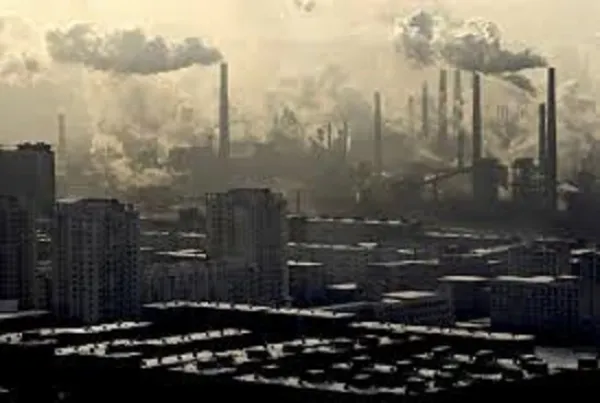
Donald Trump’s first budget makes his antipathy to the environment clear—and his love for fossil fuels and nuclear power even clearer.
In addition to slashing funding to the Environmental Protection Agency, he also announced this week that he wants massive rollbacks in automotive fuel efficiency standards and billions in new investments in nuclear weapons and storage for commercial nuclear waste.
 fter a week of limited coverage of “unimaginable levels” of radiation inside the remains of collapsed Unit 2 at Fukushima (see below), Nuclear-News.net reported February 11 that radiation levels are actually significantly higher than “unimaginable.”
Continuous, intense radiation, at 530 sieverts an hour (4 sieverts is a lethal level), was widely reported in early February 2017 – as if this were a new phenomenon. It’s not. Three reactors at Fukushima melted down during the earthquake-tsunami disaster on March 3, 2011, and the meltdowns never stopped. Radiation levels have been out of control ever since. As Fairewinds Energy Education noted in an email February 10:
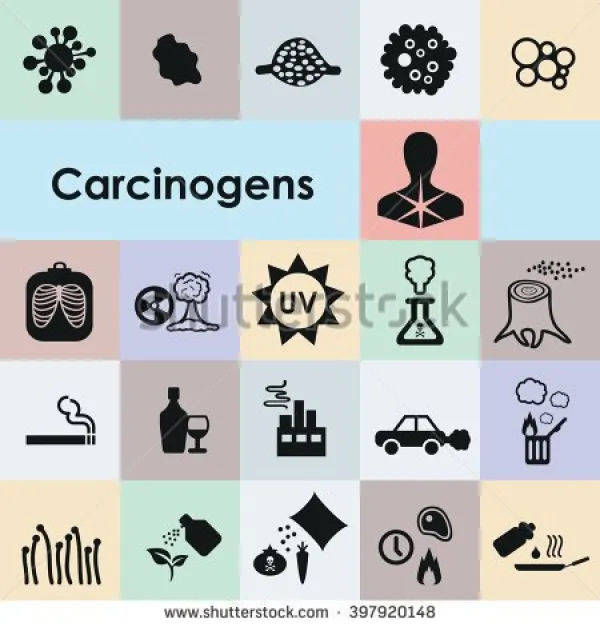
California can require Monsanto to label its popular weed killer Roundup as a carcinogen, although the corporation maintains that the product is harmless, according to a ruling by a judge in Fresno, California.
California would be the first state to order this level of labeling if this decision by the California Carcinogen Identification Committee is sustained by further court action. . Monsanto previously sued the nation's foremost agricultural producing state by filing court motions to the effect that California’s carcinogen committee acting under the powers given to it by Proposition 65, had illegally based their decision for mandatorily requiring the warnings on “erroneous” findings by an international health organization based in France.
What is Roundup and what is the problem with its chief ingredient, glyphosphate?
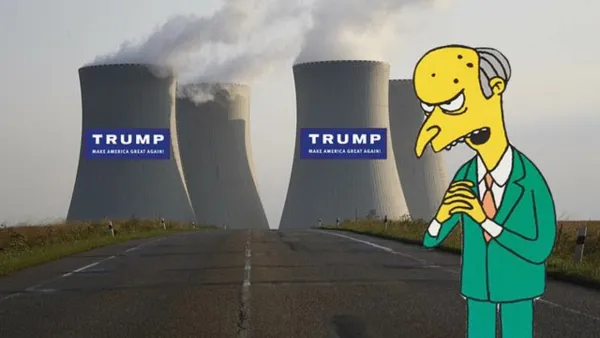
In the area of energy policy under the presidency of Donald Trump, two concerns loom above all others.
One is Trump’s support for nuclear power and fossil fuel energy, at a time when other powerful countries are going renewable. Trump’s economic commitments to nuclear energy and fossil fuels contrast sharply with China’s massive new commitment to energy sources including solar and wind. If China, the world’s number-two economy, joins Germany (number four) and possibly Japan (number three) in converting to 100 percent renewable sources, the U.S. economy will be left in the dust.

First published in The Progressive
As you ride the Amtrak along the Pacific coast between Los Angeles and San Diego, you pass the San Onofre nuclear power plant, home to three mammoth atomic reactors shut by citizen activism.
Framed by gorgeous sandy beaches and some of the best surf in California, the dead nukes stand in silent tribute to the popular demand for renewable energy. They attest to one of history’s most powerful and persistent nonviolent movements.
But 250 miles up the coast, two reactors still operate at Diablo Canyon, surrounded by a dozen earthquake faults. They’re less than seventy miles from the San Andreas, about half the distance of Fukushima from the quake line that destroyed it. Should any quakes strike while Diablo operates, the reactors could be reduced to rubble and the radioactive fallout would pour into Los Angeles.
As you ride the Amtrak along the Pacific coast between Los Angeles and San Diego, you pass the San Onofre nuclear power plant, home to three mammoth atomic reactors shut by citizen activism.
Framed by gorgeous sandy beaches and some of the best surf in California, the dead nukes stand in silent tribute to the popular demand for renewable energy. They attest to one of history’s most powerful and persistent nonviolent movements.
On November 15, 2016, the California Environmental Protection Agency’s Office of Environmental Heath Hazard Assessment’s (OEHHA), Carcinogen Identification Committee (CIC) met to decide whether to list aspartame as a carcinogen. Just to be clear, no listing decisions are made at meetings such as this one; instead, the CIC members “prioritize” the substance and that then determines whether or not the substance at issue has a chance at being put on California’s “Prop 65” list of known carcinogens.
Remember, Proposition 65 (or “Prop 65” as it is now popularly called) was the referendum measure passed into law by California voters in November 1986, thirty years ago. Prop 65 requires, among other things, that all known carcinogens be declared (usually on food and drink labels) to consumers. It is so pervasive that even residents in other States will often see Prop-65 warnings about carcinogenicity on food and drink labels or on websites when ordering.
The CIC Voting Process
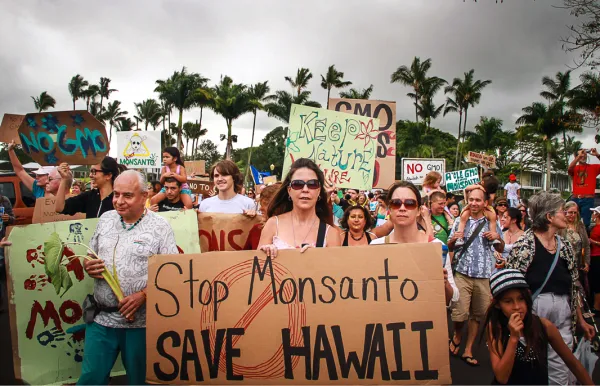
The US Court of Appeals ruled back in mid December that federal laws
cannot be used to prohibit states and counties from creating laws
regulating, labeling, and even banning genetically modified crops.
This monumental decision by the Ninth Circuit US Court of Appeals was a
ruling regarding whether federal and Hawaii state laws supersede the
authority of individual counties to regulate the use of genetically
modified crops and pesticide use.
Because of its almost limitless growing season and its being a testing
ground for all kinds of Monsanto genetic experimentation and
modifications, Hawaii has been in the middle of the debates over Genetic
Modification for decades as Monsanto and others have used the islands for
many kinds of agricultural research and local farmers have vigorously
resisted them. This is a victory for Hawaii's farmers and for the 7000
year old history of agriculture itself.
Many of these same companies have abused the very concept of research by
spraying 20 times more insecticides and pesticides than is permitted in
the mainland of the United States.