
Environment
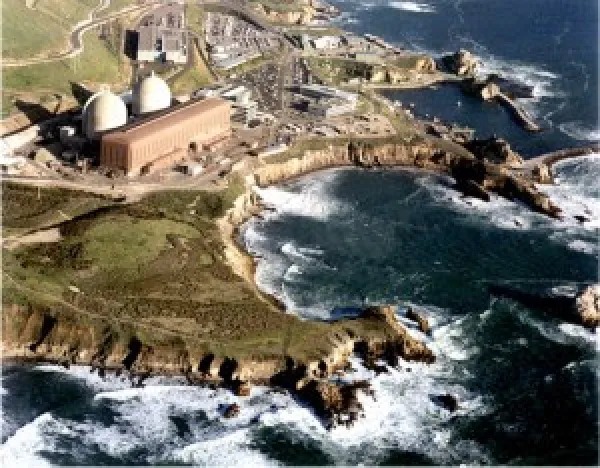
PG&E has also earmarked some $350 million to “retain and retrain” Diablo’s workforce, whose union has signed on to the deal, which was crafted in large part by major environmental groups.
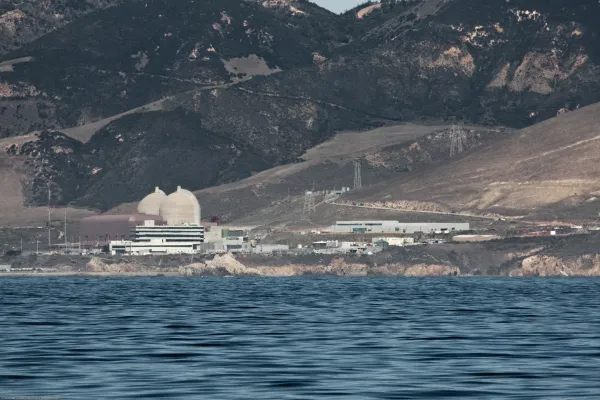
A rising tsunami of U.S. nuke shut-downs may soon include California’s infamous Diablo Canyon double reactors. But it depends on citizen action, including a statewide petition.
Five U.S. reactor closures have been announced within the past month. A green regulatory decision on California’s environmental standards could push the number to seven.

I have enjoyed reading accounts and seeing photos of those committed and courageous climate activists who participated in the recent Break Free from Fossil Fuels actions conducted at various locations in 13 countries from 4-15 May 2016. See 'Break Free from Fossil Fuels' https://breakfree2016.org/
Much of what was done was creative (some of it demonstrating considerable flair) and, mostly, how it was done reflected a sound understanding off nonviolent principles and dynamics to which virtually all activists adhered. In this regard I must acknowledge the thoughtful 'action agreements' signed by participating activists, the conduct of nonviolence education workshops, the police liaison, legal briefings and arrest support, and the widespread recognition that secrecy and sabotage have no part to play in nonviolent actions for them to be strategically effective.
April 26 marks the 30th anniversary of the catastrophic explosion at theChernobyl nuclear power plant.
It comes as Germany, which is phasing out all its reactors, has asked Belgium to shut two of its nukes because of the threat of terrorism.
It also comes as advancing efficiencies and plunging prices in renewable energy remind us that nukes stand in the way of solving our climate crisis.
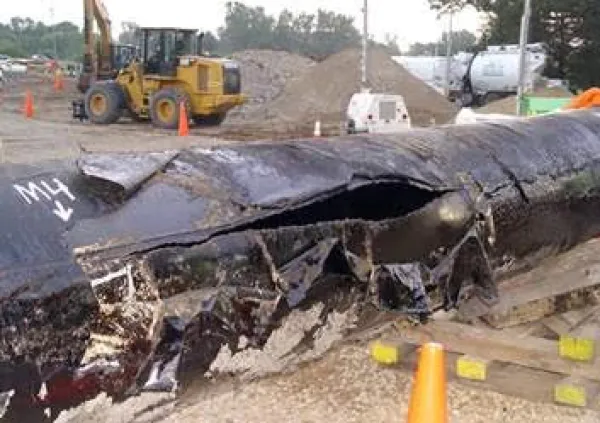
"This investigation identified a complete breakdown of safety at Enbridge. Their employees performed like Keystone Kops and failed to recognize that their pipeline had ruptured and continued to pump crude into the environment. Despite multiple alarms and a loss of pressure in the pipeline, for more than 17 hours and through three shifts, they failed to follow their own shutdown procedures. Enbridge restarted the pipeline twice in that 17-hour period, pumping oil that would account for 81 percent of the total spill.” -- National Transportation Safety Board Chairman Deborah Hersman (http://www.bloomberg.com/news/articles/2012-07-24/-keystone-kops-bungling-led-to-costliest-u-s-pipeline-spill)

Maybe if we declared “war” on poison water, we’d find a way to invest money in its “defeat.”
David Rosner and Gerald Markowitz, writing at Tom Dispatch this week about what they called “The United States of Flint,” make this point: “The price tag for replacing the lead pipes that contaminated its drinking water, thanks to the corrosive toxins found in the Flint River, is now estimated at up to $1.5 billion. No one knows where that money will come from or when it will arrive. In the meantime, the cost to the children of Flint has been and will be incalculable.”
I sit with these words: “No one knows where the money will come from.”
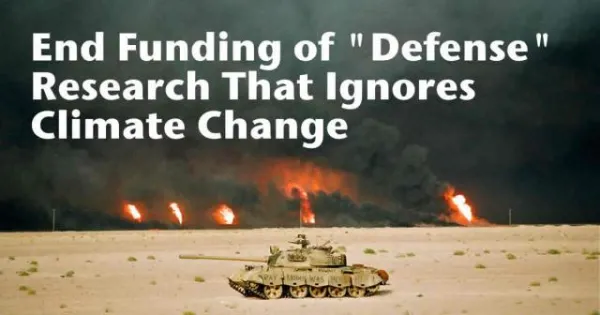
In the United States it's not actually difficult to find significant funding with which to research new and innovative -- not to say bizarre and absurd -- pursuits, as long as they form part of an overall project of mass murder.
The United States has hundreds of programs at universities, think tanks, and research institutes that claim to devote their attention to “security” and “defense” studies. Yet in almost all of these programs that receive many millions of dollars in Federal funding, the vast majority of research, advocacy and instruction have nothing to do with climate change, the most serious threat to security of our age.
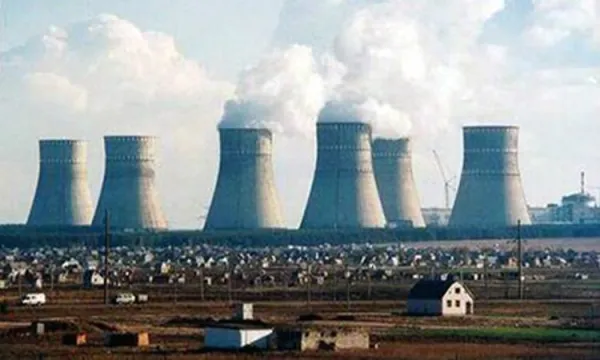
As you read this, a terror attack has put atomic reactors in Ukraine at the brink of another Chernobyl-scale apocalypse.
Transmission lines have been blown up. Power to at least two major nuclear power stations has been “dangerously” cut. Without emergency backup, those nukes could lose coolant to their radioactive cores and spent fuel pools. They could then melt or explode, as at Fukushima.
Yet amidst endless “all-fear-all-the-time” reporting on ISIS, the corporate media has remained shockingly silent on this potential catastrophe.
Ukraine’s Rivne Nuclear Power Plant in the country’s northwest. Photo credit: Wikimedia commons
Nor has it faced the most critical step needed to protect our planet in a time of terror: shutting all atomic reactors.

During the November 15 Democratic Presidential Debate, Vermont Senator Bernie Sanders sounded an alarm that "climate change is directly related to the growth of terrorism." Citing a CIA study, Sanders warned that countries around the world are "going to be struggling over limited amounts of water, limited amounts of land to grow their crops and you're going to see all kinds of international conflict."
As expectations build for a global consensus to emerge from the United Nations climate conference in Paris, starting on 30 November 2015, that could agree to taking action to limit any rise in global temperature to 2 degrees celsius, I would like to explain why these expectations are misplaced. And what we can do about it.
The essence of the problem is that most people and organisations are asking elites to take action on their behalf rather than taking action themselves. Not only is this a fearful and powerless approach, it reinforces the widespread delusions that elites have the power in this regard and that they are responsive to our pleas. Neither of these is true. We have the power and elites only respond when we create the circumstances that compel them to do so. And not otherwise. Hence, it is the action that we take, as individuals, communities and organisations, that generate the outcomes we want.