
Environment
Expert Tele-Briefing 2 pm (Eastern), Tues., Oct. 27 (See end of press release for call-in details)
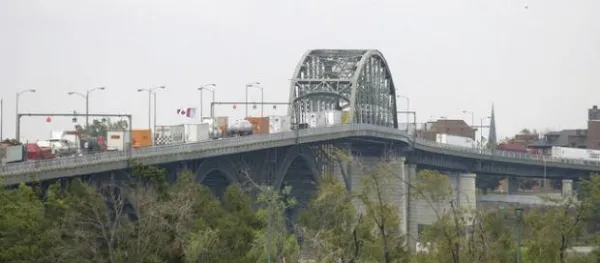
Washington, D.C. – Thousands to tens of thousands of high-level radioactive waste shipments would cross through 45 states and the District of Columbia, if plans for the country’s first nuclear waste repository at Yucca Mountain in Nevada move forward. Today, Beyond Nuclear, in coalition with NIRS and dozens of grassroots groups nationwide, released maps of the likely routes radioactive waste shipments would use. The groups want residents in these corridor communities across the country to weigh in with Congress about the dangers.
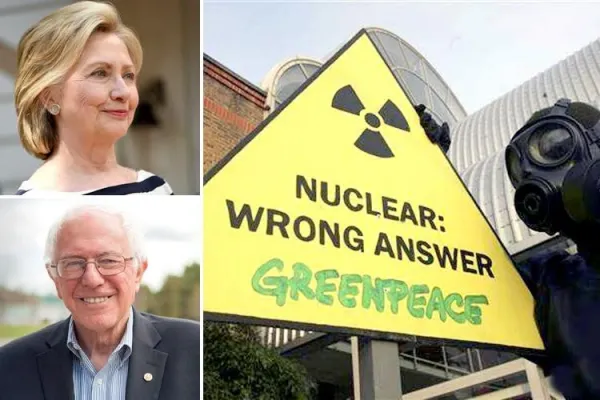
As the first Democrat presidential debate finally approaches (on Oct. 13), America’s nuke power industry is in accelerated collapse.
The few remaining construction projects in the U.S. and Europe are engineering and economic disasters.
Presidential candidates Hillary Clinton and Bernie Sanders may address this in broad terms.

The latest politician to leap toward the GOP nomination is widely known as America’s most anti-green governor. But he has a critical decision coming up that could help change that. Ohio Gov. John Kasich has established a national reputation as a leading enemy of renewable energy and enhanced energy efficiency.
When he took office in 2011, he opened fire by killing a $400 million federal grant to restore passenger rail service between Cleveland, Columbus, Dayton and Cincinnati. Columbus is the largest capital city in the western world that people cannot get to by train. It also has no internal commuter rail, making it what some have called “the mid-sized town technology forgot.” The rail grant had been painstakingly crafted over the better part of a decade by a broad bi-partisan coalition. It was poised to create hundreds of jobs and provide new opportunity for a number of small towns languishing along the restoration route.

Oh sacred planet.
The terror of climate crisis is a long time in the making. As I read about the mass mobilization forming around the upcoming U.N. climate change convention, which is likely to accomplish far too little — because what’s needed is change at the roots of civilization — I feel a desperate impatience, a tearing at my soul. What can I do that’s bigger than anger, bigger than a demand for governmental and corporate entities to make changes they are essentially incapable of making?
Maybe I can help rewrite the story of civilization, which means unwriting the present story. From the Dark Mountain Manifesto, for instance, here are two of the “eight principles of uncivilization”:
“We believe that the roots of these crises lie in the stories we have been telling ourselves. We intend to challenge the stories which underpin our civilization: the myth of progress, the myth of human centrality, and the myth of our separation from ‘nature.’ These myths are more dangerous for the fact that we have forgotten they are myths.
“We will reassert the role of storytelling as more than mere entertainment. It is through stories that we weave reality.”
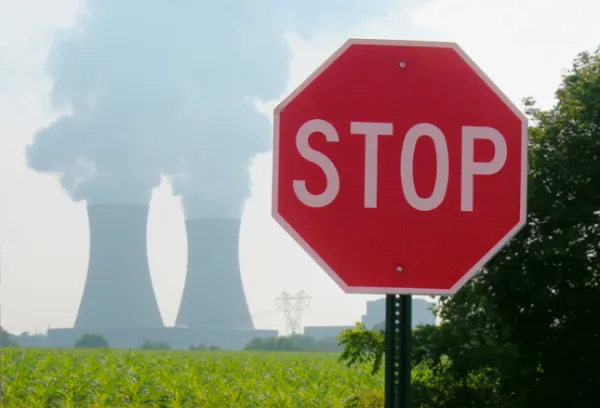
The two reactors at Diablo Canyon are the last ones still operating in California. And the grassroots pressure to shut them down is escalating.
Together grassroots activists have shut three California reactors at San Onofre, between Los Angeles and San Diego and one each at Rancho Seco, near Sacramento and at Humboldt, perched on an earthquake zone in the north.
Proposed construction at Bodega Bay and near Bakersfield has also been stopped.
But the two at the aptly named Diablo still run, much to the terror of the millions downwind.

There’s a category of political intellectuals who proudly proclaim themselves “realists,” then proceed to defend and advance a deeply faith-based agenda that centers on the ongoing necessity to prepare for war, including nuclear war.
These intellectuals, as they defend the military-industrial status quo (which often supports them financially), have made themselves the spokespersons for a deep human cancer: a soul cancer. When we prepare for war, we honor a profoundly embedded death wish; indeed, we assume we can exploit it for our own advantage. We can’t, of course. War and hatred link all of us; we can’t dehumanize, then proceed to murder, “the enemy” without doing the same, ultimately, to ourselves.
That isn’t to say there’s an easy way out of the mess we find ourselves in, here in the 21st century. Indeed, I see only one way out: a critical mass of humanity coming to its senses and groping for a way to create a peace that that has more resonance than war. We don’t have much political leadership around this, especially among the planet’s dominant — and nuclear-armed — nation states. But there is some.
For the third time in a decade, a major fire/explosion has ripped apart a transformer at the Indian Point reactor complex.
News reports have taken great care to emphasize that the accident happened in the “non nuclear” segment of the plant.
Ironically, the disaster spewed more than 15,000 gallons of oil into the Hudson River, infecting it with a toxic sheen that carried downstream for miles. Entergy, the nuke’s owner, denies there were PCBs in this transformer.
It also denies numerous studies showing serious radioactive health impacts on people throughout the region.
You can choose whether you want to believe the company in either case.
What if Columbus was a Zero Waste City by 2040? Sound impossible? Interestingly enough, a city with about 30,000 more people aims to reach that goal by 2020. San Francisco has a landfill diversion rate of over 80 percent. A “green team” is employed to ensure residents and businesses help clean up their city and a massive composting program was created to reuse food waste that then is used as fertilizer. Green jobs and nutritious food would be a win-win arrangement to make Columbus more green.
To some, a single object that best symbolizes towering landfills could be the notorious styrofoam take-out container, but the greatest image for throw-away culture today is the pitiful, plastic grocery bag. Columbus is considering measures to place a surcharge on such bags or to even, potentially, ban them. If the capital city adopts such initiatives, we will consciously decide to further care for our neighborhoods and natural landscape and to move towards zero waste.
Stagnate to Striding
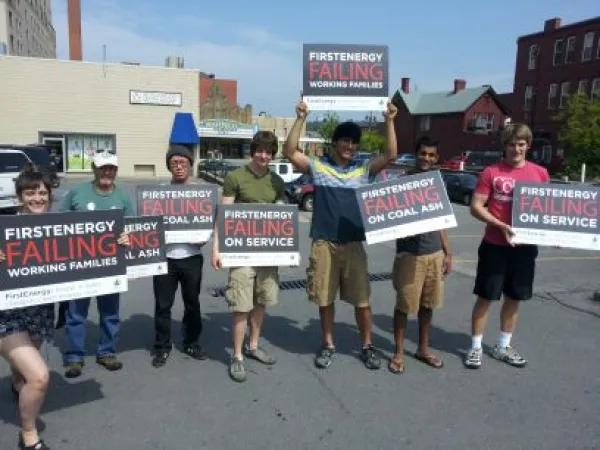
Ohio’s energy and economic future is now in the hands of the Public Utilities Commission.
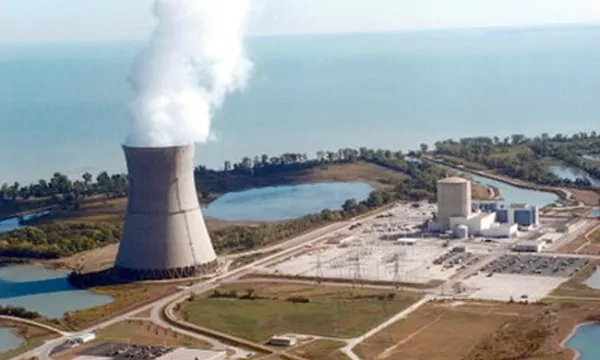
As the world’s nuke reactors begin to crumble and fall, the danger of a major disaster is escalating at the decrepit Davis-Besse plant near Toledo, Ohio.
Now the plant’s owners are asking the Ohio Public Utilities Commission to force the public to pay billions of dollars over the next 15 years to subsidize reactor operations.
The Davis–Besse Nuclear Power Station near Toledo, Ohio.
But Davis-Besse’s astonishing history of near-miss disasters defies belief. Its shoddy construction, continual operator error and relentless owner incompetence would not be believed as fiction, let alone as the stark realities of a large commercial reactor operating in a heavily populated area.