
Op-Ed

If you stop and think about it, we’ve come up with a lot of doozies in our history. Like the genocide of 20 million Native Americans. Or the enslavement of 12 million kidnapped Africans. Or us invading Vietnam and killing 4 million Asian people for no reason at all. We are not a good people. We have a non-stop cavalcade, a sordid laundry list of evil deeds that led us directly to last week, to the point where we the people, by popular vote, elected a 34-time convicted felon, a fascist, and a civilly-charged and convicted sexual abuser to be our 47th president of the United States. And we did so after he clearly and quite honestly warned us that he was going to do a mass round-up and deportation of nearly 15 million people. And that he would consider executing people he referred to as “the enemy within” (i.e. his political opponents and those who were disloyal to him).

“America is for Americans – Americans only!”
The words are those of Stephen Miller, speaking last month at the infamous Madison Square Garden rally, but they define Donald Trump. This is the message – the cry from the mountaintop – he brought to the country . . . at least to approximately half of it. It’s the unifying force behind his campaign, both pragmatically and spiritually. It transcends politics and cuts to people’s deepest values and deepest fears.
It’s why he won: Donald the Outsider, standing up to the Washington status quo, opening the doors of the American government and letting its citizens flow in (legally this time, without breaking doors and windows). America is for Americans – sieg heil!
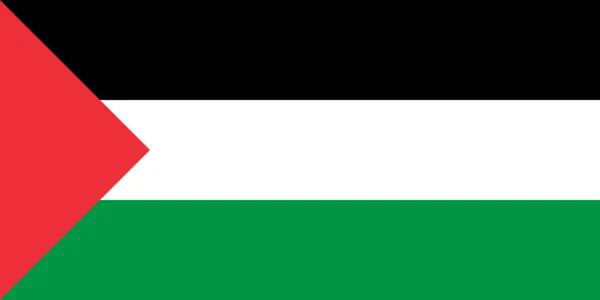
Before you pose the question to America again, "Why do Muslims hate America?" Take it from this retired veteran: the short answer is that they do not! They do resent what you did and hate U.S. bias and its misguided foreign policy.
In the event you have forgotten what you have done to Palestinians and the rest of the Muslim world since you became President for the first time in 2017, you should ask yourself, "What have I done for Muslims to have them resent me and America?" And since we say in Arabic, "A camel does not see his hump," allow me to tell you all about your misdeeds since I kept a tally sheet. Please read:
In the event you have forgotten, I did Jerusalem, violating US and International laws.
* The first executive order you issued in 2017 when you took office the first time was a call for a “total and complete ban on Muslims entering the US.”
* You recognized Jerusalem as the capital of Israel. This was a betrayal of the Palestinian dream
* You cut off ALL $390 million in annual aid to Palestinians.
* You closed the PLO office in Washington, D.C.
“I don’t know if you guys know this, but there’s literally a floating island of garbage in the ocean. Yeah, I think it’s called Puerto Rico.”
This racist pseudo-joke, uttered by Tony Hinchecliffe at the Trump rally at Madison Square Garden on Oct. 27, has been virally shamed. It’s even been denounced by Team Trump itself. But I bring it back into the limelight for a moment for several eerily linked reasons.
In two dozen words, followed by a snort of guilty laughter, this “joke” describes, indeed, encompasses, a serious slice of how humanity is destroying Planet Earth. To begin with, Hinchecliffe is right about the “floating Island of garbage.” There is such a phenomenon, the presence of which no doubt deserves far more concern and attention than it gets.
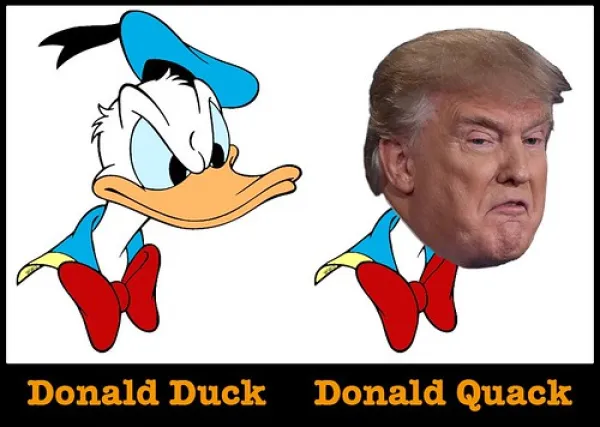
Politico reported that Trump lied on average every five minutes over 4.6 hours of speeches and press conferences.
The Huffington Post recorded that he told 71 lies during just one town hall event.
Meanwhile, The Washington Post reported in July 2020 that President Trump made over 20,000 "false or misleading claims." This amounts to an average of 23 false claims per day (a polite way to describe lies).
Here are my seven favorite lies from Trump, with my responses:
1. The “Man of the Year” Lie
For years, President Trump claimed to be honored as "Man of the Year." In reality, he only received a plaque as a gesture of thanks for speaking at a Michigan Republican dinner in 2013.
The U.S. government often claims to stand for the rule of law, but this past year has made it painfully clear that this doesn’t apply to Palestinians. The moral, financial, and security costs of U.S. support for Israel’s rapidly expanding wars are adding up for Americans, too.

“The past carries unforgettable trauma and pain across the land and among generations of refugees; yet we choose to transform victimhood into agency. We want to be the authors of our future.”
Let these words resonate. In a sense, they’re all we have — if we oppose war and envision a future that transcends it. I’ve quoted these words of Ali Abu Awwad before. They’re part of the Palestinian Nonviolence Charter, but they reach beyond Palestine: deep into the soul, and the hope, of all humanity.
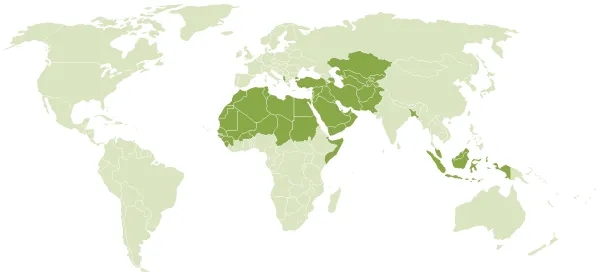
The last year of a relentless Israeli war on Gaza, and bloody raids and violence in the West Bank have been largely viewed in terms of their horrific humanitarian outcomes: the unequaled killing of tens of thousands, the obliteration of Gaza and the destruction in the West Bank.
While humanitarian urgency must indeed be a priority, other factors are also deserving of consideration, especially as we mark the one-year anniversary of the ongoing war.
Even though the mass killing is yet to end, there are several conclusions that can already be drawn about the long-term consequences of the war.