Op-Ed

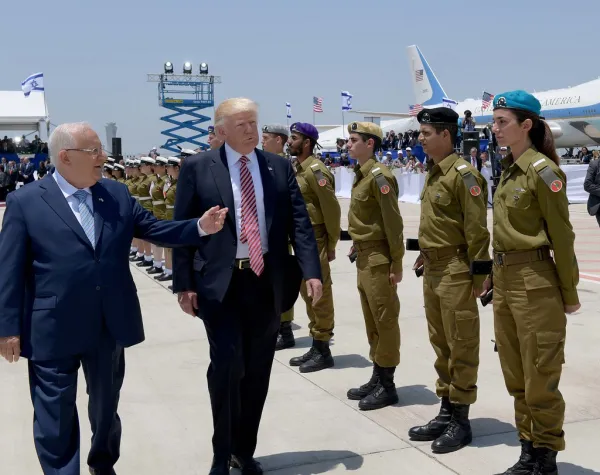
President Donald Trump’s address to Congress and the nation on Tuesday night was remarkably devoid of any mention of why the United States continues to both enable and be complicit in the Ukrainian conflict with Russia as well as with the war crimes that are being committed by the state of Israel against nearly all its neighbors on a daily basis. The most recent abomination committed by Prime Minister Benjamin Netanyahu and his band of thugs is the cutting off of food, medicine and temporary housing to the Gazans who were bold enough to return to their ruined homes due to a ceasefire negotiated successfully by US presidential envoy Steve Witkoff in January. Now that Netanyahu has decided to come up with some false assertions to break the agreement, allowing him to continue his extermination of the Palestinian people, Trump as peace maker seems to have disappeared without a trace even though the US was in a sense a guarantor of the phased disengagement.
The “old days” are more alive than ever – by which I mean my old days, when I was a kid. My life pushed forward on its own, more or less. This is called growing up. I wasn’t paying much attention until, at a certain point, a.k.a., adolescence, I started noticing the world I was a part of in ways beyond what I was taught. The world itself was changing and nobody, including my teachers, really understood it.
Existence wasn’t a bunch of bricks-and-mortar certainties. It was a vast unknown. Knowing this was alarming; it was also the meaning of freedom.
Today, as I move through the dark, stumbling uncertainty known as old age (I’m 78), I find myself looking backwards a lot, mulling over how I got here, often in amazement. For some reason it seems to matter. Can I learn from myself?
This year marks twenty years since one of the most consequential meetings of my time in Washington, D.C. Stephen Zarlenga, a man I would come to recognize as a scholar and a legend in monetary policy, walked into my Longworth Building office with his assistant, Elizabeth Harper.
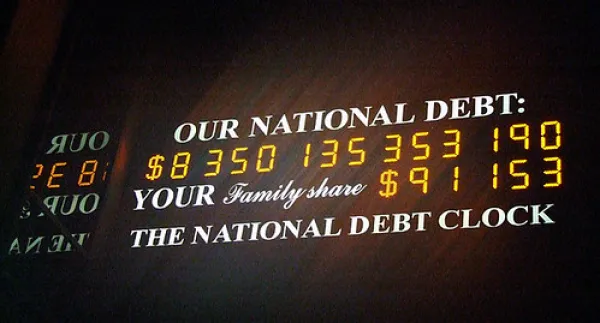
In just a seven-minute discussion of US monetary policy, they set me on a course which changed my life, and how I looked at the world. I began a deep inquiry into the nature of money, and why is our government always in debt, in this, the wealthiest country in the world?
Today, in the face of misguided austerity measures proposed by the Department of Government Efficiency (DOGE), Zarlenga’s message is more urgent than ever. While the push to eliminate wasteful government spending is laudable, it is a distraction from fundamental questions:
How is money created?
Who creates it?
Why are we locked into perpetual debt?
We have long argued that the Israeli war and genocide in Gaza must catalyze a change in the overall political discourse on Israel and Palestine, particularly regarding the need to free Palestine from the confines of victimhood. This shift is necessary to create space where the Palestinian people are seen as central to their own struggle.
It is unfortunate that centering a nation in a conversation about its own freedom from colonialism and military occupation requires years of advocacy. But this is the reality Palestinians face—often due to circumstances far beyond their control.
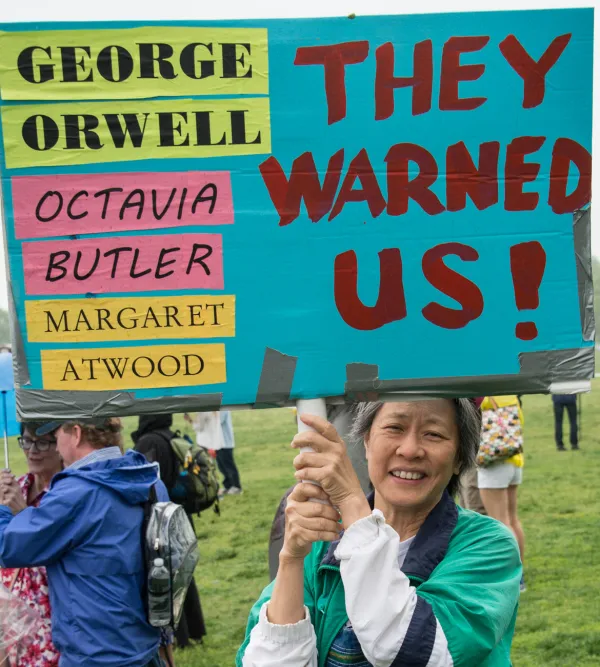
“The enemy of the moment always represented absolute evil, and it followed that any past or future agreement with him was impossible.”
The words are from George Orwell’s Nineteen Eighty-Four (where else?), explaining the root causes of a dystopian world. The book may be a work of fiction, but his words are deeply embedded in reality – we need enemies, the worse the better! This certainty may well be humanity’s most profound existential threat. I fear it could be “the meteor” that hits Planet Earth, ultimately spelling extinction for the dominant species.
Mostly what we do is prepare for – and wage – war. We always wage it in self-defense, even when in retrospect its motivating factor is colonial conquest. When it comes to the manifestation of power, at its core are the words “us vs. them.” That captures the public spirit so much more fully than cooperation, connection, understanding . . . or, groan, love.
As far as I’m concerned, this is humanity’s primary challenge of the moment. It’s time to transcend war, the meteor of our own making.
My husband, former Congressman Dennis Kucinich and I first met twenty years ago over a rather unromantic yet profoundly important topic: monetary reform. The second time we met we were engaged and three months later we were married.
It was 2005, and, at that time, I had spent nearly a decade working with the Forum for Stable Currencies, a group based at the House of Lords in London, dedicated to exploring banking malpractice and the hidden mechanics of money creation and its systemic impact on society.
My journey into this lesser-known field began much earlier, in my teenage years, when a deep concern for the root causes of social and ecological destruction led me to ask a fundamental question: What is the greatest systemic driver of these crises?
Through a series of seemingly serendipitous encounters, I discovered monetary reform—a topic rarely discussed, yet foundational to the structure of our economy and the fate of nations.
“. . . I write today from a position rare for a former prosecutor: to beseech you to commute the sentence of a man I helped put behind bars.”
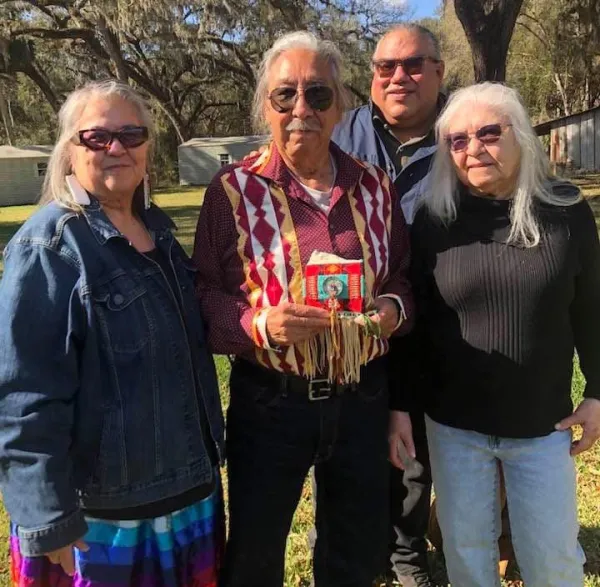
Thus begins one of the most stunning letters I have ever read, written almost four years ago by former U.S. Attorney James H. Reynolds to President Joe Biden, pleading with him to exonerate former American Indian Movement (AIM) leader Leonard Peltier, who had been convicted of murdering two FBI agents at South Dakota’s Pine Ridge Reservation in 1975.