
Peace
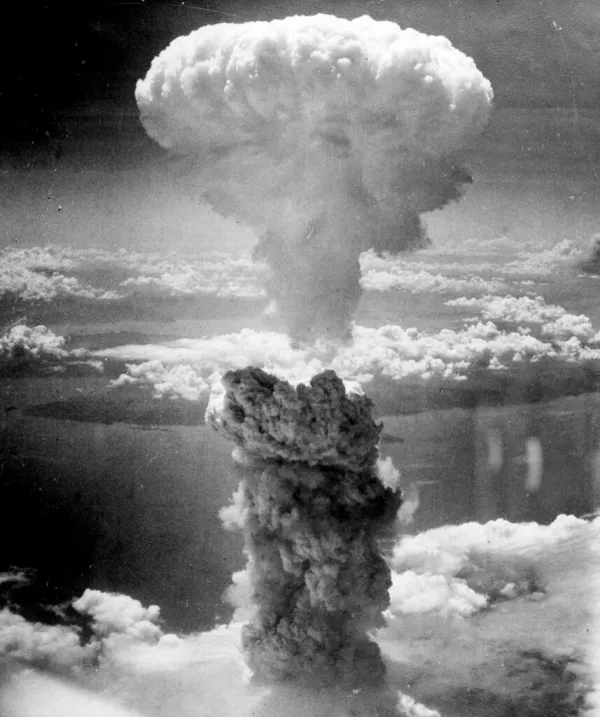
On the 9th of August, 1945, an all-Christian B-29 bomber crew, took off from Tinian Island in the South Pacific, with the blessings of its Catholic and Protestant chaplains. In the plane’s hold was the second of the only two nuclear bombs to ever be used against human targets in wartime. The primary target, Kokura, Japan, was clouded over, so the plane, named Bock’s Car, headed for the secondary target, Nagasaki.
St. Mary’s Cathedral, located in Nagasaki City’s Urakami River district, was a massive structure and a landmark easily visible from 31,000 feet above. The cathedral was one of the landmarks on which the Bock’s Car’s bombardier had been briefed for weeks before the mission. The cathedral was briefly seen through a break in the clouds, and the drop was ordered. The bomb exploded in a searing fireball as hot as the sun 500 meters above the church.
The legendary Urakami Cathedral was Ground Zero for the Nagasaki bomb on August 9, 1945
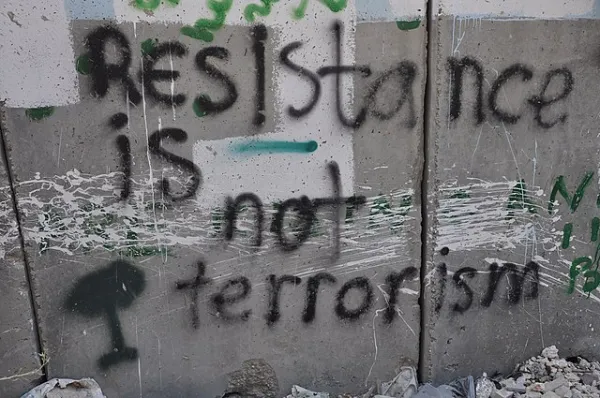
Until recently, Israeli politics did not matter to Palestinians. Though the Palestinian people maintained their political agency under the most demoralizing conditions, their collective action rarely influenced outcomes in Israel, partly due to the massive discrepancy of power between the two sides.
Now that Israelis are embarking on their fifth election in less than four years, it is important to raise the question: “How do Palestine and the Palestinians factor in Israeli politics?”
Israeli politicians and media, even those who are decrying the failure of the ‘peace process’, agree that peace with the Palestinians is no longer a factor, and that Israeli politics almost entirely revolves around Israel’s own socio-economic, political and strategic priorities.
This, however, is not exactly true.

I’ve made my own choices along the path of life — spiritual, mental, physical. I declared myself a non-believer in my parents’ religion at age 16. I’d just read the book Exodus, by Leon Uris, and couldn’t tolerate the church’s teaching that all non-believers, including all Jews, were going to hell.
Bye bye, church on Sunday. My mother was devastated, but we slowly came to terms with one another. On a family vacation that summer, as we were driving on the Chicago Skyway, the radio announced a tornado warning. Mom later wrote a published essay that ended thus: “Three Christians and one agnostic prayed.”

Nuclear sanity: ultimate (or, God help us, immediate) disarmament.
Nuclear insanity: ongoing development and deployment, endless investment, eventual (either accidental or intentional) use.
Sen. Ed Markey, D-Mass., addressing Congress several weeks ago, made a heartfelt and powerful case for nuclear sanity, for a revamping of the system of mutually assured destruction, which gives certain national leaders “Godlike powers known as sole authority to end life on the planet as we know it . . .”
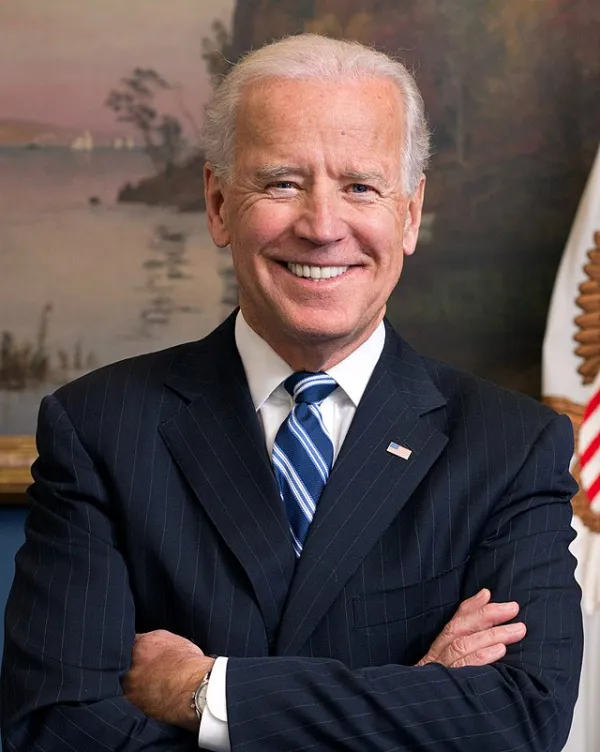
Ever since Joe Biden ended his speech in Poland on Saturday night by making one of the most dangerous statements ever uttered by a U.S. president in the nuclear age, efforts to clean up after him have been profuse. Administration officials scurried to assert that Biden didn’t mean what he said. Yet no amount of trying to “walk back” his unhinged comment at the end of his speech in front of Warsaw’s Royal Castle can change the fact that Biden had called for regime change in Russia.
They were nine words about Russian President Vladimir Putin that shook the world: “For God’s sake, this man cannot remain in power.”
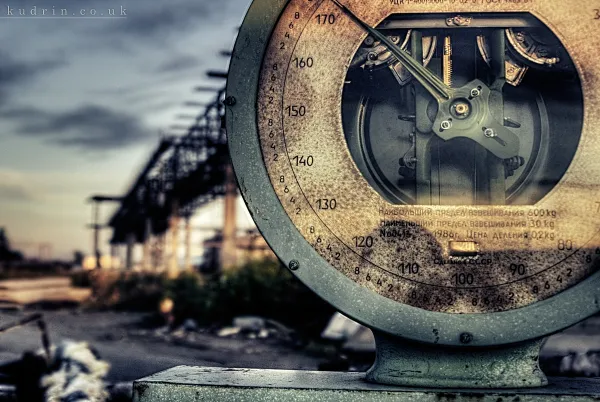
he “Peaceful Atom” has transformed Vladimir Putin’s attack on Ukraine into a nuclear war.
Like all nukes anywhere, Ukraine’s 15 operating atomic reactors are pre-deployed weapons of radioactive mass destruction. As a global threat to the future of human life on this planet, they have escalated this crisis to a danger level that parallels the apocalyptic US/USSR madness of the 1962 Cuban Missile Crisis.
As Putin’s troops penetrate the Ukrainian countryside, even a relatively minuscule attack on any of those power plants could blow out radiation far in excess of a nuclear weapon attack. They could (again) blanket Ukraine, Belarus and much of Europe with lethal radioactive fallout arriving in the United States within ten days. Their downwind death toll could dwarf Hiroshima and Nagasaki.
Fittingly, the Russian assault quickly focussed on Chernobyl, whose April 26,1986 Unit 4 explosion blew out apocalyptic clouds that have since killed more than a million people worldwide.

Gay rights, women’s rights — in reality, these are a nuisance to many U.S. conservatives, but purporting to protect these rights on the other side of the world is a great excuse to play war.
And you don’t need bombs to play. All you need is the will to dominate and the ability to dehumanize “the enemy,” so that their lives can be trashed if (and when) necessary.
I have to confess a stunned speechlessness as I learn about the looming fate of Afghanistan, if President Biden refuses to release $9.4 billion of its assets to the country’s central bank, which it had deposited abroad, primarily at the U.S. Federal Reserve, during the 20-year war. With the Taliban reclaiming power after the U.S. withdrawal last August, the president seized control of these assets, potentially plunging Afghanistan into economic freefall, and . . . oh God . . .
“United Nations officials are warning that millions of Afghans could run out of food before winter, with 1 million children at risk of starvation. . . .
Somewhere out there in the geopolitical wilderness of Eastern Europe, two powerful beasts stalk each other. One of them is good. One of them is evil. The future of all life on this planet is at stake.
We’ll be back after these messages . . . (or maybe not).
This seems to be the context in which the spectator public gets the details about the re-emerging Cold War, suddenly back from the dead, and the nuclear brinkmanship that comes with it.
Will Russia invade Ukraine? Such an act, according to President Biden, would be “the most consequential thing that’s happened in the world in terms of war and peace since World War II.”
Wow. Only we get to invade countries, apparently.
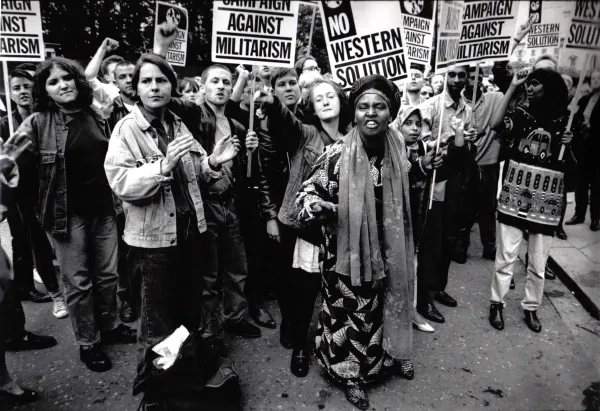
Do our “Defence Departments” really defend us? Absolutely not! Their very title is a lie. The military-industrial complex sells itself by claiming to defend civilians. It justifies vast and crippling budgets by this claim; but it is a fraud. For the military-industrial complex, the only goal is money and power. Civilians like ourselves are just hostages. We are expendable. We are pawns in the power game, the money game.
Nations possessing nuclear weapons threaten each other with “Mutually Assured Destruction”, which has the very appropriate acronym MAD. What does this mean? Does it mean that civilians are being protected? Not at all. Instead they are threatened with complete destruction. Civilians here play the role of hostages in the power games of their leaders.
A thermonuclear war today would be not only genocidal but also omnicidal. It would kill people of all ages, babies, children, young people, mothers, fathers and grandparents, without any regard whatever for guilt or innocence. Such a war would be the ultimate ecological catastrophe, destroying not only human civilization but also much of the biosphere.

Guess what? I direct the following insight to, among others, the U.S. Congress, which annually and without comment, with only a few objectors, passes a trillion-dollar (and growing) military budget, by far the largest such budget on Planet Earth.
“You cannot simultaneously prevent and prepare for war.”
The words are those of Albert Einstein, in a letter to a congressman 75 years ago. He adds, pointing out a truth that is still waiting to resonate culturally and politically: “The very prevention of war requires more faith, courage and resolution than are needed to prepare for war.”