
Peace
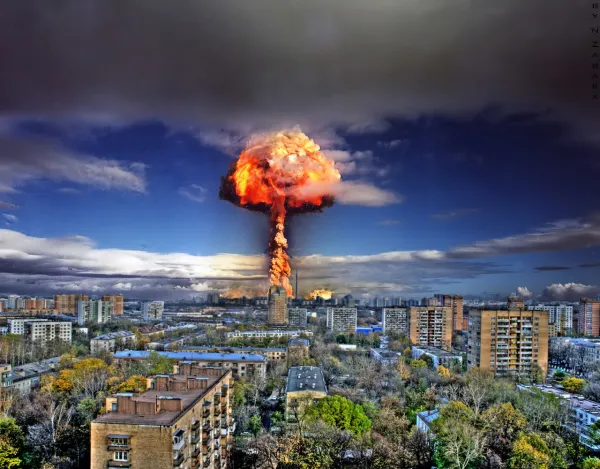
Nuclear weapons are at the pinnacle of what Martin Luther King Jr. called “the madness of militarism.” If you’d rather not think about them, that’s understandable. But such a coping strategy has limited value. And those who are making vast profits from preparations for global annihilation are further empowered by our avoidance.
At the level of national policy, nuclear derangement is so normalized that few give it a second thought. Yet normal does not mean sane. As an epigraph to his brilliant book The Doomsday Machine, Daniel Ellsberg provides a chillingly apt quote from Friedrich Nietzsche: “Madness in individuals is something rare; but in groups, parties, nations, and epochs, it is the rule.”
Now, some policy technocrats for the USA’s nuclear arsenal and some advocates for arms control are locked in a heated dispute over the future of ICBMs: intercontinental ballistic missiles. It’s an argument between the “national security” establishment -- hell-bent on “modernizing” ICBMs -- and various nuclear-policy critics, who prefer to keep the current ICBMs in place. Both sides are refusing to acknowledge the profound need to get rid of them entirely.
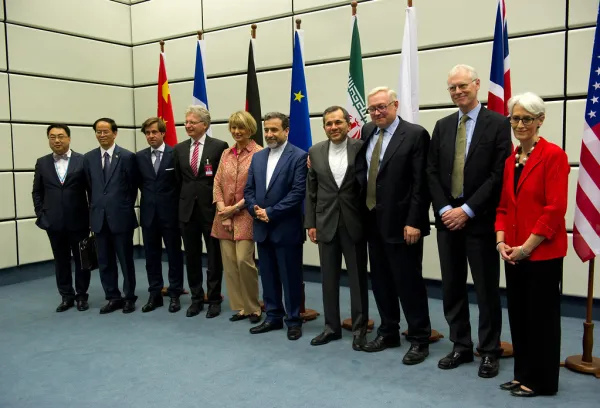
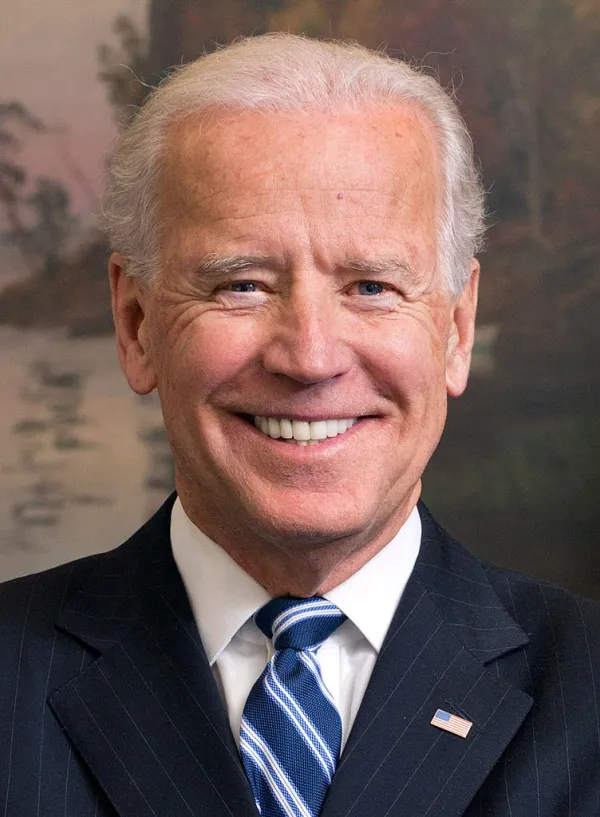
Critics of the foreign and national security policies of the Joe Biden regime were quick to note that the American soldiers being pulled out of Afghanistan were no doubt a resource that will be committed to a new adventure somewhere else. There was considerable speculation that the new model army, fully vaccinated, glorious in all its gender and racial diversity and purged of extremists in the ranks, might be destined to put down potentially rebellious supremacists in unenlightened parts of the United States. But even given an increasingly totalitarian White House, that civil war type option must have seemed a bridge too far for an administration plagued by plummeting approval ratings, so the old hands in Washington apparently turned to what has always been a winner: pick a suitable foreign enemy and stick it to him.
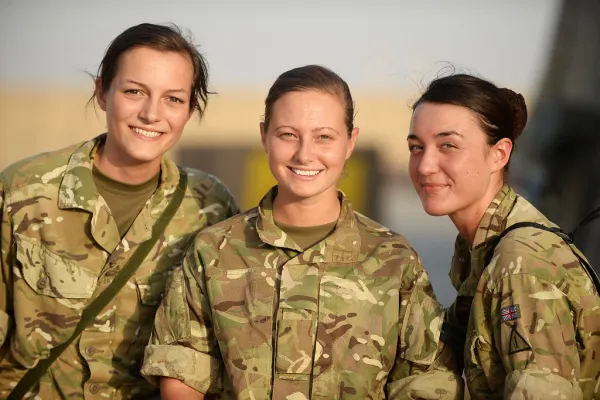
In some future lovely little war, perhaps with China or some other demonized target, some percentage of the U.S. public may suddenly exclaim: “Hey, since when does a draft include young women as well as men?!” Old tunes will be revised and sung in protest with lyrics about being the first one on your block to have your daughter come home in a box. The tragedies will be played out in tears and screams and flag-covered propaganda-regurgitating rationalizations. Dead women and men will be thanked for the service of stirring up World War III before being dumped in the ground to rot, as some of the living begin to envy them and wonder about the merits of the service they’ve provided.

Another Irradiated and Charred Victim of the Nagasaki Bomb
77 years ago (August 9, 1945) an all-Christian bomber crew dropped an experimental plutonium bomb on Nagasaki City, Japan, instantly incinerating, asphyxiating and/or vaporizing tens of thousands of innocent civilians, mostly women and children. Very few Japanese soldiers were killed by the bombs.
Japan’s major religions are Shitoism and Buddhism, but a disproportionate number of the dead at Nagasaki were Christian. The bomb also wounded uncounted tens of thousands of other victims who suffered the blast trauma, the intense heat and/or the radiation sickness that killed and maimed so many of the survivors.

We crossed the Atlantic, encountered a bunch of savages, defeated them, claimed the continent. We won! This is the history I remember learning, as satisfying and stupid as a John Wayne movie.
The myth is crumbling and cracking, its certainty now as precarious as the statue of a Confederate general. Truth flows in through the holes, e.g.:
By the late 1830s, most of the native residents had been “removed” from a big chunk of the South — a few million acres of land in Georgia, Tennessee, Alabama, North Carolina and Florida — so white men could start growing cotton there. In 1838, a final group of stubborn Cherokees were deported to Oklahoma Territory, as President Martin Van Buren sent 7,000 soldiers to do the job.

For decades I — and, no doubt, everybody else who points out the power and effectiveness of nonviolent action — have had the endlessly recurring experience of being asked “But shouldn’t people defend themselves with wars rather than do nothing?”
How did wars get to be the only alternative to nothing? If I were to run around shouting “Will you deny people the right to stick slugs up their noses rather than do NOTHING?” approximately 100% of people would think that was a crazier thing to say than that the only responses to violence are (1) mass murder, and (2) nothing. Here‘s a supposed peace activist last week hoping that if Canada manages to get itself attacked the U.S. will jump into the war.

By David Swanson, World BEYOND War, June 7, 2021
Remarks on June 7, 2021, to North Texas Peace Advocates.
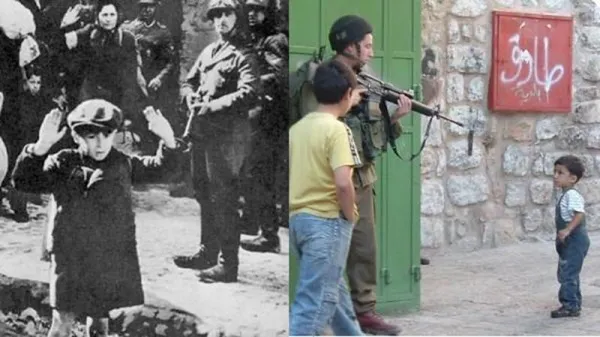
Now let me get this straight. A nation bullies and harasses a much smaller neighbor which eventually leads that neighbor to strike back with largely home-made weapons. The larger and more powerful country, armed with state of the art killing machines, attacks its basically unarmed opponent and kills hundreds of civilians, including a large number of children. It also destroys billions of dollars of infrastructure in the poorer and weaker neighbor. Almost immediately after the fighting stops, senior legislators from a third nation that had nothing to do with the war apart from supplying the larger nation with weapons appeared on the scene and promoted the lie that the larger nation had actually been the victim of an unprovoked attack by the “terrorists” running the small nation. They did so publicly while meeting with and endorsing the actions of the government officials from the large nation, which, it would seem, is about to be investigated by an international body for war crimes. They were joined by an ex-officio former foreign minister of the third nation who likewise echoed the propaganda being put out by the large nation.
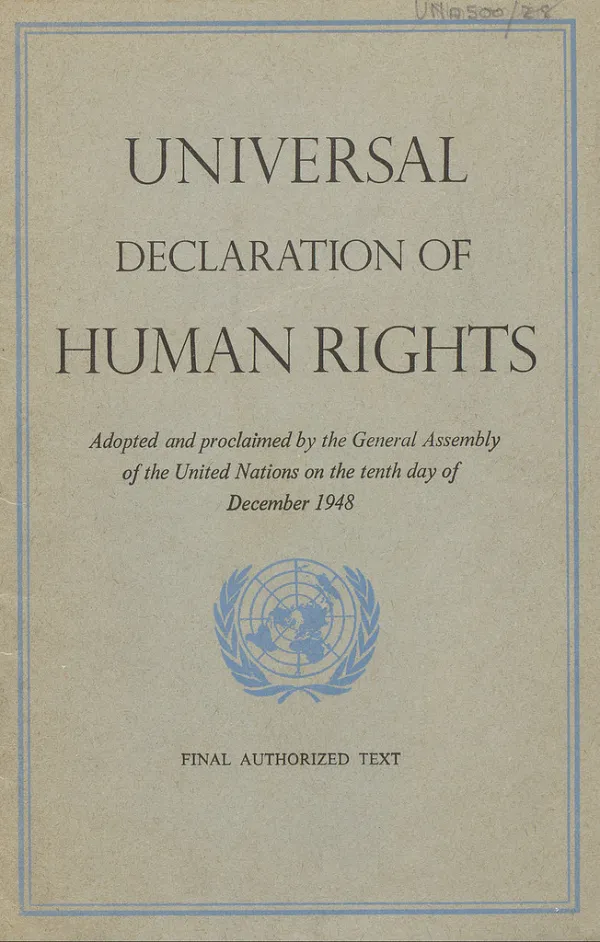
Suddenly a shard of history comes flying at me from the ebbing days of World War II, hitting me in the heart. You mean world leaders (not to mention all the rest of us) were serious about transcending — for good — the hell the world had just been through and . . . ending war?
In February 1945, President Franklin Roosevelt, on his return from the Yalta Conference with Great Britain and the Soviet Union, and two months before he died, gave an address to Congress, as quoted recently by Medea Benjamin and Nicolas J.S. Davies: