
Protest Reports
Check out below the list of people who have come together on this!
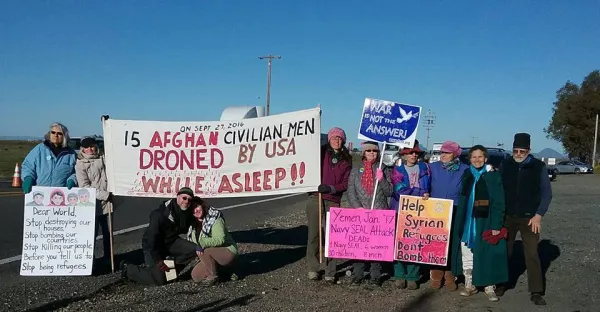


Comrades and friends, I am not writing to advise you how to resist the Trump regime. There are as many action proposals in circulation as there are anti-Trump groups, with “resistance” the buzzword of the moment. But resistance against what, exactly, and for what purposes? Most of the tactical proposals I have seen are strangely devoid of political content. It seems that anti-Trump is more a mood than a movement with shared aims. It is a negative sentiment shared by most of the identity and interest groups that formed part of the Democratic Party coalition (or, as the President himself would put it, by the losers) during the 2016 election.
The militarization of police forces in the U.S. has come under increasing scrutiny, including the effect it has on the psychology of police. Equipped with military-grade weapons and body armor, police have been conditioned to view citizens as enemies, instead of human beings whom they are bound to protect and serve.
Wearing face shields or gas masks has the psychological effect of deindividuation: a feeling of anonymity that curbs police officers’ sense of personal responsibility for their actions.
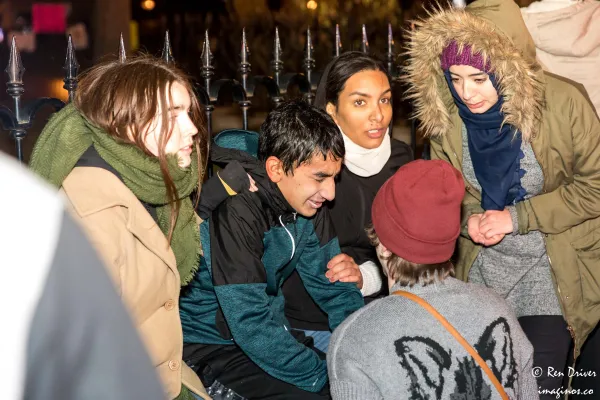
These effects played out in downtown Columbus on the evening of January 30 as a demonstration against President Trump was winding down. About 3,000 protesters were marching from the Franklin Country Courthouse back to the Ohio Statehouse, as police attempted to keep them off High Street by forcing them onto the sidewalk.

For the past decade, the standard procedure for big coalition rallies and marches in Washington D.C. has been to gather together organizations representing labor, the environment, women's rights, anti-racism, anti-bigotry of all sorts, and a wide array of liberal causes, including demands to fund this, that, and the other, and to halt the concentration of wealth.
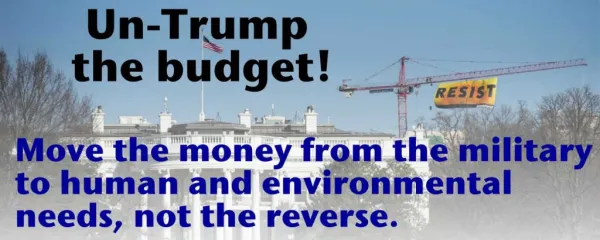
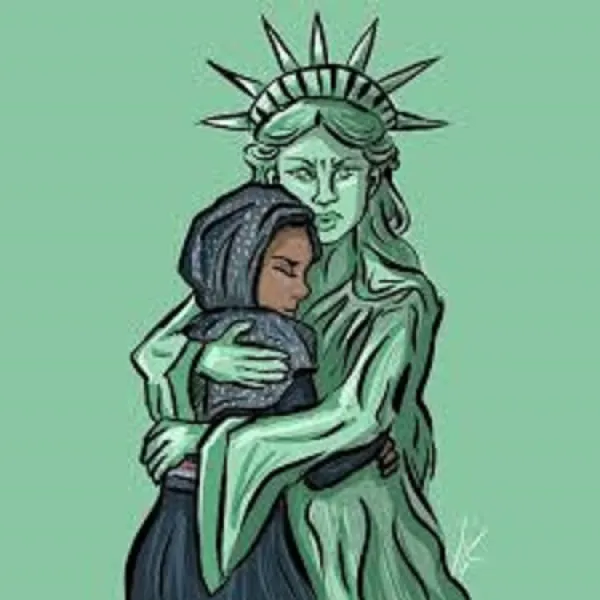
At that point, some of us in the peace movement will generally begin lobbying the PEP (progressive except for peace) organizers to notice that the military is swallowing up enough money every month to fund all their wishes 100 times over for a year, that the biggest destroyer of the natural environment is the military, that war fuels and is fueled by racism while stripping our rights and militarizing our police and creating refugees.
When we give up on trying to explain the relevance of our society's biggest project to the work of reforming our society, we generally point out that peace is popular, that it adds a mere 5 characters to a thousand-word laundry list of causes, and that we can mobilize peace groups to take part if peace is included.
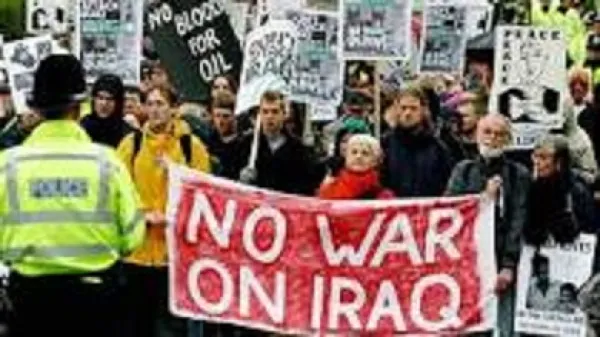
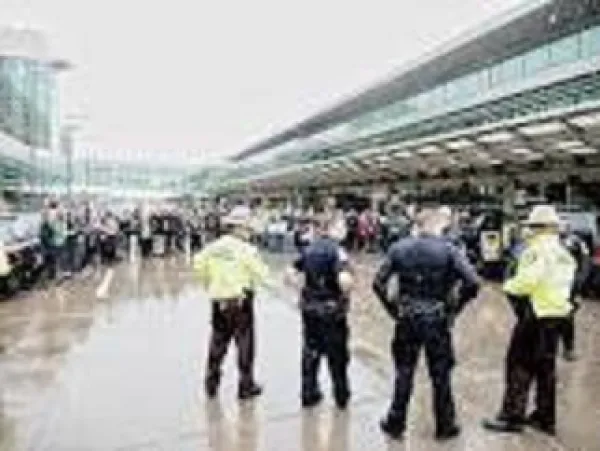
Airport resistance is the biggest step forward by the U.S. public in years.
Why do I say that? Because this is unfunded, largely unpartisan activism that is largely selfless, largely focused on helping unknown strangers, driven by compassion and love, not political ideology, greed, or vengeance, and in line with activism around the globe. It's also targeted at the location of the harm, directly resisting the injustice, and achieving immediate partial successes, including very meaningful successes for certain individuals. It's gaining support from people never before engaged in any activism. And it shows no signs of any significant undesirable side-effects. This is a movement to be built on, and I have an idea what a next step should be.