
Protest Reports
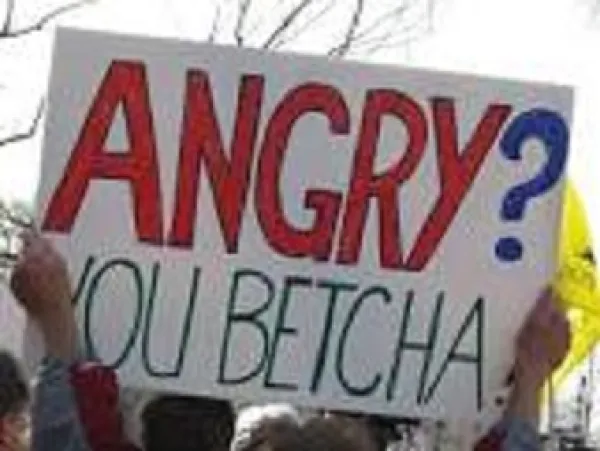
Radicalization: what is it good for? The song, “War? What is it good for?”, tells us that war is worth “absolutely nothing!” Is radicalization the same? Just something that turns everyday, ordinary people into gun-toting, bomb-throwing terrorists? The media give us that image after every new terror incident here in the U.S. or in Europe involving presumed Islamists. How did these people turn into suicide bombers, gunmen/women, decapitators, torturers, or whatever? Well, it must have been “radicalization.” So then we need to know how that happened. Where and when did their radicalization start? Was it from a web site? Or the influence of a religious leader or friends or family or even a spouse?

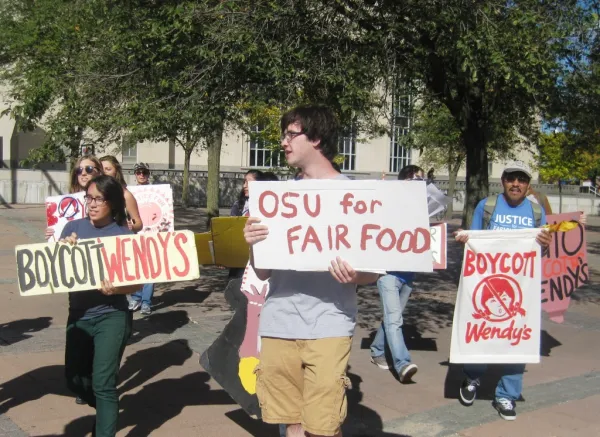
On October 7 members and supporters of the Student/Farmworker Alliance (SFA) held a rally outside Bricker Hall at the Ohio State University, calling on the administration to terminate its contract with the Wendy’s Corporation. The fast food chain has lucrative contracts with universities across the country. Wendy’s operates a restaurant in the Wexner Medical Center at OSU.
Two years ago OSU administrators signed an agreement with the SFA, promising to end its contract with Wendy’s if the fast food chain did not make a verifiable commitment to fair labor practices in its Florida tomato supply chain. This would have meant joining the Coalition of Immokalee Workers’ Fair Food Program, which includes a commitment to source its produce only from farms that provide fair pay and safe working conditions to their workers. The program also includes a zero-tolerance policy for slave labor and sexual harassment.
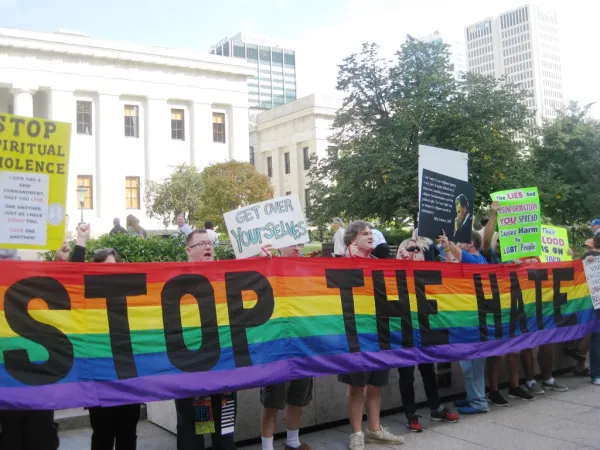
On October 6 followers of evangelist Franklin Graham gathered by the thousands at the Statehouse for a prayer rally. Supporters who arrived on the south side of the Capitol were greeted by counterdemonstrators holding a rainbow banner with the message “Stop the Hate!”
“We’re here to say that we are human beings,” said Shannon Glatz. “We deserve love, we deserve equal rights, and their hate is not going to be tolerated.”
Graham’s rhetoric at the prayer rally was non-partisan on the surface. But he opposes gay marriage and warned Christians to keep LGBT people away from their children and churches. He also supports Donald Trump’s proposal to end Muslim immigration. Trump supporters were conspicuous in the crowd.
Dar Williams:
Every new album from Dar Williams represents her thoughts and feelings about both her own life and larger forces in the world. But her ninth studio record, Emerald, marks a particularly dramatic confluence between her experiences and broader contemporary culture—and what it means to be a songwriter at this moment in history.
In the past few years, Williams has been involved in a wide range of different efforts and projects: teaching a course titled “Music Movements in a Capitalist Democracy” at her alma mater, Wesleyan University; working with children at several summer camps; leading songwriting workshops; getting involved with the workings of her village; and writing a book about the ways she’s seen towns becoming more independent and prosperous over her twenty years of touring. In addition, in the face of dramatic transformations in the music industry, she is releasing Emerald on her own after choosing to part ways with Razor & Tie, her label for almost twenty years.

Greeting Sisters and Brothers: 
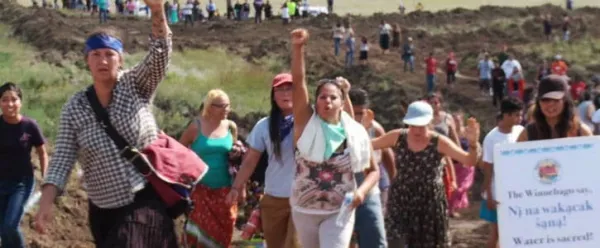
I have been asked to write a SOLIDARITY statement to everyone about the Camp of the Sacred Stones on Standing Rock. Thank you for this great honor. I must admit it is very difficult for me to even begin this statement as my eyes get so blurred from tears and my heart swells with pride, as chills run up and down my neck and back. I’m so proud of all of you young people and others there.
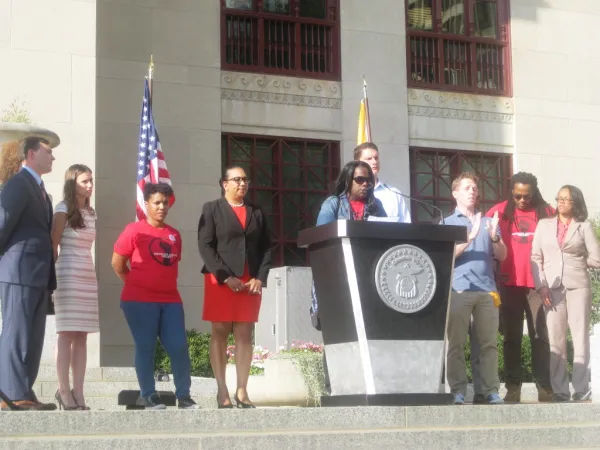
The political atmosphere in Columbus has been tense in the week since protesters shut down a City Council meeting. Activists seeking justice in the police killings of Ty’re King and Henry Green have been waiting to see how City Council would respond.
On Monday members of the People’s Justice Project gathered on the south steps of City Hall with all members of City Council and some of Mayor Ginther’s staff.
“We’re here because we’re tired of being told to wait and to just be quiet,” said Tammy Alsaada, an organizer with the People’s Justice Project. “We’re tired of young people in our communities being killed at the hands of police. We are committed to continuing to demand justice.
“Members of our coalition met with local officials two years ago, after the death of Tamir Rice, because we were afraid the same thing could happen here in Columbus,” Alsaada said. “Our calls were ignored.”
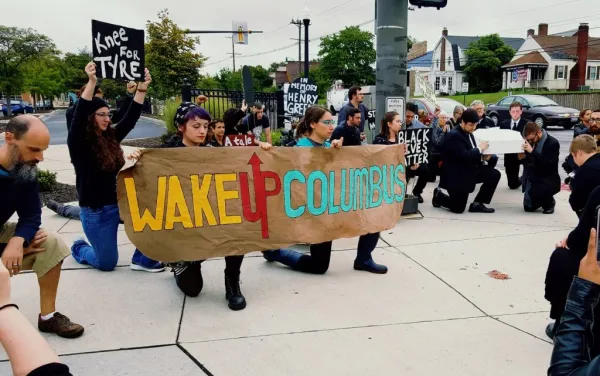
On Thursday about 50 demonstrators, most wearing black, marched in a silent mock funeral procession from the Columbus Mennonite Church to the home of Mayor Andrew Ginther in the predominately white neighborhood of Clintonville.
“Mayor Ginther’s inaction speaks louder than words,” said Tynan Krakoff, an organizer with Showing Up for Racial Justice (SURJ). “Ginther needs to wake up to the racism thriving in Columbus. We are here to demand justice for Ty’re King and Henry Green. We are calling on city officials to invest in communities of color and for the mayor to break his silence and complicity in upholding racism.” SURJ is a national organization of white people organizing to fight against racial injustice.
“As white people, we know that we are treated differently than our neighbors of color, particularly under police programs such as the Summer Safety Initiative,” Krakoff said. “We need to shift our city’s budget away from policing and instead invest in black communities.”
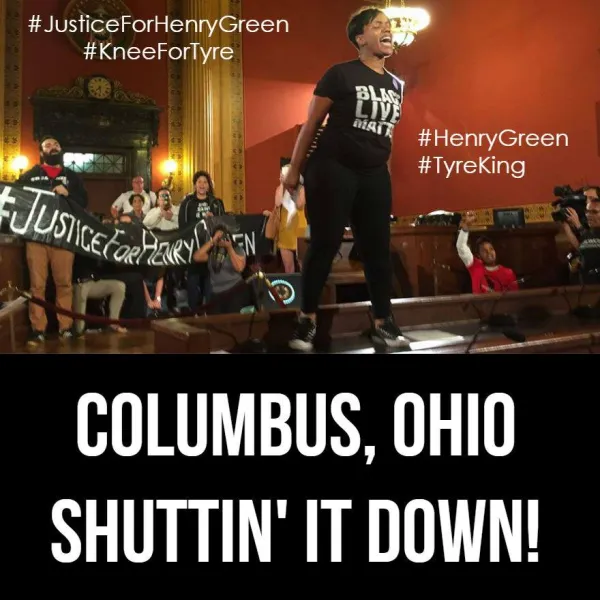
When Columbus residents come to City Hall to voice their concerns, City Council members always thank them for their advocacy, often in tones that stop just short of being patronizing. The City Council meeting on September 26 was no exception.
“We’re grateful that you’re taking time out of your day to be with us this evening,” City Council President Zach Klein told 150 audience members who came to protest the police killings of Tyre King and Henry Green. “It’s really important with all issues facing the City of Columbus that we have an engaged citizenry,” he said. “I’m grateful for the activism, the determination, the passion, and the resolve for justice, accountability, and transparency.”
The crowd was not interested in Klein’s gratitude. After sitting through two of Council’s agenda items, a woman stood up and shouted, “Will you amend the Columbus city budget to remove the Summer Safety Initiative and replace it with neighborhood programs?”
“I thank you for your advocacy,” Klein responded. “But I respectfully ask that you follow the rules of Council —”
“Yes or no, sir?” the woman shouted. “Your rules are killing us!”