
Protest Reports

The national religion of the United States of America is nationalism. Its god is the flag. Its prayer is the pledge of allegiance.
The flag's powers include those of life and death, powers formerly possessed by traditional religions. Its myths are built around the sacrifice of lives to protect against the evils outside the nation. Its heroes are soldiers who make such sacrifices based on unquestioning faith. A "Dream Act" that would give citizenship to those immigrants who kill or die for the flag embodies the deepest dreams of flag worship. Its high priest is the Commander in Chief. Its slaughter of infidels is not protection of a nation otherwise engaged, but an act that in itself completely constitutes the nation as it is understood by its devotees. If the nation stopped killing it would cease to be.
What happens to myths like these when we discover that flying killer robots make better soldiers than soldiers do? Or when we learn that the president is using those flying robots to kill U.S. citizens? Which beliefs do we jettison to reduce the dissonance in our troubled brains?
Against a Trump regime that is totally unacceptable, we’ll need resistance that’s sustainable. Like a healthy forest, the resistance will depend on great diversity to thrive -- a wide range of people engaging in a vast array of activities. And our resistance will need community.
I’m not talking about the facile gloss of the word “community” that often follows an adjective denoting race, religion, ethnicity or sexual orientation. The kinds of community that will make ongoing resistance possible have little to do with demographic categories. The most powerful, most vital bonding will be transcendently human.
Facing a Trump presidency, we’ll have an imperative opportunity to go deeper as individuals and groups of people working together -- nurturing and growing the social, cultural and political strength that can overcome the Trump regime.
Against a Trump regime that is totally unacceptable, we’ll need resistance that’s sustainable. Like a healthy forest, the resistance will depend on great diversity to thrive -- a wide range of people engaging in a vast array of activities. And our resistance will need community.
I’m not talking about the facile gloss of the word “community” that often follows an adjective denoting race, religion, ethnicity or sexual orientation. The kinds of community that will make ongoing resistance possible have little to do with demographic categories. The most powerful, most vital bonding will be transcendently human.
Facing a Trump presidency, we’ll have an imperative opportunity to go deeper as individuals and groups of people working together -- nurturing and growing the social, cultural and political strength that can overcome the Trump regime.
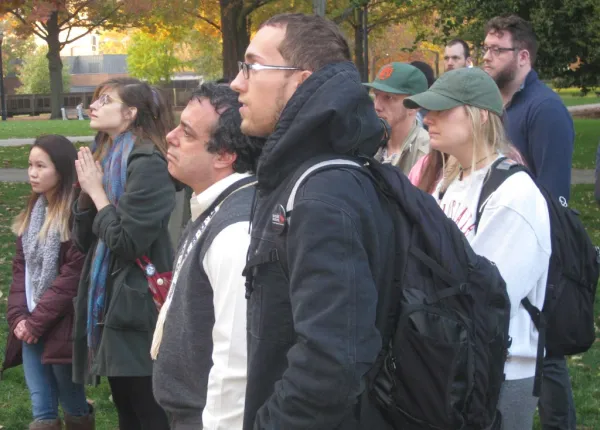
In Columbus, the looming Donald Trump presidency has added urgency and intensity to protests of the Dakota Access Pipeline. On November 16 the student group Socialist Students organized a demonstration on the Ohio State University campus.
“They’re building the pipeline through sacred Sioux burial grounds,” said Socialist Students member Mia Zerkle. “This is the equivalent of destroying somebody’s church, or disrupting the Arlington National Cemetery. This is infringing on their rights and everything they believe in.”
“This isn’t only an issue about the environment,” said Rachel Rouwenhorst, who studies ecology and evolution at OSU. “This is about Native American sovereignty. Corporations shouldn’t be putting pipelines through their burial grounds, prayer sites, and water supply.”
Rouwenhorst called for a boycott of the banks that are investing in the pipeline, including CitiBank, Wells Fargo, Bank of America, US Bank, PNC Bank, JP Morgan Chase, UBS, and Goldman Sachs. “You can close your account with them and use a credit union, or a bank that is not funding this pipeline,” she said.
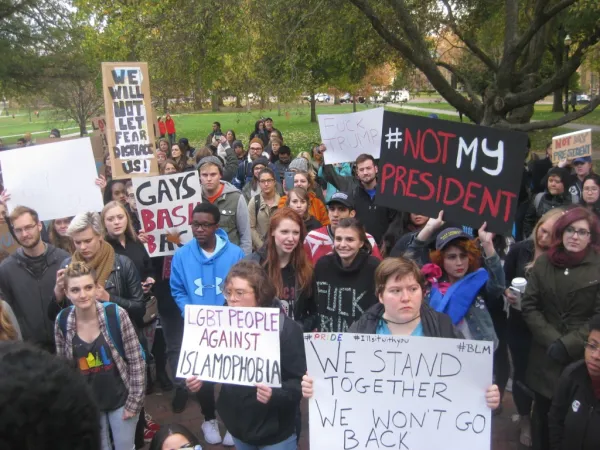
Protests and vigils in Columbus last week focused largely on fear of President-elect Donald Trump, outrage at his supporters, and grief over Democratic candidate Hillary Clinton losing the election. But while over 200 demonstrators had a lot to say against Trump at the OSU Oval on Friday, they also pointed a clear path forward: mass organizing and rejection of establishment politics.
“This is our wake-up call. We’ve been asleep, and we woke up to a nightmare,” said Bilal El-Yousseph, a Palestinian Muslim. “My mother wears a head covering, and she shouldn’t be scared to go to her job.”
El-Yousseph supported Bernie Sanders as the Democratic nominee, who polled better against Trump than Hillary Clinton did. He was angry when the DNC used underhanded tactics to give Clinton the nomination anyway. “The Democratic Party is not here for us,” he said.
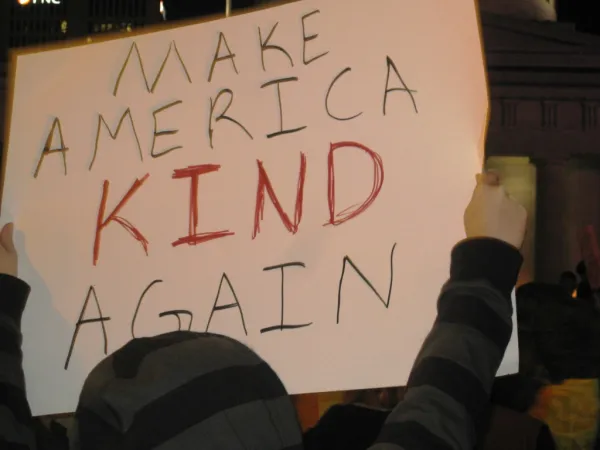
Hundreds joined a protest against President-elect Donald Trump at the Statehouse on November 10. The turnout was encouraging. The messaging probably gave protesters a needed catharsis. But more needs to be done to direct the momentum into building a fighting movement of the 99%.
Protesters chanted about how awful Trump is. They bemoaned that Hillary Clinton didn’t win the presidency. And hey, let’s sign a petition to ask the Electoral College to give Hillary the election.
All of this is easy, and it won’t accomplish anything. What’s needed is a clear path forward. And the way forward needs to be informed by an accurate assessment of why so many working-class Americans have turned away from the Democratic Party. Robert Reich’s article in The Guardian is a good place to start.
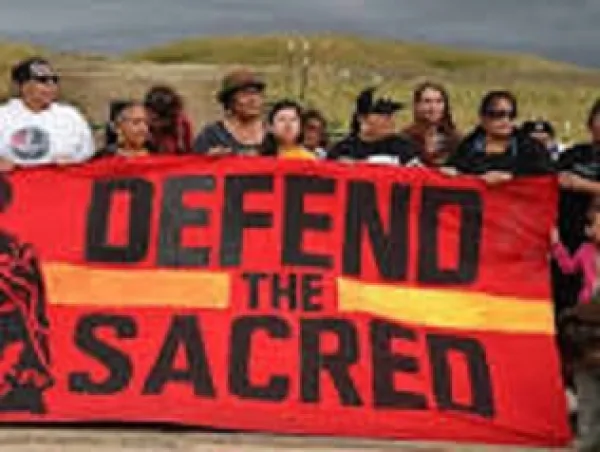
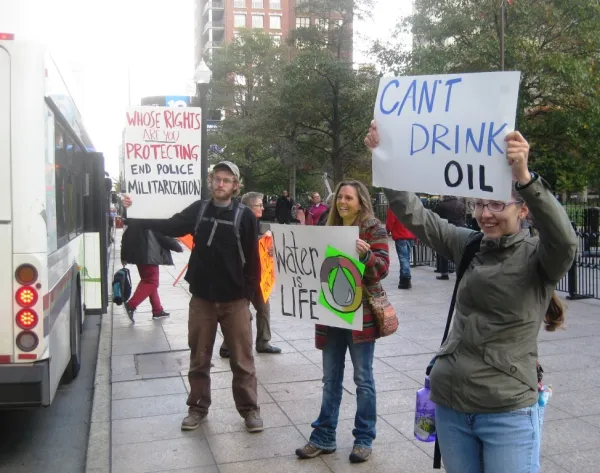
On November 4 supporters of the North Dakota Sioux from across Ohio gathered at the Statehouse to call on Governor Kasich to recall state troopers from Standing Rock. The demonstrators chanted, “Mni Wiconi!” (Lakota for “water is life”).
The Ohio State Highway Patrol sent 37 troopers to Standing Rock on October 29, ostensibly to “help law enforcement there protect property and to protect everybody’s rights.”
Opponents of the Dakota Access Pipeline understand that law enforcement has been called in to protect property rights. But they don’t believe that everyone’s rights are being protected. Police violence against protesters blocking the path of pipeline construction has been escalating, including the use of pepper spray, tear gas, stun guns, and rubber bullets.

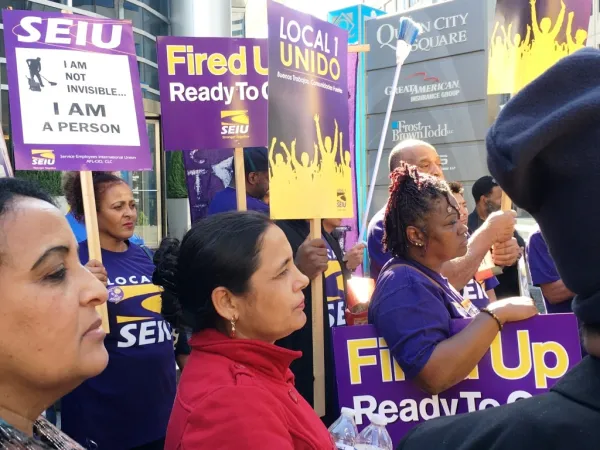
Diane Hudson wants a new union contract that will bring her family out of poverty. She works as a janitor at the Columbus Academy, a private PreK-12 school in Gahanna. Hudson supports her elderly mother and struggles every month to make ends meet. A living wage would mean “we don’t have to be under so much stress, living paycheck to paycheck,” she said.
On October 29 hundreds of janitors held a rally at the Great American Tower in Cincinnati to kick off contract negotiations. The new contracts will affect 1,800 members of Service Employees International Union (SEIU) Local 1 in central and southern Ohio, including 800 janitors who work in the Columbus area. The current Columbus contract, which expires December 31, covers janitors who clean the offices of Columbus’ largest companies, including Nationwide, Huntington, JP Morgan Chase, and AEP.