
Global
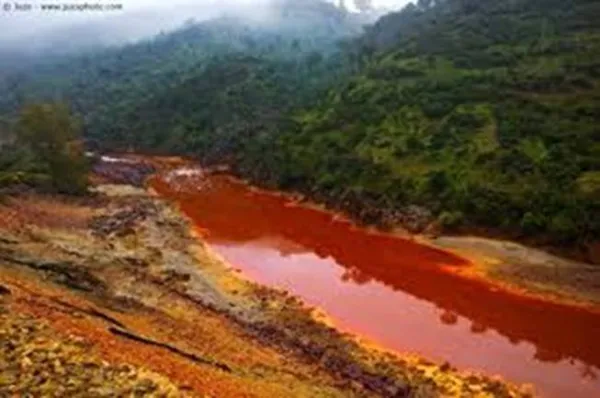
Lessons for Northern Minnesota From 5000 years of Copper/Sulfide/Acid Mining in Spain, Followed by a Single Generation of Failed Remediation Attempts - and You Still Can’t Drink the Water! (and you never will)
Spain’s Rio Tinto (“Stained River”) Estuary: one of the Most Polluted Areas in the World – Thanks to Sulfide Mining
By Gary G. Kohls, MD, Duluth, MN
“The Rio Tinto system in southwestern Spain….is one of the most polluted fluvial-estuarine systems in the world and most likely has been so for thousands of years.”
”The city of Huelva, Spain, has become the site of one of the most polluted industrial areas of the world.”
“Spain's Rio Tinto is characterized by deep red water that is highly acidic (pH 1.7—2.5) and rich in heavy metals”
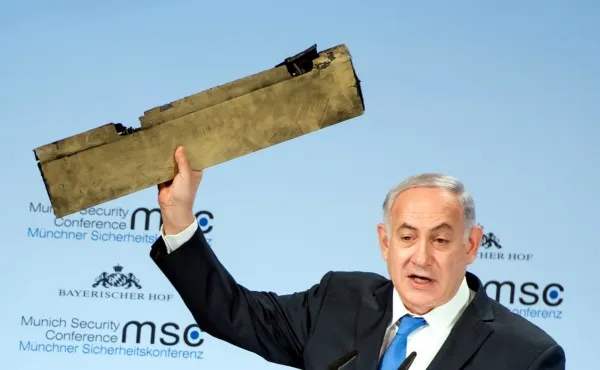
The deluge of recent reporting regarding possible conflict with nuclear armed North Korea has somewhat obscured consideration of the much higher probability that Israel or even Saudi Arabia will take steps that will lead to a war with Iran that will inevitably draw the United States in. Israel is particularly inclined to move aggressively, with potentially serious consequences for the U.S., in the wake of the recent incident involving an alleged Iranian drone and the shooting down of an Israeli aircraft. Prime Minister Benjamin Netanyahu has been repeatedly warning about the alleged threat along his northern border and has pledged that Israel will not be in any way restrained if there are any hostile moves directed against it.

 onald Trump’s sole “philosophy” is personal profit. His real “party” is the mob. His mafia “don,” Vladimir Putin, is the world’s #1 crime boss. For the pair of them, the issues of the day all boil down to one: cash flow.
Russian crime lords have been laundering money through The Donald since the 1980s. Like his slumlord father, who was allied with the New York mob, nothing really matters to Trumputin except that river of lucre. If Special Counsel Mueller touches the bottom of The Donald’s swamp, it will all be about money laundering and his ties to the organized underworld. There are many reasons he’s hiding his tax returns.
Meanwhile, let’s look at some actual issues:
GUNS: The National Rife Association is a sales organization for the weapons industry. All that twisted blather about the Bill of Rights is cheap cover.
The Second Amendment requires all gun owners to be part of “a well-regulated militia” serving “the security of a free state.”

 hen you stop to think about it, can you tell the difference between Russian disinformation bots and Fox News? Actually, that’s a serious question.
Special Counsel Robert Mueller’s February 16 indictment of people and organizations associated with Russia offers a loose definition of Russian disinformation bots that seems equally accurate as a description of what Fox News has been doing since 1996:

The power of mass demonstrations to mobilize activism and move those in positions of power is minimized, first and foremost, by those opposed to popular power. Do not listen to them. Make them listen to us!
Can you give two days to stop the slaughter of innocents and the shameless profiteering from their blood? If you can give more, so much the better. But by giving two days, you will guarantee that others will give more. You will be part of building the necessary momentum, the key ingredient in social change.
BANGKOK, Thailand -- The U.S. government's National Human Genome
Research Institute (NHGRI) is studying if every American baby should
undergo extensive DNA sequencing and analysis at birth, while China
and other countries are more advanced toward that goal despite reports
of human rights violations.
DNA, the double helix of deoxyribonucleic acid, can reveal a
person's physical and psychiatric health, identity, relatives and
other details.
But databases of people's DNA could enable governments, police,
hackers, corporations, forgers and others to abuse the information.
Sequencing or identifying details of DNA could also be used to
create bioweapons to kill ethnic groups or individuals.
"I do know that if you look in the last 15 years, the investment in
genomics in particular have been more substantial in countries like
China, South Korea, Singapore, and even places like Brazil," NHGRI
Director Eric D. Green said in an interview.
"Support for biomedical research in the United States has not
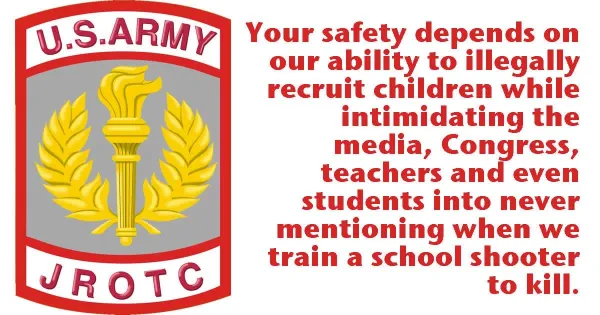
I asked my Facebook page which high school teacher they’d least like to have had a gun in their desk.
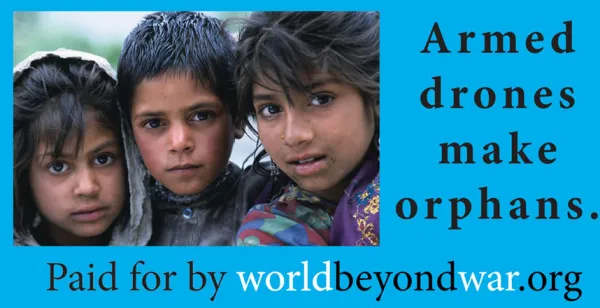
World Beyond War has been raising funds for and renting billboards in opposition to war. We’ve run into censorship from numerous billboard companies but persevered, and more billboards are on their way.
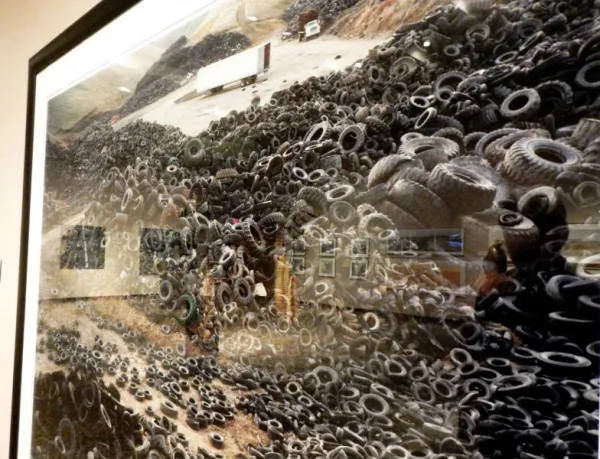
Is Earth the largest garbage dump in the Universe? I don’t know. But it’s a safe bet that Earth would be a contender were such a competition to be held. Let me explain why.
To start, just listing the types of rubbish generated by humans or the locations into which each of these is dumped is a staggering task beyond the scope of one article. Nevertheless, I will give you a reasonably comprehensive summary of the types of garbage being generated (focusing particularly on those that are less well known), the locations into which the garbage is being dumped and some indication of what is being done about it and what you can do too.
But before doing so, it is worth highlighting just why this is such a problem, prompting the United Nations Environment Programme to publish this recent report: ‘Towards a pollution-free planet’.