
Global
Just one short week ago, I read Ray McGovern's excellent article Israel’s Window to Bomb Iran; suggesting that Israel has a limited window to attack Iran. In a nutshell, McGovern argues that Israel may believe that they will have no chance of attacking Iran after Nov 2012. Israel is isolated due to the Arab Spring, Turkey's repudiation of their long standing support of Israel, and international reaction to the Palestinian issue. Obama will cave to Israel (again) during the run up the the Presidential election in order to ensure support of the Israel lobby and thus reelection. And so, Israel may view this as their last chance.
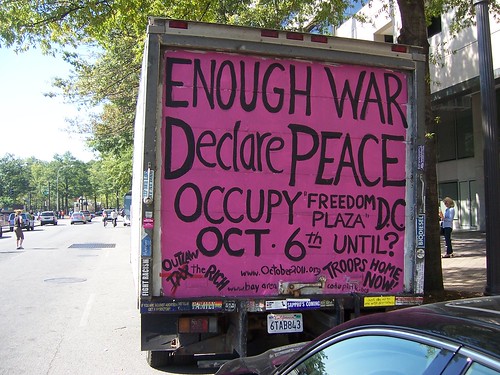 That's what we chanted, passing groups of male cops. Some of them appeared to respond or react by squinting and tightening their shoulders and jaws. Don't know who among the 60 of us marchers started the chant, but it seems to have been a playful, taste-of-your-own-medicine challenge to patriarchy. What role does feminism play in the occupations going on around the country ?
The majority of the organizers for the October 2011 occupation of Freedom Plaza are women. And women seem to have played a leading role in opposing our nation's militarism by way of--among other means--Code Pink, an organization named in defiance of post-9/11 color-coded terrorism threat levels.
Terry Smith wrote a thoughtful and provocative article in the Oct. 6 issue of The Athens News with the title “Can our region really afford to say no to ‘fracking’.” Terry’s analysis sides with those who want regulation of fracking but he is also concerned that Athens needs jobs and revenue. He speculates reasonably that the gas companies will make great profits on their investments in the Wayne National Forest and elsewhere in Athens City and County. Therefore, government and taxpayers should expect they should” pay more to protect local water supplies.” The implication of Terry’s stance is that, given the concerns of local folks and the ongoing economic distress of the area, gas companies be required to put some of their profits into a fund to pay for any damage they do to the environment.
BANGKOK, Thailand -- The worst floods in decades have killed 261 people, swamped an export manufacturing zone, and caused millions of dollars in damage to crops and property while government officials publicly prayed to Buddha and prepared Bangkok for a destructive deluge.
Some fleeing residents in the central city of Ayutthaya climbed aboard an elephant and clung to their valuables, including an electric fan and plastic bags stuffed with household goods, while riding the huge pachyderm through tusk-deep floodwater.
In Bangkok, multi-story public parking areas at shopping malls were turned into emergency shelters for automobiles, where people could park their cars for free -- as long as need be -- if their residential areas faced flooding.
Prime Minister Yingluck Shinawatra, who was elected as Thailand's first female prime minister in July, announced on Sunday (Oct. 9) that she was canceling her visits to Singapore and Malaysia, scheduled for Oct. 11 and 12, so she could command emergency assistance.
Some fleeing residents in the central city of Ayutthaya climbed aboard an elephant and clung to their valuables, including an electric fan and plastic bags stuffed with household goods, while riding the huge pachyderm through tusk-deep floodwater.
In Bangkok, multi-story public parking areas at shopping malls were turned into emergency shelters for automobiles, where people could park their cars for free -- as long as need be -- if their residential areas faced flooding.
Prime Minister Yingluck Shinawatra, who was elected as Thailand's first female prime minister in July, announced on Sunday (Oct. 9) that she was canceling her visits to Singapore and Malaysia, scheduled for Oct. 11 and 12, so she could command emergency assistance.
The U. S. Supreme Court ruling on the Affordable Care Act will trump Issue 3 a Ohio Constitutional Amendment. So, Issue 3 will have no final effect. However, if you read the text of Issue 3 and the handout notes for my seminars, you will see that Issue 3 would immediately harm every citizens of Ohio by preventing the improvement of the delivery, and increasing costs of health care. It is so ambiguous and broadly framed that it would result in much litigation which would be paid for the tax payers.
The immediate devastating effect would be to invalidate needed laws and regulations passed since March 19, 2010, including the cost saving ones passed by the Kasich administration. Any needed in the future would also not go into effect. It would keep 1.5 million Ohioans, 135,325 of them children, from having medical insurance or health care until the U. S. Supreme Court ruling is made, and the provisions of the Affordable Care Act from going into effect as scheduled. It would interfere with the use of new vaccines, prevent the keeping and sharing records of new diseases, licensing changes of care givers and cause many other problems.
The immediate devastating effect would be to invalidate needed laws and regulations passed since March 19, 2010, including the cost saving ones passed by the Kasich administration. Any needed in the future would also not go into effect. It would keep 1.5 million Ohioans, 135,325 of them children, from having medical insurance or health care until the U. S. Supreme Court ruling is made, and the provisions of the Affordable Care Act from going into effect as scheduled. It would interfere with the use of new vaccines, prevent the keeping and sharing records of new diseases, licensing changes of care givers and cause many other problems.
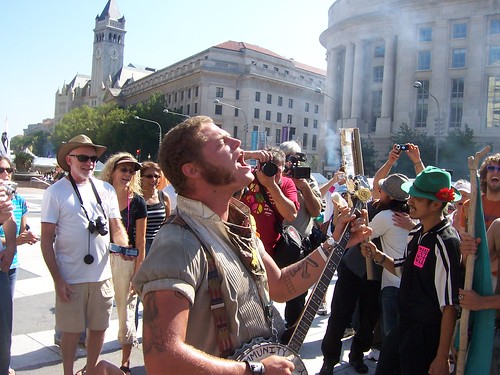
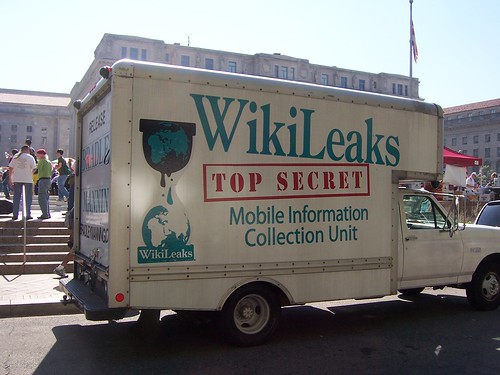
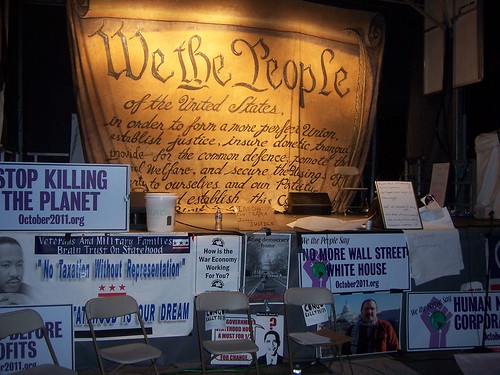
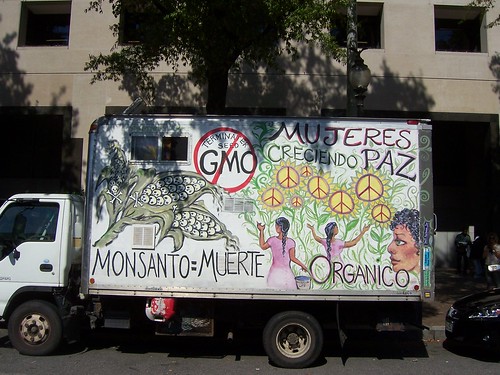
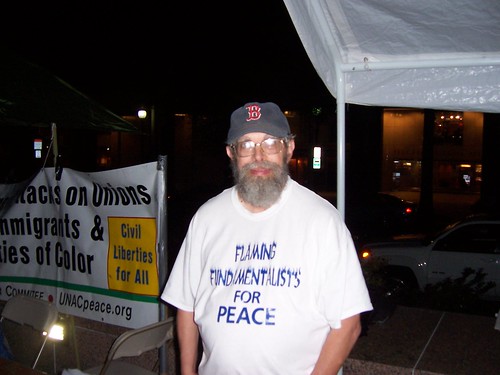 Curt Day was one of the occupiers of Freedom Plaza in Washington D.C. the Columbus Free Press spoke with on Friday Oct 7. He said activists on the left who want to build a mass movement have to get outside our comfort zones and directly help people with their needs, whether it pertains to housing, medicine, food, transportation, or education.
He said the political left has neglected community involvement on an individual basis and on a group basis.
“If you look at the Black Panthers in the 60s and 70s, they were doing things that served the community. They were feeding the children. They were opening medical clinics. You couldn’t have a Black Panther chapter without doing one of those two things.”
We want everyone that is able to come down to the capital of our great state of Ohio to show unity in our efforts to eliminate corporate influence in our government. Bring copies of the original Occupy Wall Street grievances to pass, a sign, snacks, blankets, dedication, etc. to help contribute to our cause. No contribution is too small.
Please come down whenever you can to show support. This movement takes boots on the ground, not fingers on keyboards. If you come down and only see a few people, don't be discouraged -- every person who takes time out of their day, even if it's an hour, gives credibility to our cause. If you feel misrepresented, disenfranchised, or sold out by our government -- the government of the people -- then please give your time to the occupation.
WE ARE THE 99%
Occupy Columbus Occupy Columbus 10/10/11 Columbus Day at the Statehouse
Photos from Oct. 10 event
Oct 10 event
Please come down whenever you can to show support. This movement takes boots on the ground, not fingers on keyboards. If you come down and only see a few people, don't be discouraged -- every person who takes time out of their day, even if it's an hour, gives credibility to our cause. If you feel misrepresented, disenfranchised, or sold out by our government -- the government of the people -- then please give your time to the occupation.
WE ARE THE 99%
Occupy Columbus Occupy Columbus 10/10/11 Columbus Day at the Statehouse
Photos from Oct. 10 event
Oct 10 event
On the day a new generation of activists “occupy” Columbus by camping out at the Ohio Statehouse, the Free Press mourns the loss of an older activist who was a one-man occupation, Jerry Doyle. Some of us met him as he set up daily “occupation” on Nelson Road in front of a nursing home holding two signs simply stating “There’s Danger Here” and “God Knows.” By sheer force of will, he shut down the nursing home where he used to work, where he had witnessed an elderly person being beaten and abused.
At the Free Press, we were used to his calls and messages which always began the same: “Nobody important, just the Doyle boy.” His “Plantation News” newsletter was a legendary muck-raking publication that exposed such an accurate truth about corruption in Columbus it often got him arrested.
Free Press Editor once represented Doyle on sentencing and appeal after the Columbus Board of Education had him arrested for “trespassing at the podium” at a School Board meeting. Of course, Doyle had the necessary speaker’s slip to speak at the podium that day, but the School Board decided to change the rules on the spot, and have him arrested.
At the Free Press, we were used to his calls and messages which always began the same: “Nobody important, just the Doyle boy.” His “Plantation News” newsletter was a legendary muck-raking publication that exposed such an accurate truth about corruption in Columbus it often got him arrested.
Free Press Editor once represented Doyle on sentencing and appeal after the Columbus Board of Education had him arrested for “trespassing at the podium” at a School Board meeting. Of course, Doyle had the necessary speaker’s slip to speak at the podium that day, but the School Board decided to change the rules on the spot, and have him arrested.
Swanson spoke with the Columbus Free Press on Saturday during the occupations in D.C. at Freedom Plaza and McPherson Square.
“It takes sacrifice but it’s very enjoyable. It takes discipline because we can be co-opted and misdirected, but I’m encouraged. We’re starting to have democratic decision-making (in the form of the people’s movement assemblies), and we’re making some pretty good decisions. So it’s a question of how many people come and join us.”
Swanson said some of the people who are joining the occupations are doing so because things have gotten worse economically and politically.
“Some of us have been trying to start this for 10 years. We’re starting it now with some extra energy---- not because the wars are getting worse, but because people are feeling it economically, and there are pros and cons to that. There are people who would be here but can’t afford to. But I think the net affect is good for activism, that things are getting worse economically for Americans. I don’t wish that to be the case but that seems to be what’s contributing here.”
Swanson said some of the people who are joining the occupations are doing so because things have gotten worse economically and politically.
“Some of us have been trying to start this for 10 years. We’re starting it now with some extra energy---- not because the wars are getting worse, but because people are feeling it economically, and there are pros and cons to that. There are people who would be here but can’t afford to. But I think the net affect is good for activism, that things are getting worse economically for Americans. I don’t wish that to be the case but that seems to be what’s contributing here.”