
Local
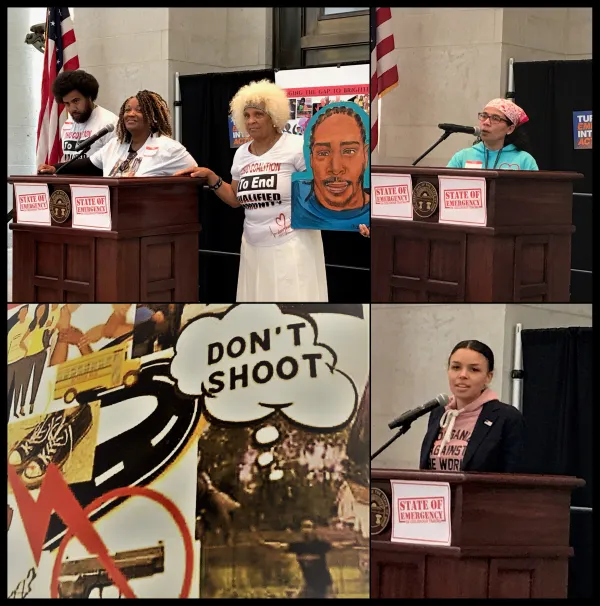
Ohio’s first-ever “Day of Empathy” – part of a nationwide effort first initiated by CNN’s Van Jones – took place Thursday, March 31 in the Ohio Statehouse atrium. The event attracted a who’s who of Columbus activists who challenged the community to seek criminal justice transformation for the betterment of all. Participants demanded more empathy from police, and at the same time, towards those suffering from trauma, like heroin addicts.
“Our game plan is to create positive change and a new vision for the great state of Ohio. To be the nation’s leader in reducing violence, crime, poverty, hungry, addiction, and trauma, and broken families by creating equity in Ohio, as well as strengthen relationships between law enforcement and the communities they serve,” said De-Escalate Ohio’s Cynthia Brown, who created and hosted the event.

Friday, April 1, 5:30-9:30pm, Gokul Cafe, 2685 Federated Blvd.
If you feel like being foolish (or not) on April Fool’s Day, join us at Gokul Cafe for appetizers, a dinner buffet, and karaoke! Gokul Cafe has some of the best vegan Indian food around.
Kamal, the owner of Gokul Cafe, has made certain that we will have an intimate evening by reserving the main dining room for us. The stage will be there for the karaoke too! We will start with appetizers from 5:30pm to 6:30pm (Jalapeño Pakoras, Potato Bondas, Baked Beans on Toast, and Idli Manchurian).
The karaoke will be from 6:30pm to 8:00pm. Dinner will be served buffet style starting at 8pm (Tofu Spinach, Malai Kofta Curry, Chana Masala, Dal Fry, Vegetable Biryani Rice, Basmati Rice, Puri bread, Mango Medley and Coconut Kir). Gluten free bread will be available for those who want it. Kamal will also be serving his refreshing Mintoli drink of mint, lemon, and ginger. All of the food at Gokul Cafe is prepared fresh and is vegan! Gokul Cafe has some of the most flavorful cuisine your taste buds will meet!

Talk World Radio: Ruth McDonough on Unarmed Resistance in Western Sahara
https://davidswanson.org/talk-world-radio-ruth-mcdonough-on-unarmed-resistance-in-western-sahara/
AUDIO:

Thursday, March 31, 2-4pm, Ohio Statehouse Atrium
The Heartbeat Movement, in partnership with Dream Corps Justice, is holding Ohio’s inaugural day of action for unity in the community to plan for community development and criminal justice transformation. Learn how the Heartbeat Movement is working to create windows of opportunities in Franklin County and the State of Ohio.
The purposes of this event include the following.
• Build empathy in elected officials
• Humanize and uplift stories of those who have been impacted by the criminal justice system
• Raise awareness about issues within the community and how people can help bring positive change
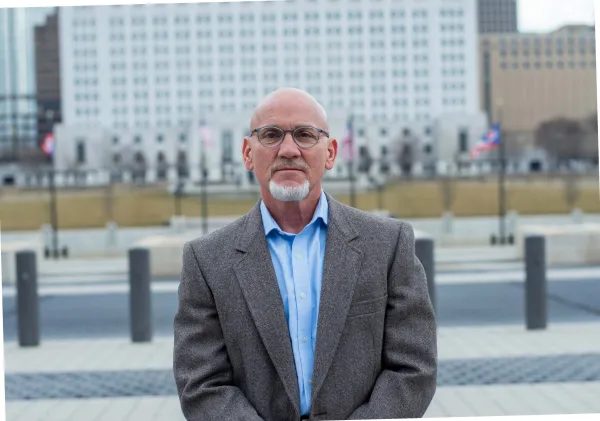
Joe Motil, former Columbus City Council candidate and longtime community advocate who is strongly considering running for Mayor in 2023 states that, “Mayor Ginther’s continued Enterprise Zone tax abatement hand outs at the Rickenbacker logistics center and elsewhere need to be repealed. And with Intel’s presence, the need for tax incentives as an enticement to locate at Rickenbacker and in other Columbus locations makes no sense at all.”
This past Monday, Columbus City Council members approved of a $5.34 million 10-year tax abatement to the athletic sportswear company lululemon USA Inc. The company has operated a distribution warehouse since 2014 at the Rickenbacker logistics center which is one of the if not the number one most risk-free development logistics centers in the United States. Rickenbacker boasted a vacancy rate of its warehouse space of 2.1 percent at the end of the recent 4th quarter.
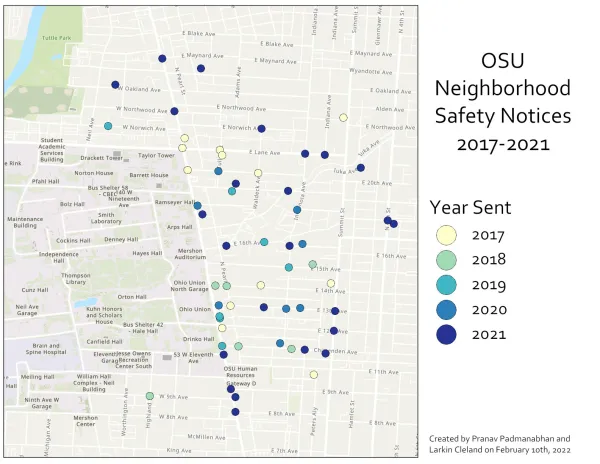
Ohio State administration and the Department of Public Safety are using crime reports to manipulate how our community understands safety, and we let them get away with it.
Between July and September 2021, Ohio State blasted out 14 “Neighborhood Safety Notices” by email to the campus community, causing panic and outrage. The result? A petition was circulated pressuring the university to hire more police, and a parent-led group purchased billboards that read “COLLEGE SHOULD NOT BE A CRIME SCENE[1].”
Was there actually a dramatic crime wave last summer? As the university sent us safety tips and continued to send alerts, most of us students assumed worst. But a closer examination of the “safety notices,” along with new revelations about the crimes that aren’t being reported, points to something else. OSU administration is manipulating crime reporting to serve its own goals—goals that have a lot more to do with money than they do with safety.

Last year Congress increased military spending. It does that every year. But last year it did it in a particularly disturbing way. President Biden asked for a $12 billion increase. Republicans asked for a $25 billion increase beyond that. The Democratic Congress ultimately passed even more than the Republicans had proposed.
This year, Biden has just proposed a $31 billion increase over the total spent last year. In the absence of a major public push for a reduction in military spending, we can expect Republicans to propose a major increase beyond the Biden increase, a handful of progressive Congress Members to mumble something about the proper Biden spending level, and Congress to pass even greater spending on war and war preparations.
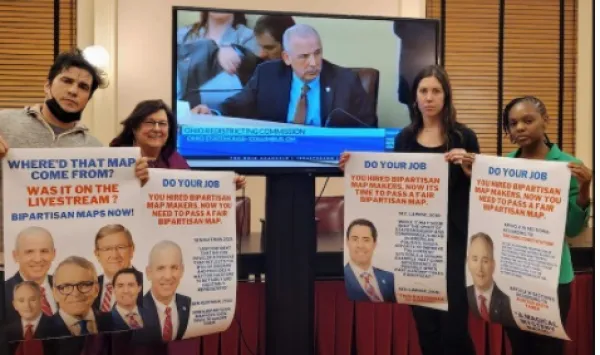
Something lawless, heartbreaking, and cruel happened last night in Columbus. In open defiance of the Ohio Constitution and the Ohio Supreme Court, a majority of the GOP members of the Commission plotted to jettison the work of the bipartisan, independent mapmakers and—just hours before the deadline—switched in and officially adopted a set of maps based on General Assembly maps previously struck down by the Court.
Yes votes were Sen. Pres. Huffman, Speaker Cupp, Gov. DeWine, Secretary of State LaRose; Auditor Faber abstained; Sen. Sykes and Minority Leader Russo voted no.

Tuesday, March 29, 2:30pm, Ohio Statehouse
We finally have a chance to support pre-trial reform in front of the Senate Criminal Justice Committee as the sponsors introduce the substitute language for S.B. 182.
That committee is typically scheduled to begin at 3:15pm, so you can meet us there or meet us beforehand at 2:30pm over at the AFP office in the KeyBank Building, 88 E. Broad St., on the 11th floor.
Because we know this is a Statehouse hearing that could be canceled or moved [right up until the last second], we’ll have a substitute event ready to go, so you know you can make the trip to Columbus and still be doing something to drive Criminal Justice Reform!
We’ll have food set up in our conference room where we can get together and run through a number of vital actions that we can take to support Criminal Justice Reform and learn about our exciting plan for Ohio, The Buckeye Blueprint! Expect it to be a casual and enjoyable time.
Additional Opportunities:
Our State Director Donovan O’Neil will be speaking on a great panel in the Statehouse Atrium on “Economic Opportunity” that will begin at 4:30pm.

Free Press hero Cynthia Brown has been unwavering since 2017 in her fight to change or end qualified immunity for law enforcement in the state of Ohio, which if successful, could remove the legal shield police have from being sued civilly by victims of excessive force.
Indeed, Brown has been knocking on Ohio Statehouse office doors of those who have the power to make change, but behind these doors are lawmakers who progressives believe would never want to end qualified immunity for police.
“They control the Statehouse, right? So no laws are going to be passed unless you have Republican support,” says Brown who founded the nonprofit De-Escalate Ohio Now! HeartbeatMovement Inc. “We were the only organization that was invited to the Statehouse during the George Floyd protests to talk policy.”
Brown says progressives want to end or change qualified immunity as well. Some of the nation’s most prominent progressives, in fact.
“Ben Cohen and Jerry Greenfield, of Ben and Jerry’s Ice Cream, they really want to end qualified immunity,” she says.