
Anti-War
I feel the finger on the trigger. I also feel it on the button.
“Dear President Obama,” the letter begins. It goes on to remind him of something he said in his 2008 presidential campaign: “Keeping nuclear weapons ready to launch on a moment’s notice is a dangerous relic of the Cold War. Such policies increase the risk of catastrophic accidents or miscalculation.”
The letter, from the Union of Concerned Scientists, is signed by 90 scientists, including 20 Nobel laureates. It continues: “After your election, you called for taking ‘our nuclear weapons off hair-trigger alert.’”
Presidential campaigns, mass killings, war . . . nuclear war. Washington, we have a problem.

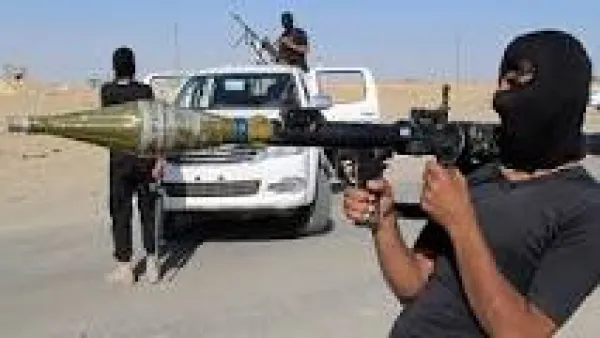
When someone commits mass murder in the United States and is tied, however significantly, to a foreign terrorist group, there remains a section of the U.S. population willing to recognize and point out that no ideology, fit of hatred, or mental derangement can do the same damage without high-tech weaponry that it does with it. Why does this understanding vanish into the ether of ignorance and apathy at the water's edge?
ISIS videos display U.S. guns, U.S. Humvees, U.S. weaponry of all sorts. The profits and political corruption that bring those weapons into existence are the same as those that litter the United States with guns. Shouldn't we be bothered by both?

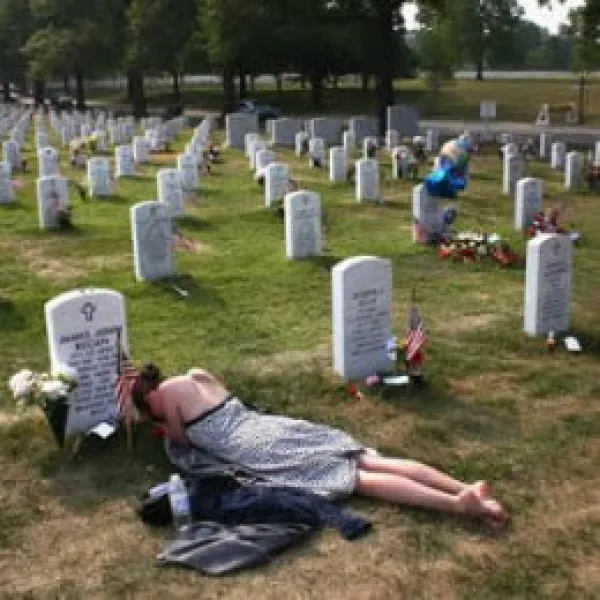
The most likely way to die in a U.S. war, by far, is to live in the country that the United States is attacking. But the most likely way in which a U.S. participant in a war will die is by suicide.
There are a couple of widely observed top causes of hundreds of thousands of U.S. troops returning from recent wars deeply disturbed in their minds. One is having been near an explosion. Another, which has been around longer than explosions have, is having killed, having nearly died, having seen blood and gore and suffering, having imposed death and suffering on innocents, having seen comrades die in agony, exacerbated in many cases by having lost faith in the sales pitch that launched the war -- in other words, the horror of war making.
President Obama went to Hiroshima, did not apologize, did not state the facts of the matter (that there was no justification for the bombings there and in Nagasaki), and did not announce any steps to reverse his pro-nuke policies (building more nukes, putting more nukes in Europe, defying the nonproliferation treaty, opposing a ban treaty, upholding a first-strike policy, spreading nuclear energy far and wide, demonizing Iran and North Korea, antagonizing Russia, etc.).
Where Obama is usually credited -- and the reason he's usually given a pass on his actual actions -- is in the area of rhetoric. But in Hiroshima, as in Prague, his rhetoric did more harm than good. He claimed to want to eliminate nukes, but he declared that such a thing could not happen for decades (probably not in his lifetime) and he announced that humanity has always waged war (before later quietly claiming that this need not continue).
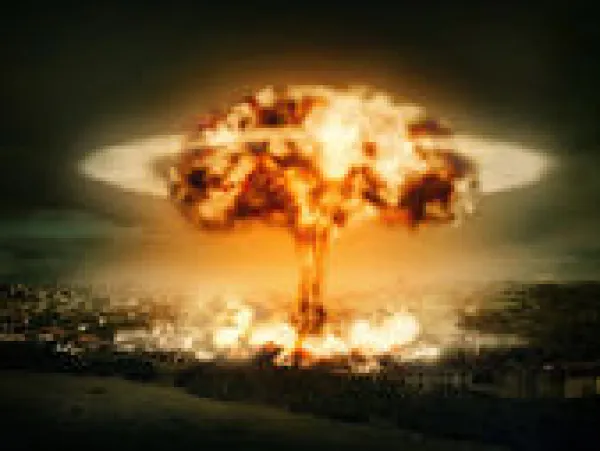
Consider this a friendly reminder to President Obama on his way to Hiroshima.
No matter how many years one writes books, does interviews, publishes columns, and speaks at events, it remains virtually impossible to make it out the door of an event in the United States at which you've advocated abolishing war without somebody hitting you with the what-about-the-good-war question.
Of course this belief that there was a good war 75 years ago is what moves the U.S. public to tolerate dumping a trillion dollars a year into preparing in case there's a good war next year, even in the face of so many dozens of wars during the past 70 years on which there's general consensus that they were not good. Without rich, well-established myths about World War II, current propaganda about Russia or Syria or Iraq would sound as crazy to most people as it sounds to me.
And of course the funding generated by the Good War legend leads to more bad wars, rather than preventing them.

On April 1, 2016 President Barack Obama addressed the closing session of the Nuclear Security Summit and praised "the collective efforts that we've made to reduce the amount of nuclear material that might be accessible to terrorists around the world."
"This is also an opportunity for our nations to remain united and focused on the most active terrorist network at the moment, and that is ISIL," Obama said. Some observers might argue that the US, itself, now represents the world's "most active terrorist network." In doing so, they would merely be echoing the words of the Rev. Martin Luther King Jr. who, on April 4, 1967, railed against "the greatest purveyor of violence in the world today, my own government."
While Obama hyped the fact that "a majority of the nations here are part of the global coalition against ISIL," he also noted that this same coalition was a major recruiting conduit for ISIS militants. "Just about all of our nations have seen citizens join ISIL in Syria and Iraq," Obama admitted, without offering any thoughts as to why this situation exists.
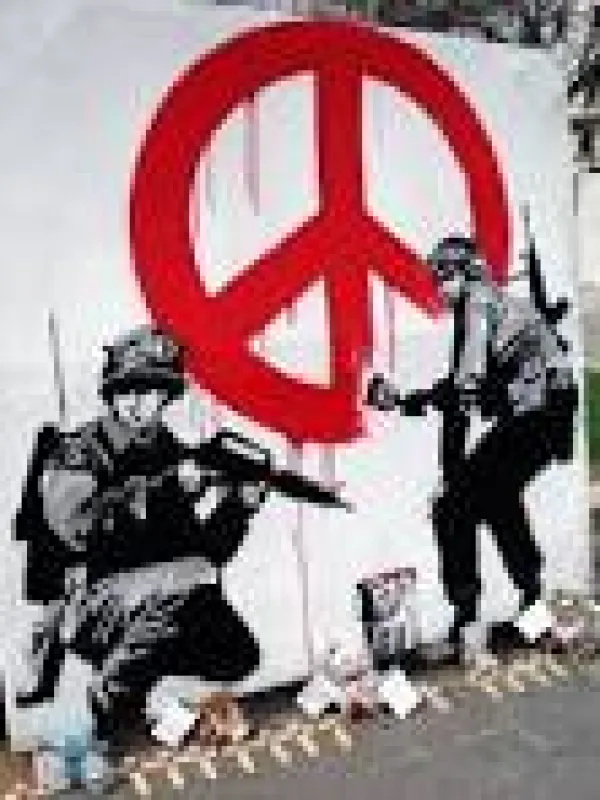
Anti-War Advocate: Is there a case that can be made for war?
Pro-War Advocate: Well, yes. In a word: Hitler!
Anti-War Advocate: Is "Hitler!" a case for future wars? Let me suggest some reasons why I think it isn't. First, the world of the 1940s is gone, its colonialism and imperialism replaced by other varieties, its absence of nuclear weapons replaced by their ever-present threat. No matter how many people you call "Hitler," none of them is Hitler, none of them is seeking to roll tanks into wealthy nations. And, no, Russia did not invade Ukraine any of the numerous times you heard that reported in recent years. In fact, the U.S. government facilitated a coup that empowered Nazis in Ukraine. And even those Nazis are not "Hitler!"

My son left a 2015 Guinness Book of World Records lying around. It's largely a mix of athletic feats, extravagant spending, freakish body conditions and diseases, and people who do dumb stuff in order to get into the book. It also features two sections focused on mass-murder. One celebrates the technology used to kill people. In that section, the United States is featured almost exclusively. The other section looks more at the wars, killing, and dying. In that section, the United States could not be avoided, but every effort was made.
Starting with the celebration of the tools of death, Guinness chooses to include these awards for the United States of America:
Most sea craft.
Most aircraft.
Most total firepower.
Most expensive super carrier.
Longest range stealth mini-sub.
Most expensive drone.
Most expensive military aircraft program.
Largest air force.
Most common fighter aircraft.
Longest "serving" bomber.
Largest anti-mine naval exercise.
Largest aerial assault using poisoned mice.
First successful combat submarine.