
Environment
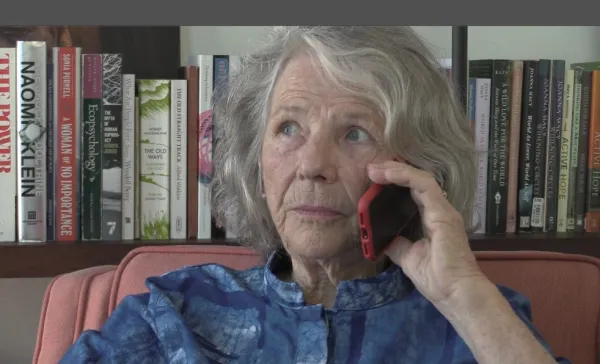
Why are they trying to start up old reactors that are already shut down and build SMRs on the sites that are already down? I know it's the weapons. It's the revamping of our nuclear weapons system. – Linda Seeley
[Editors’ Note: The San Luis Obispo Mothers for Peace was organized in 1969 and has been steadfastly advocating for local and national nuclear safety ever since.]
The Current State of Play – A Slim Window of Opportunity
Heddle: So give us the current state of play. How does the situation shake out now? What should informed and vigilant citizens be aware of here?
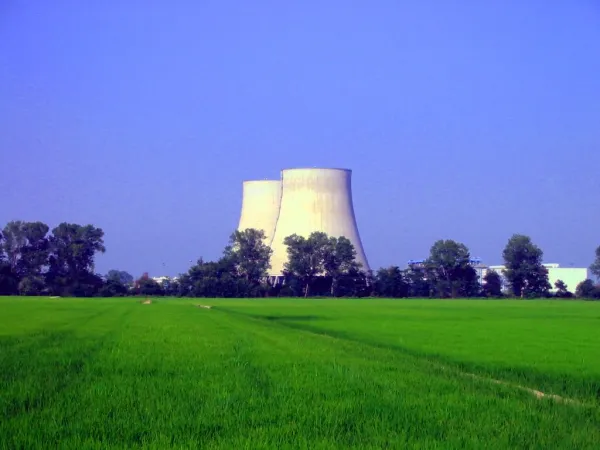
he nuclear industry’s war against renewable energy has taken center stage in California under Democratic Gov. Gavin Newsom, with a terrifying new development now threatening the state and nation with increased risk of intense radioactive fallout.
This week on October 24 — despite earlier assurances — Pacific Gas and Electric (PG&E) revealed that it will not test its 38-year-old atomic reactor in California’s Diablo Canyon for embrittlement during the current refueling outage, but instead plans to wait until the next outage in 2025 before conducting the crucial safety tests.
Embrittlement transforms a metallic reactor pressure vessel (RPV) as heat, pressure and radiation rob it of resilience. An embrittled reactor pressure vessel can shatter when coolant water is poured in during an emergency, causing massive steam, hydrogen and fission explosions.
Don’t miss a beat
Get the latest news and thought-provoking analysis from Truthout
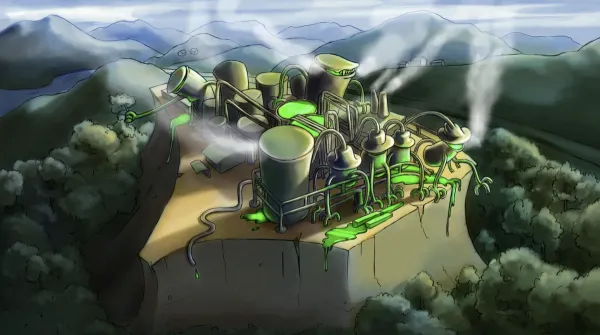
In rural West Virginia, largely hidden among steep hills, stands a $255 million facility designed to transform fracking waste into freshwater and food grade quality salts. Proponents hailed it as one of the most important environmental projects undertaken by the oil and gas industry in recent U.S. history. But local conservation groups and residents remained skeptical from the start, warning that the plant could leak toxic waste into water and air, harming human health and ecosystems in a largely forested region where tight-knit communities live close to the land.
The facility, called Clearwater, was built by the Denver, Colorado-based oil and gas extraction company, Antero Resources, and an affiliate of Veolia, the multinational French waste, water and energy management company. It lies in the heart of north central Appalachia’s booming Marcellus and Utica gas fields — America’s top natural gas-producing region — and was built to process 600 truckloads per day of fracking wastewater. Laden with heavy metals, chemicals and other contaminants, this waste frequently exhibits levels of radioactivity hundreds of times the safe limits set by regulators.
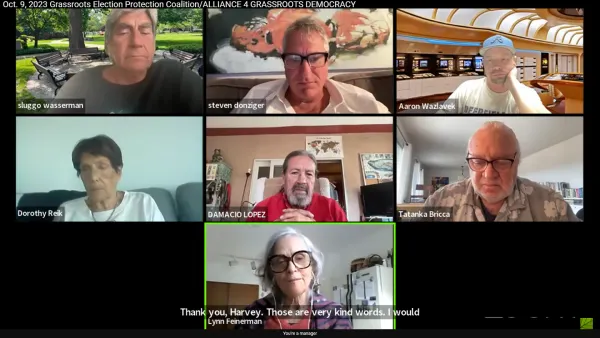
We begin GREEP #152 with the great LIBBE HALEVY, creator of the Nuclear Hotseat, who tells us about the triumphant debut of the award-winning documentary SAN ONOFRE SYNDROME.
This SOS masterpiece by MARY BETH BRANGAN & JIM HEDDLE of the Ecological Options Network join us later in the call to explain the great grassroots victory in shutting the two San Onofre reactors….followed by the horrific struggle to deal with their atomic waste.
In honor of Indigenous People’s Day, ANDREA MILLER shares some her amazing native brilliance rooted in her Cherokee background.
Introduced by MYLA RESON, we hear from ANNA RONDON of the southwestern tribes who are fighting to protect our Earth from the horrors of uranium mining.
TATANKA BRICCA reminds us of our Star Origins as well as our Indigenous roots amidst the struggle to call in powers of the Four Directions, and in hopes of freedom for the wrongly imprisoned LEONARD PELTIER..
From PAT MARIDA in central & southern Ohio we hear a brilliant dissection of the catastrophic Portsmouth/Piketon uranium enrichment/Bomb-making disaster in Shawnee/Miami land.
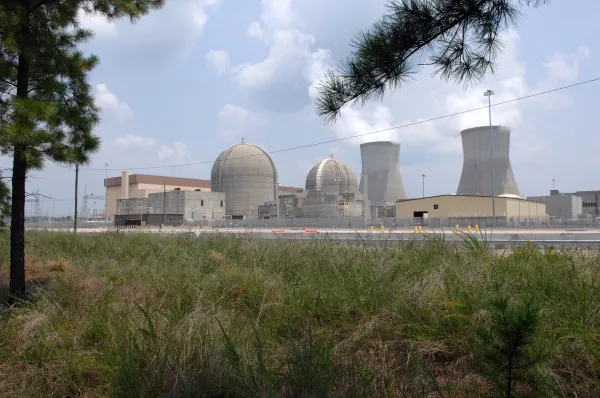
No new U.S. reactors, big or small, fission or fusion will be built here within at least the next five years…more like ten. Those that try will do nothing but divert resources away from the Solartopian technologies needed to save the Earth.
They’ll also lose big money for their billionaire backers and the taxpayers who’ll be forced to bail them out.
There are now 93 large uninsured light-water reactors licensed for operation in the US. One more-- Georgia’s Vogtle #4-- may open within the next year or so.
All of them emit radioactive Carbon-14. They release additional greenhouse gasses through the process of mining, milling and enriching uranium-based fuel, as well as attempting to store it once it’s become radioactive waste.
All commercial reactors burn at ~570 degrees Fahrenheit, warming the planet on their own.
Meanwhile, there are zero such commercial nukes in the pipeline. None are under construction.

Many thought leaders now recognize that incremental reforms, although useful, are not sufficient to propel the radical changes needed to transition to a future that avoids catastrophic climate chaos. As noted earlier, the poly crises we now face — income inequality, global warming, nuclear war, etc. are symptoms of the economic globalization that has emerged in the last 50 years. Corporate oligarchies now effectively “rule the world” with international trade agreements designed to manage the neoliberal order.
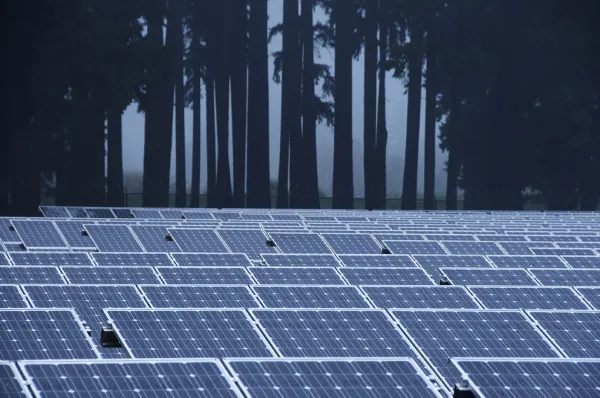
This came up I was just doing some solar assessments over in North Central Ohio and more when you go driving in in that kind of region you're going to see a lot of these signs along the road that say no solar panels on Prime farmland and it's interesting anyway because they're all clearly made by the same people. Everybody's got the same signs and so I was just curious as to who's behind this effort that's going on.
What's the motivation what's the argument so I did a little research and then I thought I'd just share that with you a lot of this is going to be happening in the Midwest specifically so what's the issue that we're dealing with
here?
I guess I should back up just a little bit because I have some sympathy for them I have some sympathy for these positions in my way of thinking. Prime farmland, Green Fields, whatever you want to call them, should be the last choice right? We should be prioritizing and saying, okay, let's deal with the brownfields first and foremost.
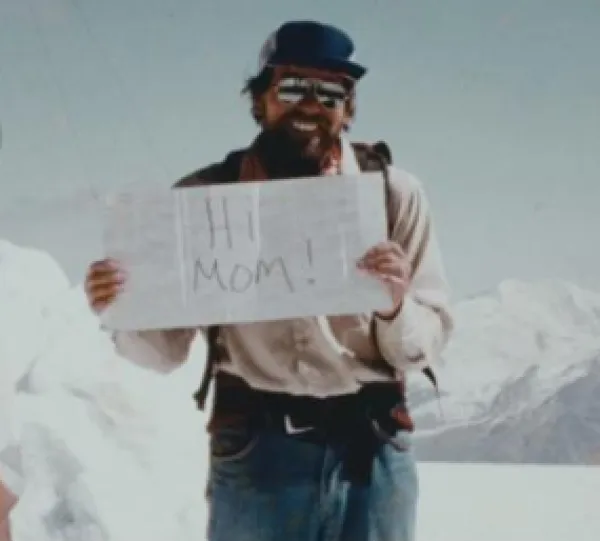
Witness the extraordinary life of Dr. Lonnie Thompson, an explorer who went where no scientist had gone before and transformed our idea of what's possible. Daring to seek Earth’s history contained in glaciers atop the tallest mountains in the world, we see the front lines of climate change, to recover these priceless historical records before they disappear forever.
The Quelccaya Ice Cap is located 5300-5670 meters above sea level in the southeastern Andes of Peru and is the Earth’s largest tropical glacier. The observed change in surface elevations on QIC is similar to those seen at other glaciers. However, the second-largest mountain range in Peru, the Cordillera Vil-canota (CV), south-east of the Cordillera Blanca, has received much less attention to date. Consequently, little is known about the timescales and equilibrium conditions of the vast majority of tropical Andean glaciers, and how climate variability affects their mass balances. In Peru, most studies have focused on glaciers in the Cordillera Blanca, which represents the largest mountain range in the tropics.

The two nuclear reactors at Brookhaven National Laboratory on Long Island, New York were shut down in the late 1990s because they had been leaking tritium into the water table below, part of the island’s aquifer system on which more than 3 million people depend on as their sole source of potable water.
BNL was established on a former Army base in 1947 by the then U.S. Atomic Energy Commission to develop civilian uses of nuclear technology and do atomic research.
BNL scientists were upset with the U.S. Department of Energy over the closures. BNL has been a DOE facility in the wake of the elimination of the AEC by the U.S. Congress in 1974 for being in conflict of interest for having two missions, promoting and also regulating nuclear technology.
The water table below BNL flows largely into a community named Shirley.
Welcome to Shirley: A Memoir of an Atomic Town is a 2008 book by Kelly McMasters, a professor at Hofstra University on Long Island, who grew up in Shirley.
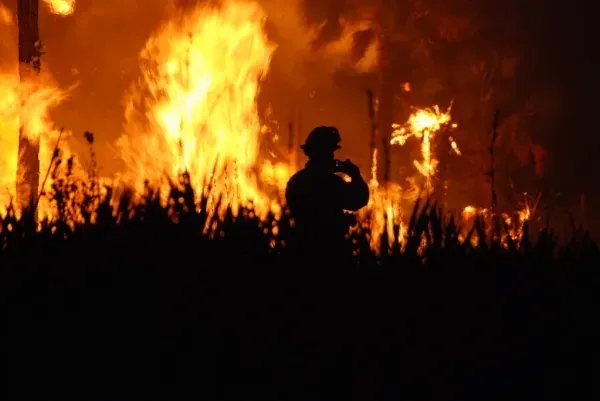
“. . . we need to do everything we can to keep (global) warming as low as possible.”
When it comes to climate change, one two-letter word has me totally perplexed: “we.” There’s an implication of global unity — a transcendent “we,” marching as to war (so to speak) — facing humanity’s greatest crisis, undoing the exploitative, Earth-destroying aspects of our social structure and grabbing control over the planet’s rising temperature. We need to do everything we can!