Labor
Haga clic aquí para español
The first installment (“I’m just a consumer”) closed with two admonitions. One said we should value people instead of tossing them aside as “mere hands,” and the other is confident we can cast aside propaganda that justifies inequity by the age old trick of blaming the victim. This installment scrutinizes a couple of those victim-blaming urban legends that twist our outlook to see our colleagues as disposable implements.
Like that previous piece, this one springs from reflections on chapters 15 and 16 of Beyond Capital by István Mészáros. I encourage you to read them for yourself to make up your own mind.
There’s Something Special about this Place
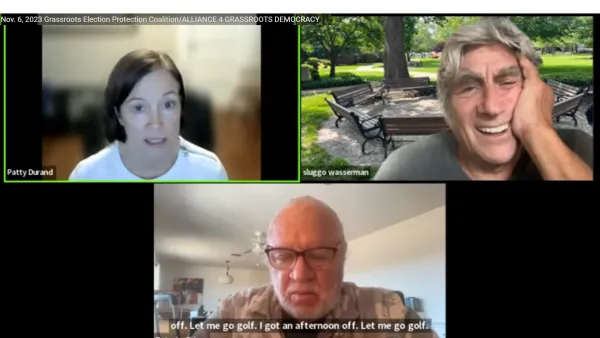
Our GREEP zoom #156 opens as the magnificent ANDREA MILLER of the Center for Common Ground tells us about the critical election in Virginia, showing us the astounding flood of money into these key races. It’s an amazing show of the power of corrupt funding in what’s left of our democracy.
From the labor movement we then hear PATRICK CROWLEY, AARON WAZLAVEK and JAY PONTI fill us in powerful developments in the green economy as strikes proliferate throughout the nation. The recent rise of organized labor is one of the great unexpected successes of the new century.
MYLA RESON and TATANKA BRICCA give us critical perspectives on all this.
Then WENDI LEDERMAN tells the horrifying on-going details of the Cop City assault on Atlanta, protestors and the actual law with a wave of brutal, illegal repression.
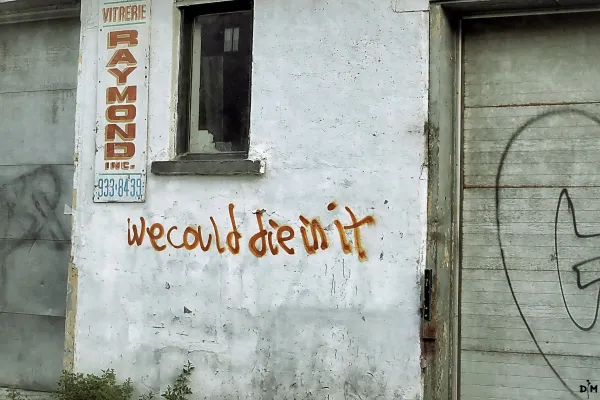
It’s all so easy to romanticize the uprising against that gray sense of isolation and helplessness we all feel every day. (New Moon on Monday by Duran Duran jumps to my own mind. No doubt each Free Press’s rebel has a favorite!)
But we mustn’t forget Rosa Luxemburg’s warning about how innocents confuse the two: the day of the uprising is what will be celebrated on anniversaries, but the revolution to change society down to its roots takes a long time, most likely many generations. It’s one thing to pick up the reins when a government collapses, but transforming society down to its roots is a much deeper and complex matter. What comes first? Do we take office to change the laws, or remodel society to the point that laws have to be changed to catch up with a new reality, some combination of the two, or something else entirely?
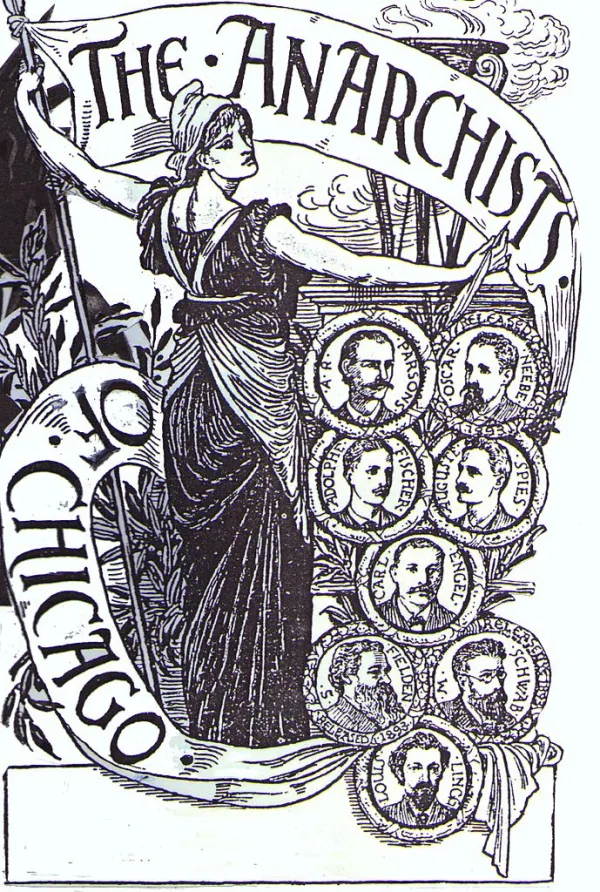
Industrial production in the United States grew by leaps and bounds after the Civil War in the 1860s. Chicago was one of those major industrial centers where factory hands labored a six day work week, Monday through Saturday, putting in a bit over 60 hours weekly.
Like most times throughout U.S. history, bosses nurtured immigration to keep wages low and complaints in check. Thousands of Chicago’s immigrants in those days hailed from Germany and Bohemia, responsive to unionization thanks to their backgrounds in anarchy and socialism from their home countries — some had read the recent writings of Marx and Engels, for instance.
“We are now faced with the fact that tomorrow is today. We are confronted with the fierce urgency of now. In this unfolding conundrum of life and history, there is such a thing as being too late.” –Dr. Martin Luther King
Over a year ago, members of the public brought to the Charlottesville City Council a demand that our money not be invested in weapons dealers and fossil fuel producers. The City Council listened. The City Treasurer listened. They supported divestment for the city’s operating budget and swiftly acted on it.
At the same time, they noted that the City’s retirement fund would be a separate question that would have to wait a few months for a key hiring decision. Meanwhile, the City Treasurer suggested that I join the Retirement Commission. I did so. I’ve spent hours and hours in committee and subcommittee meetings. Today I resigned.
U.S. politics has for three-quarters of a century been shaped by the question “Do you support the troops?” The understood meaning of the question has been “Do you want members of the military to live or do you wish them dead?” The effective meaning of the question has been “Do you want unlimited unaccountable spending on weaponry and endless wars or are you an evil traitor?”
Such a question cannot be answered or undone, but it can be replaced with a different question.
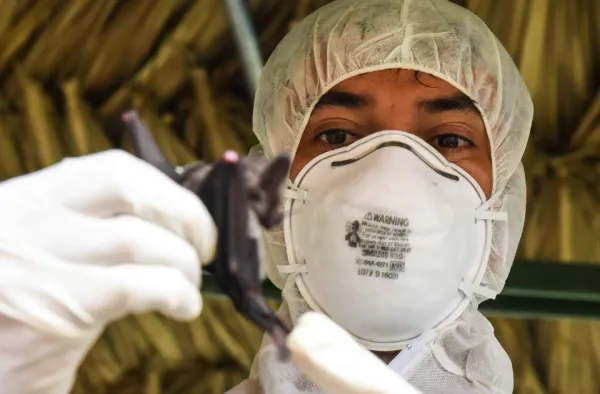
What if we were to ask this question: Do you support the health workers? The understood meaning could be: Do you think that doctors and nurses and emergency medical technicians and health workers by whatever names should live or do you wish them dead? Are you grateful for their service? Do you believe they should have the sort of armor or protective clothing and equipment their colleagues in China have? Do you think they should have the tests and treatments they need to accomplish their mission, and that people should follow their guidance?
A Winnipeg Free Press Exclusive
He stands about 5-10, with hair that’s shaggy on top and clipped close at the sides. He pulls at his bushy beard when he's deep in thought. His arms are often crossed when he talks.
If you walked past him on the sidewalk, you wouldn’t look twice.
Racial and homophobic epithets pepper his speech. He hates people who aren’t like him. He hates Jews and rants about conspiracies against white men. He quotes neo-Nazis such as Tom Metzger, James Mason and George Lincoln Rockwell.
He claims to be a member of the Canadian Armed Forces and said he was trained as a combat engineer. That training makes him highly coveted by the global fascist organization of which he's a member. He wants to pass on those skills to other neo-Nazis.
On a warm weekday evening in August at Winnipeg’s Whittier Park, he points to a nearby rail line and talks about the possibility of derailing a train. "Even if you didn’t want to make that go boom," he mutters, before explaining how someone could sabotage the tracks.

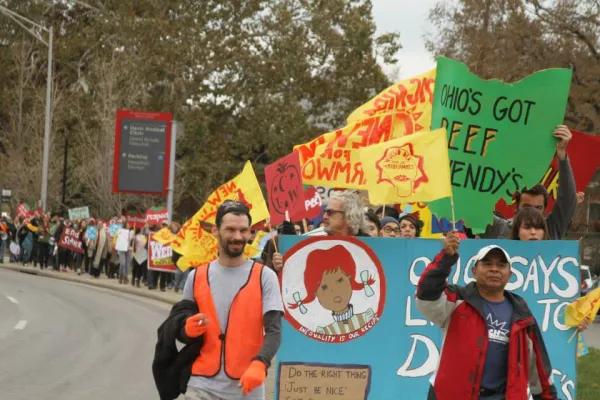
The first memory I have of Wendy’s was in the mid 1970’s in Albuquerque, New Mexico. My mother told me of a new restaurant in Old Town that served square hamburgers. She loved that they had a salad bar – the old-style salad bar where you had the option of one serving or all you can eat, but everyone cheated. They served a delicious burger with fresh lettuce and tomatoes. It’s a good memory of my mom who was born in the country but called herself a “city girl.” She considered Wendy’s to be “city living.”
More recently in 2013, a friend of mine and local Columbus worker’s rights activist Rubèn Castilla Herrera gave a talk. He held up a tomato and contemplated, how did the tomato in his hand arrive in Columbus? Who picked it? He and his family were pickers of fruit and vegetables in his youth. He was working with an organization called the Coalition of Immokalee Workers (CIW) and their struggle for justice in the fields and their goal for Fair Food. The CIW formed to combat the historical mistreatment of these farm workers in the work place.