
Peace
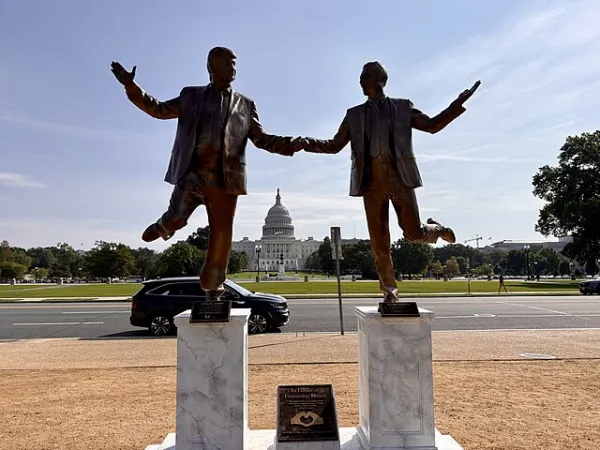
President Donald Trump and his merry menagerie that inhabit the White House have had a couple of exciting weeks bringing “peace or pieces” to half the world while also pulling back the curtain on what that naughty character Jeffrey Epstein just might have been up to while spending hundreds of millions of dollars setting up venues for screwing and filming fifteen year old women being sexually abused. And it was all funded by Jewish billionaires and plausibly Mossad to benefit Epstein and his “clients” including possibly Bill Clinton and Donald Trump himself as well as good old Israel.
I dedicate this question, which is at the core of the book with which I am struggling, to Donald Trump.
When we think of power, the word itself commands that we carve the concept into something isolated and wieldable: a sword, a gun, a scepter. Power means power over. There is no basic concept of power – no word for power in the English language – that also means collaboration, collective participation: people working together, individually empowered at the same time that they are part of a larger whole.

Israel’s allies worldwide are desperately scrambling to help Tel Aviv re-establish a convincing narrative, not only concerning the Gaza genocide, but the entire legacy of Israeli colonialism in Palestine and the Middle East.
The perfect little story, built on myths and outright fabrications — that of a small nation fighting for survival amid ‘hordes of Arabs and Muslims’ — is rapidly collapsing. It was a lie from the start, but the Gaza genocide has made it utterly indefensible.
The harrowing details of the Israeli genocide in Gaza were more than enough for people globally to fundamentally question the Zionist narrative, particularly the racist Western trope of the ‘villa in the Jungle’ used by Israel to describe its existence among the colonized population.
In the face of the international legal and political systems' paralyzing silence and utter failure to hold Israel accountable for its genocide in Gaza, international civil society has refused to stand idly by. Instead, it continues to forge a path, presenting essential working models for what true justice in Palestine must look like.

Let him rest in . . . peace?
I don’t know. The irony of those words is a little too much for me to grasp as I sit here contemplating the death of Dicke Cheney at age 84. Cheney, mastermind and primary organizer on the “war on terror,” which, in a 20-year span of insanity, cost the United States some $8 trillion and killed (murdered) nearly a million people, according to Brown University’s Costs of War Project.
And as though that total weren’t high enough, the Project notes that this number is very much an undercount, since it doesn’t include indirect deaths of the war caused by “disease, displacement and loss of access to food or clean drinking water.”
I’m trying to find my way back into The Possible Future, the working title of the book I started over a decade ago and eventually lost hold of. Somewhere deep inside me I feel compelled to reclaim it, but almost simultaneously I feel like I’m kidding myself. The topic is beyond me: our evolutionary necessity to transcend war and dehumanization and build humanity around the belief that power is collective.
Yes, I’ve done lots of research – in particular on Restorative Justice, a.k.a., the peace circle process – but . . . what? There’s a sense of doubt in me – a deep hole – that I can’t seem to overcome. Who do I think I am? I’m just an ordinary soul. How can I presume to write a book of such scope that it influences human evolution? By myself?
Well, here’s a piece of it from the likely first chapter, discussing the myth, which I refer to as the “old story,” around which humanity has organized itself:

A single, candid statement by US President Donald Trump during a Fox News interview on October 9 may illuminate the true calculus behind Israel’s decision for a ceasefire in Gaza, following a relentless, two-year genocidal campaign that has tragically killed and wounded nearly a quarter of a million Palestinians.
“Israel cannot fight the world, Bibi,” Trump declared during the interview, a direct warning he said to have previously delivered to Israeli Prime Minister Benjamin Netanyahu.
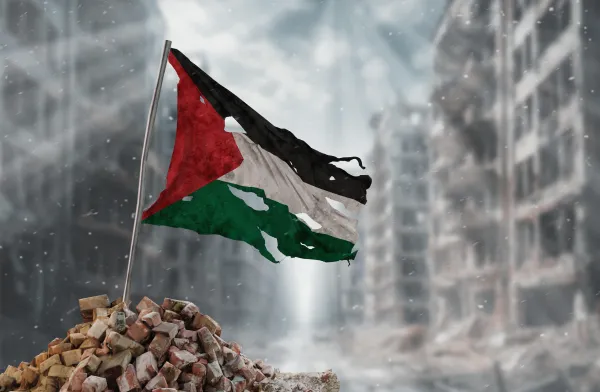
On Friday, October 10, 2025, the ceasefire took effect. After 735 days, tens of thousands of the two million displaced Palestinians began the painful walk home—some to rubble, others to houses barely standing. After two full years of relentless bombardment, more than ten percent of Gaza’s population was either killed or injured.
Over 81,000 were reported killed, including 67,000 confirmed dead and 14,000 missing and presumed dead. Among them: 20,000 children, 22,000 women, and 22,000 fathers. At least 1,000 infants under one year old perished—one Palestinian child every hour for two years.
The medical sector was systematically targeted: 1,670 medics and 140 civil defense workers killed, 125 health facilities destroyed, and 34 hospitals reduced to ruins. Gaza’s health system, once fragile, was deliberately annihilated.
Starvation became a weapon of war. At least 459 people, including 154 children, died of hunger. In their search for food aid, 2,600 more were killed and 19,000 injured. To silence witnesses, 254 journalists were targeted and killed.
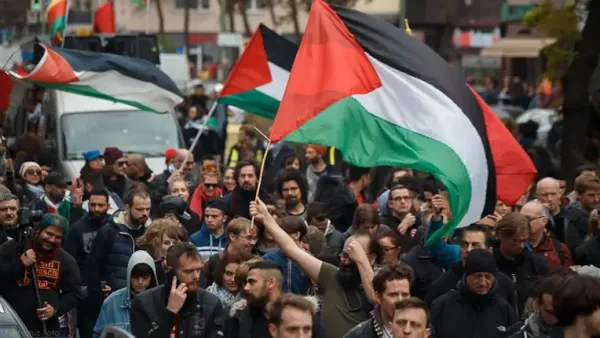
‘Victory has a thousand fathers. Defeat is an orphan’
Attributed to Count Ciano
How very true. Thunderous self-congratulations echo over the temporary ceasefire in Gaza that many hope will end two years of massacre, kidnappings and war crimes in this open-air prison camp.
President Donald Trump, hot in pursuit of the Nobel Peace prize, claims authorship of the just concluded ceasefire and prisoner release. His American supporters and legions of sycophants are heaping praise and accolades on him. Trump says he may shortly fly to the Mideast to ink an agreement.
I call this political kabuki. Like the so-called Abraham accords in Trump’s first term, the Gaza agreement is a sweetheart deal between US allies and satraps. Its primary object is to deflect the worldwide outcry against the genocide in Gaza fueled by US money, arms and diplomatic cover.
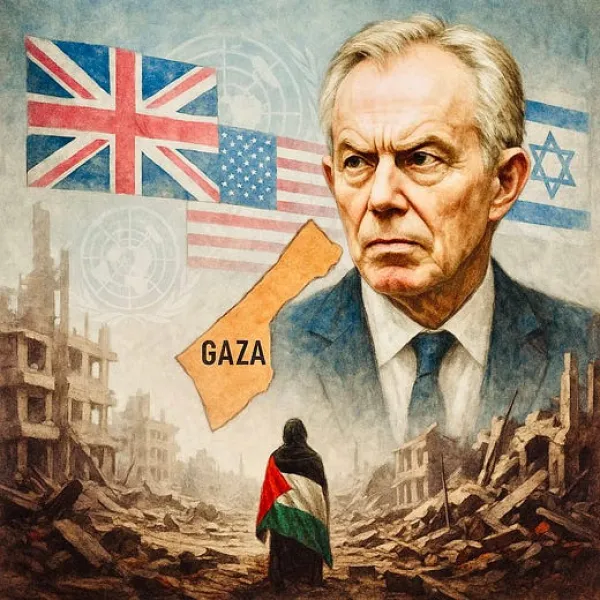
Gaza is an occupied territory. Its borders, airspace, imports, exports, and even calories are controlled by Israel and its Western backers. Gaza does not need another flag flown above its ruins; it needs the right to rebuild on its own terms.
The Mirage of “Transition”
Western governments are preparing a plan for Gaza’s postwar administration. The proposal, advanced through quiet coordination between Washington, London, and Jerusalem, would establish a new international body called the Gaza International Transitional Authority to govern the territory for several years following the conflict. The concept, promoted as a stabilization effort, is said to draw inspiration from earlier foreign-led missions in Kosovo and Lebanon.
At the center of this “plan” was the risible suggestion that former British Prime Minister Tony Blair should lead the authority, overseeing Gaza’s reconstruction, policing, and governance on behalf of the self-proclaimed international community.
Gaza Governor Blair. “You What?!”