Global
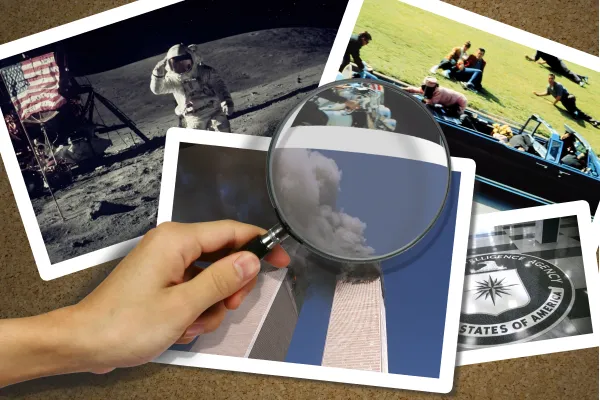
When Edward Bernays, the nephew of Sigmund Freud (the Father of Psychoanalysis), wrote his famous 1928 book, Propaganda, he titled the first chapter of the book “Organizing Chaos”. The first part of this article are quotes from the first chapter of the book. It is obvious that Bernays doesn’t try to sugar-coat what he thinks are the reasons why propaganda is necessary – and not even evil - in a modern society.
Probably the most telling admission appears in the tenth paragraph of the first chapter:
“…the manipulation of news, the inflation of personality, and the general ballyhoo by which politicians and commercial products and social ideas are brought to the consciousness of the masses. The instruments by which public opinion is organized and focused may be misused. But such organization and focusing are necessary to orderly life.”
The next dozen paragraphs relate the essence of the book:

National and local election reform groups have weighed in on the local controversy about the purchase of new voting machines, assailing the process for its unwarranted secrecy. Representatives of AUDIT Elections USA (AUDIT USA), a national nonprofit advocating for hand-marked paper ballots and post-election audits, have said that the secrecy surrounding the Shelby County purchasing process is unprecedented. The organization has advocated for auditable and secure elections in various local jurisdictions around the country, assisting local grassroots activist groups. It hosted an April 9 national forum focusing on the Shelby County controversy with experts from around the country.
“The Shelby County Election Commissioners are being asked to vote on a staff recommendation for a $10 million purchase without even seeing the alternatives they’re voting on,” said AUDIT USA founder John Brakey. “The public is being asked to comment without seeing that information either. In all our efforts around the country, we’ve never seen anything like it.”

I get it: We all must vote by mail—or we die. There is really no other safe choice.
But there is much to fear, especially for minority and young voters, with a switch to all-mail voting—unless our broken absentee ballot system is fixed.
Here’s what the “Go Postal” crowd doesn’t tell you: In 2016, 512,696 mail-in ballots—over half a million—were simply rejected, not counted. That’s official, from the federal Elections Assistance Commission (EAC).
But that’s just the tip of the ballot-berg of uncounted mail-in votes. A study by MIT, Losing Votes by Mail, puts the total loss of mail-in votes at a breathtaking 22%.
Move to 80% mail-in voting and 25 million will lose their vote.
And not just anyone’s mail-in ballots are dumped in the electoral trashcan. Overwhelmingly, those junked are ballots mailed by poorer, younger, non-white Americans.
Senator Amy Klobuchar’s proposed bill takes baby steps to expanding vote-by-mail protection but will barely bite into the 22% loss of votes especially among minorities.
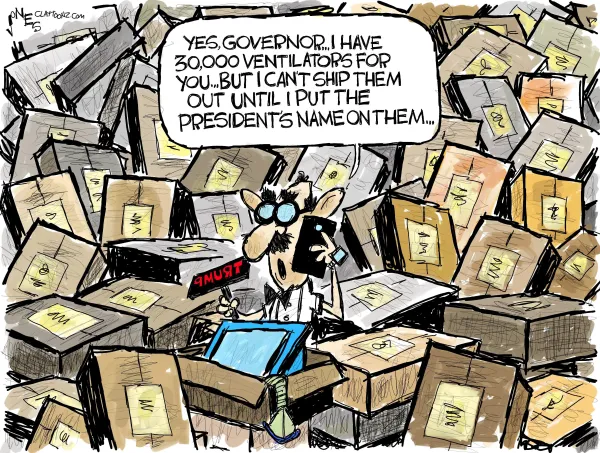

This week, soon after Bernie Sanders suspended his campaign, one of its most effective message-crafters summed up a vital challenge ahead. “The best hope to defeat Trump is to positively and constructively motivate a large Democratic turnout,” David Sirota wrote.

BANGKOK, Thailand -- A vicious, hilarious, political war has erupted
on the Internet between Thailand's satirical dissidents and China's
outraged nationalists, prompting the Chinese embassy in Bangkok to
complain, apparently in vain.
"The recent online noises only reflect bias and ignorance of its
maker(s), which does not in any way represent the standing stance of
the Thai government nor the mainstream public opinion of the Thai
People," a Chinese embassy spokesperson insisted on its official
Facebook page.
"The scheme by some particular people, to manipulate the issue for the
purpose of inflaming and sabotaging the friendship between the Chinese
and Thai people, will not succeed," the embassy's 372-word statement
on April 14 said in English, Thai and Chinese.
The Internet battle also attracted activists in Hong Kong, Taiwan and
elsewhere, mostly cheering Thailand's mischievous jokes, insults,
political stabs, and pop art memes against China.
"Perhaps we can build a new kind of pan-Asian solidarity that opposes
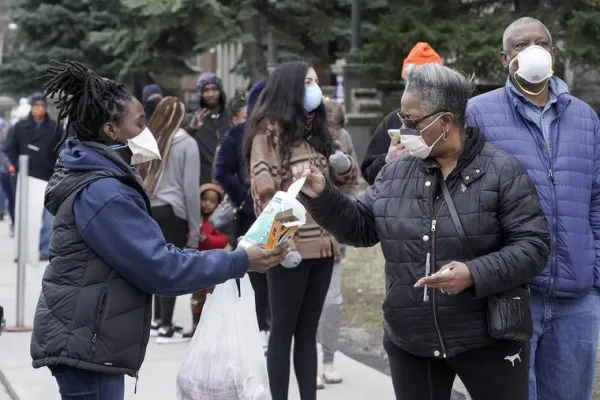
This week’s astonishing people’s victory in Wisconsin has shattered the myth of an unbeatable Trump dictatorship.
A gerrymandered legislature and the Trumpite US Supreme Court failed to steal an election they were heavily favored to win.
The big upset victory put liberal challenger Jill Korofsky on to the Wisconsin’s supreme court. It has upended all the assumptions about November 2020.
It means people power can beat dirty tricks even when perpetrated by a gerrymandered legislature and a corrupt US Supreme Court.
Let’s count the ways:
X In 2016 Wisconsin’s vicious labor-hating Gov. Scott Walker used a wide range of dirty tricks to turn Wisconsin for Donald Trump. Green attorney Robert Fitrakis found questionable voting machine software and other problems that made the official vote count highly dubious. (Bob was told by a ranking Trump insider that Walker stole at least five elections).
X But as in Michigan and Pennsylvania, Hillary Clinton—-who won nationwide by nearly three million popular votes—- refused to support legal challenges that might’ve kept Trump out of the White House.

In just a short period of time the world in Russia has changed for
everyone. I’ve started to notice how people around me are going mad.
They’ve started blaming and avoiding other people, making social
distance the priority of their lives. These people are well-educated,
well-off, with flexible minds. It doesn't matter who they were in their
life “before corona”. Now all of them are afraid. And that's the reason
for their madness.
They are afraid to go to the office, walk, meet with their friends and
just do what they usually do. And all of them are repeating the same
mantra - the situation is _very_ serious; we don't want the Italian and
American scenario be repeated here. One person told my friend: “They
cancelled the Cannes Film Festival”. They never did that before. So it
does mean the world is close to catastrophe.
Would you say it's the pandemic of coronavirus that is changing Russia?
No, I'd say it's the Pandemic of Fear that did it.
Of course, no politician wants to see all these human victims (and the
fall in their own ratings). But do they really know what to do?

I have previously explained how the COVID-19 infection is being used to frighten us into submitting powerlessly to the global elite’s latest move to take much greater control of our lives and how those who can perceive this, and wish to resist it, can do so effectively. See ‘Observing Elites Manipulate Our Fear: COVID-19, Propaganda and Knowledge’ and ‘Defending Humanity Against the Elite Coup’.
In this article I want to document a sample of the rapidly increasing evidence of how this coup is taking shape and to reiterate a strategy for defeating it.