
Anti-War
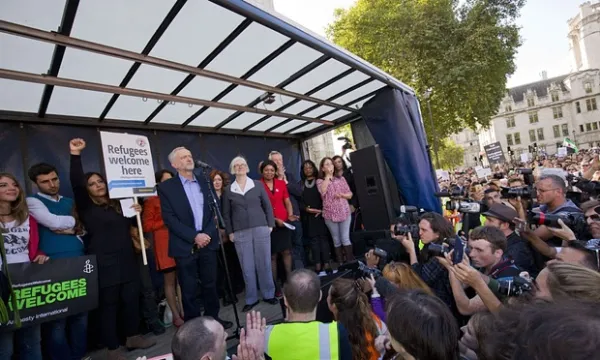
I wonder if people in the United States understand what it means that the Labour Party in London now has a peace activist in charge of it. Jeremy Corbyn does not resemble any U.S. politicians. He doesn't favor "only the smart wars" or prefer drone murders to massive invasions. Corbyn opposes wars, and he works to end militarism. He was over here in Washington recently trying to get a Brit freed from Guantanamo. He chairs the Stop the War Coalition, one of the biggest peace organizations in Britain. He meets with foreign peace activists, like me, who can't even enter the same worldview, much less the same room, with any U.S. leaders.
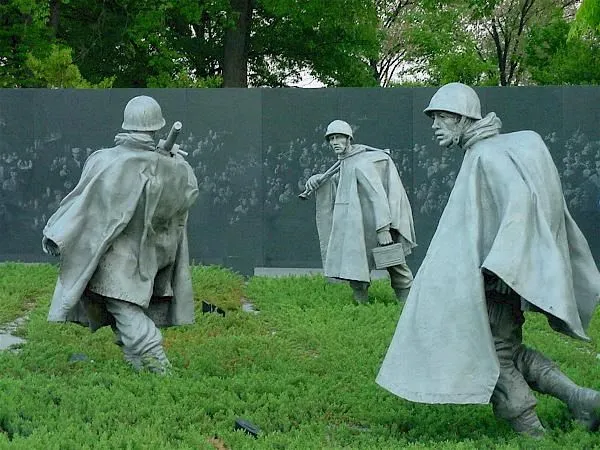
This happened some 63 years ago, but as the U.S. government has never stopped lying about it, and it's generally known only outside the United States, I'm going to treat it as news.
Here in our little U.S. bubble we've heard of a couple versions of a film called The Manchurian Candidate. We've heard of the general concept of "brainwashing" and may even associate it with something evil that the Chinese supposedly did to U.S. prisoners during the Korean War. And I'd be willing to bet that the majority of people who've heard of these things have at least a vague sense that they're bullshit.
If you didn't know, I'll break it to you right now: people cannot actually be programed like the Manchurian candidate, which was a work of fiction. There was never the slightest evidence that China or North Korea had done any such thing. And the CIA spent decades trying to do such a thing, and finally gave up.

The United States and its European allies have launched wars on the Middle East that have created an enormous refugee crisis. The same nations are threatening Russia. The question of maintaining peace with Iran is on the tip of everyone's tongue. Even in Asia and the Pacific, not to mention Africa, the biggest military buildup is by the United States.
So why does Japan, of all places, have streets full of antiwar demonstrations for the first time since the U.S. war on Vietnam? I don't mean the usual protests in Okinawa of U.S. bases. I mean Japanese protests of the Japanese government. Why? Who did Japan bomb? And why do I say the future of war and peace in the world is at stake in Japan?

By the latest count, the nuclear agreement with Iran has enough support in the U.S. Senate to survive. This, even more than stopping the missile strikes on Syria in 2013, may be as close as we come to public recognition of the prevention of a war (something that happens quite a bit but generally goes unrecognized and for which there are no national holidays). Here, for what they’re worth, are 10 teachings for this teachable moment.

Fascism From West Point
By
http://warisacrime.org/content/fascism-west-point
This headline in the Guardian is completely accurate: West Point professor calls on US military to target legal critics of war on terror.
Another war is in the making in Libya: the questions are ‘how’ and ‘when’? While the prospect of another military showdown is unlikely to deliver Libya from its current security upheaval and political conflict, it is likely to change the very nature of conflict in that rich, but divided, Arab country.
An important pre-requisite to war is to locate an enemy or, if needed, invent one. The so-called ‘Islamic State’ (IS), although hardly an important component in the country's divisive politics, is likely to be that antagonist.
Libya is currently split, politically, between two governments, and, geographically, among many armies, militias, tribes and mercenaries. It is a failed state par excellence, although such a designation does not do justice to the complexity of the Libyan case, together with the root causes of that failure.

Three cheers for Reuters pointing out that the Pentagon can't explain what it did with $8.5 trillion that taxpayers gave it between 1996 and 2013.
Three trillion cheers for a blogger who is pointing out that this fact renders many other concerns ludicrous, and recommending that people bring it up at every opportunity:
Understanding human conflict requires us to understand human psychology. And it is only when we understand the psychology that drives conflict that we can take intelligent steps to address it.
Unfortunately, understanding the psychology of conflict is not easy and I would like to illustrate one significant problem in this regard and explain what we can do about it. That problem is what is often called 'projection' or 'transference' and it illustrates the importance of emotional, as distinct from intellectual, content in any conflict.
Let me start by quoting a few carefully selected words from a lengthy dialogue recently published. http://peacefromharmony.org/?cat=en_c&key=628 The dialogue took place between two Israelis, two Palestinians and several individuals from other countries and was focused on the Israeli occupation of Palestine. It was concluded by the moderator's observation that 'our discussion has reached an impasse'.

I've found there isn't really any way to touch on this topic without misunderstanding, but here's a try. Iran has never had a nuclear weapons program or threatened to launch a war against the U.S. or Israel. Many opponents of the Iran deal in the U.S. Congress and nearly every, if not every single, proponent of the agreement in the U.S. Congress has proposed war as the alternative. Some examples are here.

The US added Yemen to its 14 years of continuous war somewhere
 he American-backed genocidal war on Yemen is in its fifth month, making it one of the hotter issues in the 2016 Presidential campaign, right? Wrong.