
Human Rights
In an online discussion I asked Salil Shetty, Secretary General of Amnesty International, a fairly straightforward question:
"Will Amnesty International recognize the UN Charter and the Kellogg Briand Pact and oppose war and militarism and military spending? Admirable as it is to go after many of the symptoms of militarism, your avoidance of addressing the central problem seems bizarre. The idea that you can more credibly offer opinions on the legality of constituent elements of a crime if you avoid acknowledging the criminality of the whole seems wrong. Your acceptance of drone murders as possibly legal if they are part of wars immorally and, again, bizarrely avoids the blatant illegality of the wars themselves."
http://davidswanson.org/node/4933
Life is a very jumbled mixture. The pain of it, if you're awake and thinking, brings into your mind the happiest moments you can remember and transforms them into agony unless you resist bitterness with every drop of strength you have left, if not more. Physical pain makes clear-thinking and generous thinking more difficult, until death appears in front of you, and then the physical pain is as nothing.
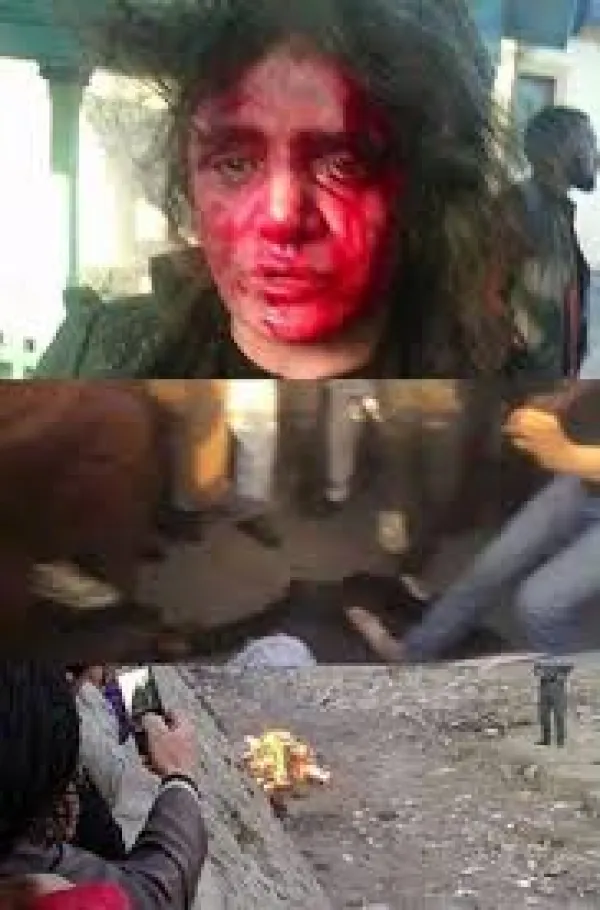
I know that I'm not supposed to be bitter, and yet that somehow makes it harder not to be. When my father and sister and two cousins were blown into little pieces last year, it was the action of some distant office worker pushing a switch on a remote-controlled airplane. And I'm supposed to believe that they meant well. And this is supposed to make it better. But somehow it makes it worse.
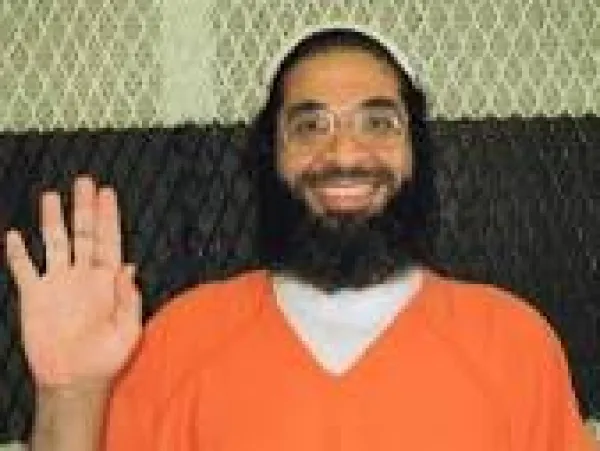
In the week since it was announced that Shaker Aamer, the last British resident in Guantánamo, is to be released, to be returned to his family in the UK, there has been a huge sigh of relief from the many, many people who campaigned for his release — supporters of the long-standing Save Shaker Aamer Campaign, which I have been involved with for many years, attending protests and speaking at events, of We Stand With Shaker, the campaign I established with Joanne MacInnes last November, which drew huge support for photos of celebrities and MPs standing with a giant inflatable figure of Shaker, and supporters of the Shaker Aamer Parliamentary Group, established last November by John McDonnell MP, who, at the time, was a persistent supporter of worthy causes and fighter against injustice, and, with Caroline Lucas (our sole Green MP), Jeremy Corbyn and Shaker’s constituency MP, Jane Ellison, the most consistent MP suppor
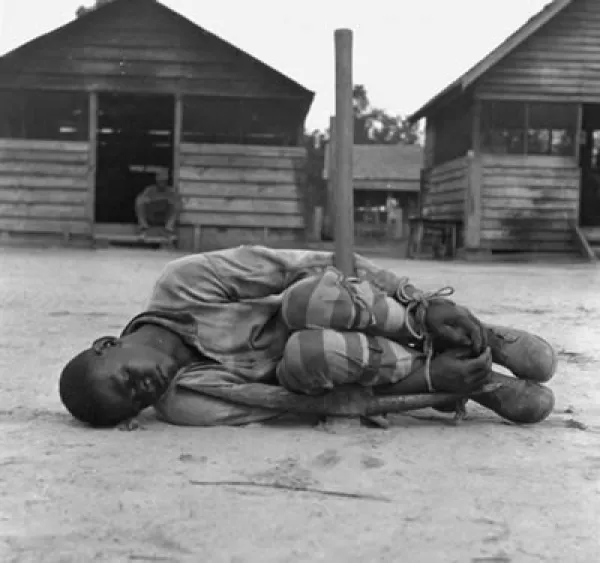
As documented in Douglas Blackmon's book, Slavery By Another Name: The Re-Enslavement of Black Americans from the Civil War to World War II, the institution of slavery in the U.S. South largely ended for as long as 20 years in some places upon completion of the U.S. civil war. And then it was back again, in a slightly different form, widespread, controlling, publicly known and accepted -- right up to World War II. In fact, in other forms, it remains today. But it does not remain today in the overpowering form that prevented a civil rights movement for nearly a century. It exists today in ways that we are free to oppose and resist, and we fail to do so only to our own shame.
The Pope will speak to Congress on Thursday. No other institution on earth does more to destroy the habitability of the planet for future generations. Will the Pope raise his concerns with them or only when he's thousands of miles away?
No other institution sells and gives as many weapons to the world, participates in as many wars, or invests remotely as much in planning, provoking, and pursuing war after war. Will the Pope speak up for abolishing war in the U.S. Capitol or only when he's nowhere near the leading maker of war on earth?
As Nicolas Davies documents in a forthcoming article, when the U.S. has reduced military spending, the world has followed. When it has increased, the world has followed. The Pope wants nuclear weapons eliminated. Will he mention that to the leading investor in nuclear weapons?
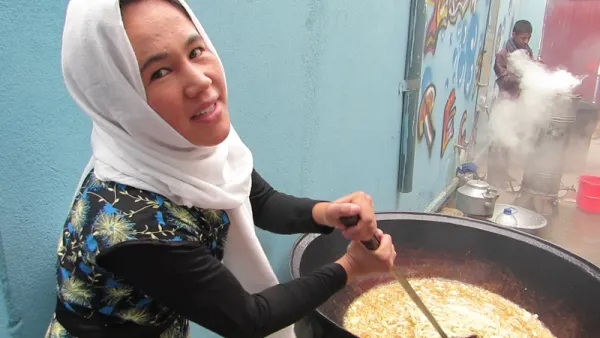
21st September 2015, the International Day of Peace
Kabul, Afghanistan
16 years ago, a Talib ( literally translated, a student ) shot and killed Zarghuna’s father.
Zarghuna and her family were frantically fleeing a desperate situation. The same holds true for more than 60 million refugees in today’s ‘progressive’ world.
If you’re like me, you may think, “Oh, how messy is Zarghuna’s part of the world.”
“How terrible are the Taliban!”, and perhaps even, “We should imprison or eliminate them.”
But, Zarghuna thinks differently.
In the noisy violence raging around her, Zarghuna quietly but resolutely says, “#Enough!”
Okay, I confess I’m not confident that, in our hurried lives, we’ll appreciate the relevance of Zarghuna’s distant struggle.
But I trust we can care for her when she cries.
Just sitting there. Crying.
“I don’t think my mother will manage if Arif leaves,” she said.
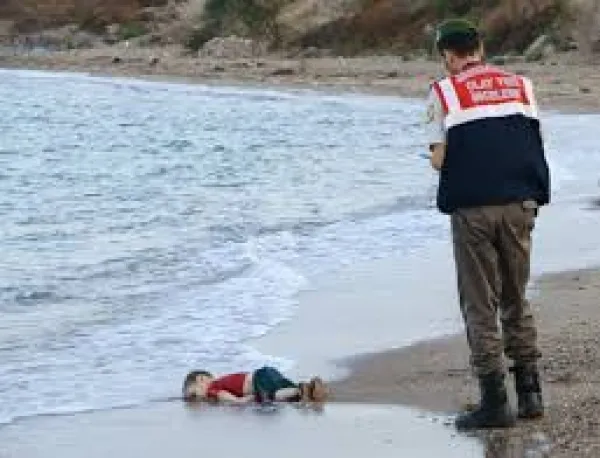
The world hemorrhages. Refugees flow from its wounds.
Is there a way to be innocent of this?
People are washed ashore. They die of suffocation in humanity-stuffed trucks. They flee war and politics; they flee starvation. And finally, we don’t even have sufficient air for them to breathe.
For words to matter about all this, they have to express more than “concern” or even outrage – that is to say, they have to cut internally as well as externally. They have to cut into our own lives and personal comfort. They have to cut as deep as prayer.
“Wonderful column, Bob. It brings up the post-Katrina images of armed citizens blocking a bridge so that our own refugees could not infest their neighborhoods.”

In the United States it's hard to imagine admiring an attorney general. The words call to mind people like Eric Holder, Michael Mukasey, Alberto Gonzales, John Ashcroft, Janet Reno, and Edwin Meese. There were those who fantasized that Barack Obama would not prevent an attorney general from prosecuting top officials for torture, but the idea of a U.S. attorney general prosecuting a U.S. president for war/genocide doesn't even enter the realm of fantasy (in part, because Americans don't even think of what the U.S. military does in the Middle East in those terms).
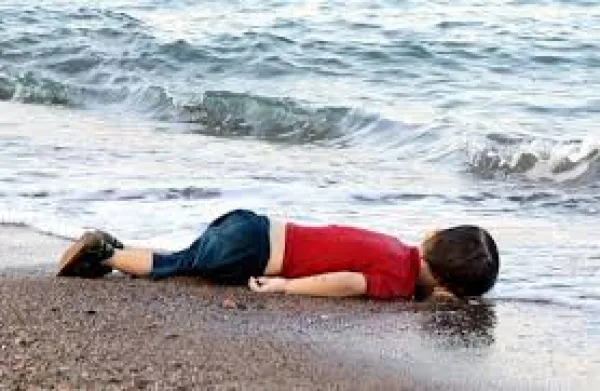
Who are all these people?
Here’s another global problem — this flow of refugees — that national governments are apparently incapable of dealing with in a long-term, cooperative, globally responsible way. As with climate change, as with war and disarmament, they retreat into insularity in the face of such matters and become protective of their short-term, individual “interests,” which mostly concern the bureaucratic sacredness of their borders and an obsessive distinction between us and them.
“The European Union, (French President François Hollande) said, needed to create ‘hot spot’ reception centers at those borders under the greatest onslaught — in Greece, Italy and Hungary — to register new arrivals and turn back those who do not meet the requirements for asylum,” reports the New York Times.
There is much being written about the refugee crisis in Europe at the moment but none of what I have read explains why the problem is occurring and what will need to be done for the problem to be addressed.
Refugees are just one symptom of a deeper crisis. Moreover, like other symptoms of this deeper crisis, the global elite is happy to use this symptom to keep us utterly preoccupied; after all, the immediacy of the refugee problem is all too demanding of our attention and our compassion.
Thirty years ago, on 9 September 1985, I tried to resuscitate a baby in the Shagarab East 3 Refugee Camp in Eastern Sudan at the height of the Ethiopian war and famine. As a lifesaver, I had been expertly trained in cardio-pulmonary resuscitation. My attempt to resuscitate this child failed: the doctor advised me that the baby was dead and I watched her mother as I handed the dead child back to her. The mother was, understandably, utterly distraught. And, frankly, I was in considerable emotional pain myself.