
Anti-War
for The Humanist
Do not celebrate Veterans Day. Celebrate Armistice Day instead.
Do not celebrate Veterans Day — because of what it has become, and even more so because of what it replaced and erased from U.S. culture.
Former American Humanist Association President Kurt Vonnegut once wrote: “Armistice Day was sacred. Veterans’ Day is not. So I will throw Veterans’ Day over my shoulder. Armistice Day I will keep. I don’t want to throw away any sacred things.” Vonnegut meant by “sacred” wonderful, valuable, worth treasuring. He listed Romeo and Juliet and music as “sacred” things.
The suspect in today’s mass shooting (well, the biggest one I’ve heard of thus far this morning; the day is young) is a veteran of the U.S. Marine Corps.
– Jamal Khashoggi’s column lede, Washington Post, September 11, 2018

The Collapse of the War Systemis the hopeful and predictive title of a 2007 book by John Jacob English, who’s actually Irish, and it may prove a valuable stepping stone for many trying to partially back their way out of support for endless war yet not prepared to acknowledge the more coherent and empirically substantiated wisdom of complete abolition. Whether any of the authors of the following books which I routinely recommend to people had read English’s book I do not know, but it also makes a nice lead-up chronologically and logically to them:
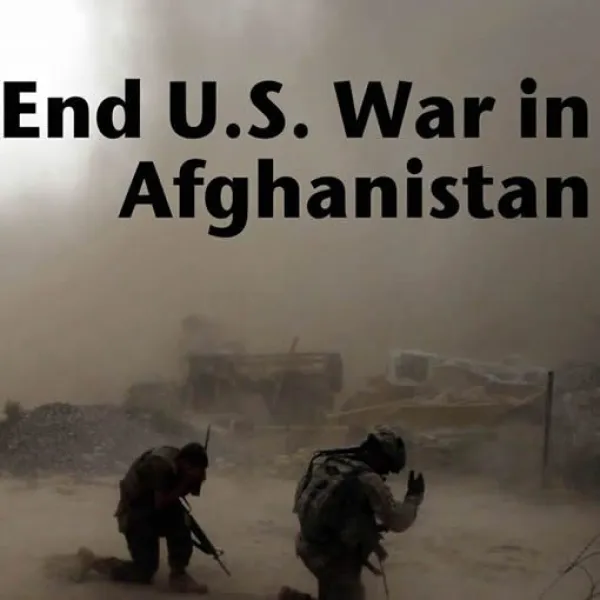
We expect 17-year-olds to have learned a great deal starting from infancy, and yet full-grown adults have proven incapable of knowing anything about Afghanistan during the course of 17 years of U.S.-NATO war. Despite war famously being the means of Americans learning geography, few can even identify Afghanistan on a map. What else have we failed to learn?
The war has not ended.
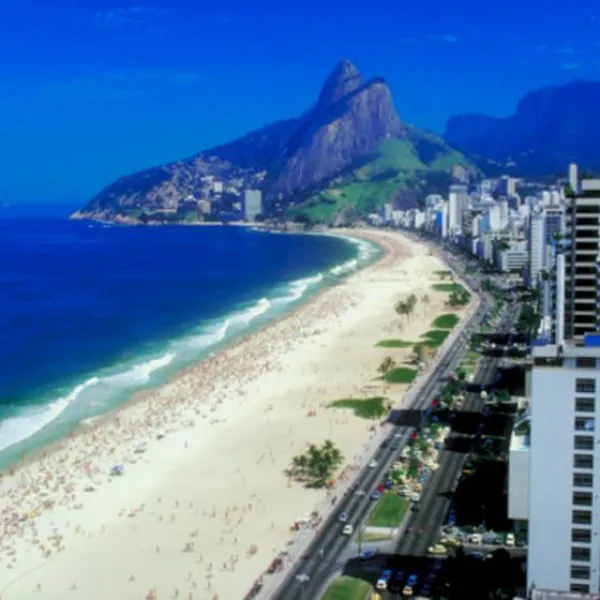
Mary Jo McConahay’s The Tango War is an engaging, extensive, well-researched, well-written account of a topic that still manages to offend me. World War II is sacred history in the United States, the ultimate clash of pure good and evil, the fundamental origin myth of the military industrial complex. It is the top subject of books, films, and shows. Finding a novel angle on World War II that has not yet been exhaustively covered is, at this point, a significant feat. Finding a whole continent is a major victory.
The Tango War tells the story of how Latin America was, at least tangentially, part of World War II. The book’s introduction describes admiration for unrecognized heroes. It notes that “people of Latin American heritage are by far the largest driver of demographic growth in the United States.” One gathers that for the prestige of Latin America, and for the self-respect of Latinos in the United States, South and Central America need to have been in on the most glorious of catastrophes. That’s what offends me, or perhaps depresses me.
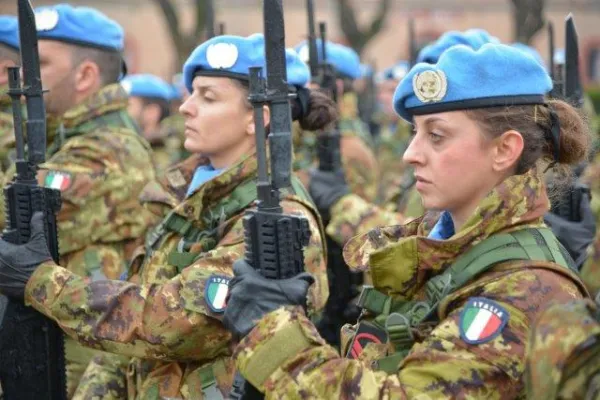
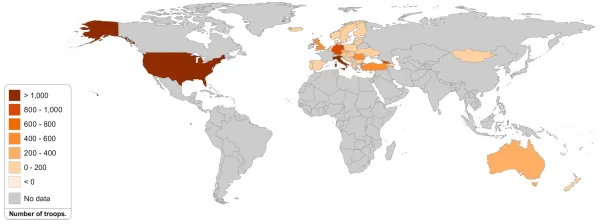
The United States spends about five times what China does on its military. And it spends more just on its military bases in other people’s countries than any country other than itself or China spends on its entire military. The United States keeps troops in almost every country on earth, including in 800 to 1,000 major military bases outside the United States. The rest of the world’s nations combined (most of them U.S. allies and weapons customers) keep a couple of dozen foreign bases total. Imperialism is a uniquely U.S. illness, although everybody suffers the damage.
Ayanna Pressley just won a Democratic Primary in a Democratic Congressional District in Massachusetts.
While most candidates for Congress have websites completely devoid of any mention of foreign policy whatsoever, Pressley has one with a substantive position on foreign policy.