
The Free Press is bringing back a Reviews section after some absence. We hope to review plenty of events around town. Check back frequently and if what\'s going on is any good.
Arts & Culture
Image
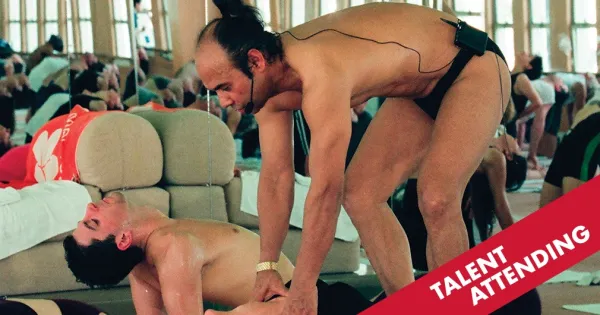
Academy Award winning Australian filmmaker Eva Orner’s well-made documentary Bikram: Yogi, Guru, Predator is an 86-minute creepfest perfect for the #MeToo Movement and moment. This no-punches-pulled nonfiction film purports to chronicle the career, life, lies, and sexual abuse of Bikram Choudhury, the main ballyhooer of Bikram or “Hot Yoga” in America and beyond. The ornery Orner goes after Choudhury with the same take-no-prisoners panache that Alex Gibney - with whom she shared (as producer) the Best Documentary Oscar for 2007’s Taxi to the Dark Side - took on another alleged cult in 2015’s Going Clear: Scientology & the Prison of Belief.
Image
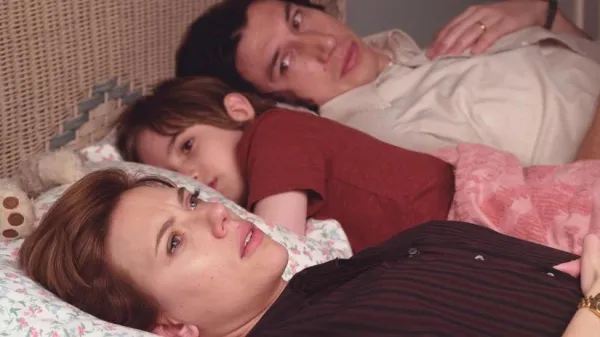
Noah Baumbach assembled an outstanding cast for Marriage Story, which was a last minute replacement for the scheduled screening of The Banker (maybe it was pulled for going bankrupt?) at AFI Fest. He and the wonderful Laura Dern (who was so good in the pro-union HBO series Enlightened and the original Jurassic Park), appeared to present the Netflix production Marriage Story at the TCL Chinese Theatre where Baumbach remarked on how long he’s been looking forward to the occasion - exactly “29 and a half hours” since AFI Fest presumably scrambled to find a substitute for the Festival’s grand finale.
Image

Borderline: A Chip Off of Dusan Makavejev’s Cinematic Block
Serbian co-writer/director Ivana Mladenović’s Ivana the Terrible is many things, but one thing it most definitely is not is a sequel to Sergei Eisenstein’s 1940s Ivan the Terrible, Parts I and II. The cinematic style of this funny semi-autobiographical film is interesting in that Ivana plays a version of herself, as do her mother, father, grandmother and others in a mostly nonprofessional cast. Ms. Mladenović also relates that most of the events depicted onscreen actually happened to her. So Terrible is a hybrid movie, combining elements of documentary and fiction filmmaking.
Onscreen (and I guess offscreen) Ivana is from Kladovo, a small town on the Serbian-Romanian border. She moves to Bucharest, where she studies filmmaking and becomes an actress and director. In doing so Ivana turns into a local celebrity, the most famous living person from her hometown. But suffering from some unknown, undiagnosed ailment, when she returns to where she grew up Ivana finds out, like Thomas Wolfe before her, that “You Can’t Go Home Again.”
Image

In 1927 The Jazz Singer - the first feature length movie with a synchronized soundtrack - was released. The musical had a memorable spoken line when Al Jolson quipped: “Wait a minute, wait a minute I tell yer, you ain’t heard nothing yet.” Given the ensuing deluge of dialogue since talkies displaced silent films, truer words have rarely ever been spoken onscreen.
But “Jolie” couldn’t foresee that around 80 years later a theater company specializing in “merg[ing] animation and live performance” would name itself after that fateful year in cinematic history in the U.K. And in 2012, according to the company’s website, “1927 collaborated with Komische Opera Berlin, to conceive and create a reimagining of The Magic Flute” that combines not only animation but a silent cinema aesthetic with Wolfgang Amadeus Mozart’s music. The mind blowing result can now be seen onstage at the Dorothy Chandler Pavilion LA Opera.
Image
The American Film Institute’s annual film festival is arguably Los Angeles’ best and most comprehensive annual fete of feature, documentary, short, animated, domestic and foreign cinema, plus panels and parties, taking place in Hollywood from Nov. 14-21. Here are capsule reviews of some of AFI Fest 2019’s myriad productions.
CLEMENCY: Film Review
Dead Woman Walking: A Capital Film on Capital Punishment
[NOTE: This review may contain plot spoilers.]
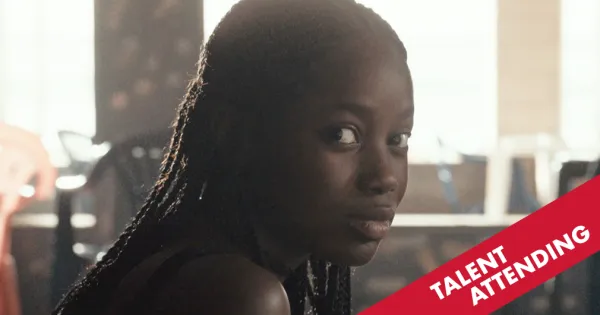
With her first full-length feature film, Chinonye Chukwu’s Clemency is a gripping death penalty drama. (Her 2012 Alaskaland was only 75 minutes long.) The movie opens and closes with a legally sanctioned execution that is botched at a prison (after a screening the writer/director told the AFI audience that Clemency was shot on location in a penitentiary no longer in use, which enhances and heightens the movie’s realism).
Image

The American Film Institute’s annual film festival is arguably Los Angeles’ best and most comprehensive annual fete of feature, documentary, short, animated, domestic and foreign cinema, plus panels and parties, taking place in Hollywood from Nov. 14-21. Here are capsule reviews of some of AFI Fest 2019’s myriad productions.
DESERT ONE: Film Review
From Harlan to Hormel to Hemingway to Hostages, two-time Academy Award winner Barbara Kopple is one of America’s preeminent documentarians. Her first nonfiction film, 1976’s Harlan County USA, as well as 1990’s American Dream were class struggle epics about Kentucky coalminers and striking workers at a Hormel factory in Minnesota that both won the Best Documentary Oscar. The insightful, incisive Kopple has also tackled our inner life and was Emmy co-nominated for 2013’s Running from Crazy, exploring mental illness largely through actress Mariel Hemingway, who grappled with her grandfather Ernest’s apparent suicide and her sister Margaux’s self-inflicted death.
Image
AFI FEST 2018: CAPSULE REVIEWS
By Ed Rampell
The American Film Institute’s annual film festival is arguably Los Angeles’ best and most comprehensive annual fete of feature, documentary, short, animated, domestic and foreign cinema. Here are capsule reviews of some of AFI Fest 2019’s myriad productions.
THE IRISHMAN: Film Review
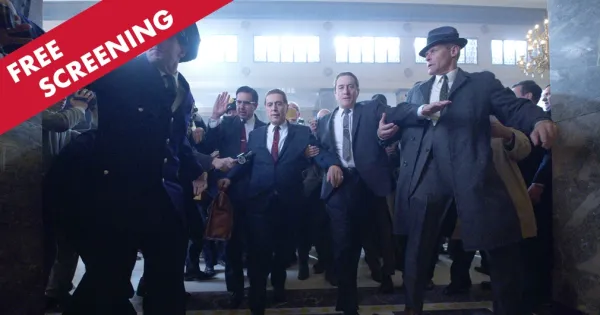
The portentous screening of The Irishman at the world’s most famous movie palace, Hollywood Blvd.’s capacious TCL Chinese Theatre, was preceded by an in person interview with one of the world’s greatest living directors, Martin Scorsese. Clips from his half century oeuvre were screened, reminding us of the cinematic realms Scorsese has unspooled, and his personal appearance was punctuated by sincere, enthusiastic applause. Interestingly, if I heard correctly, the loudest clapping was when Scorsese was lauded as a foremost film preservation advocate - but then again, what would you expect from a film festival audience packed with fervent cineastes like moi?
Image
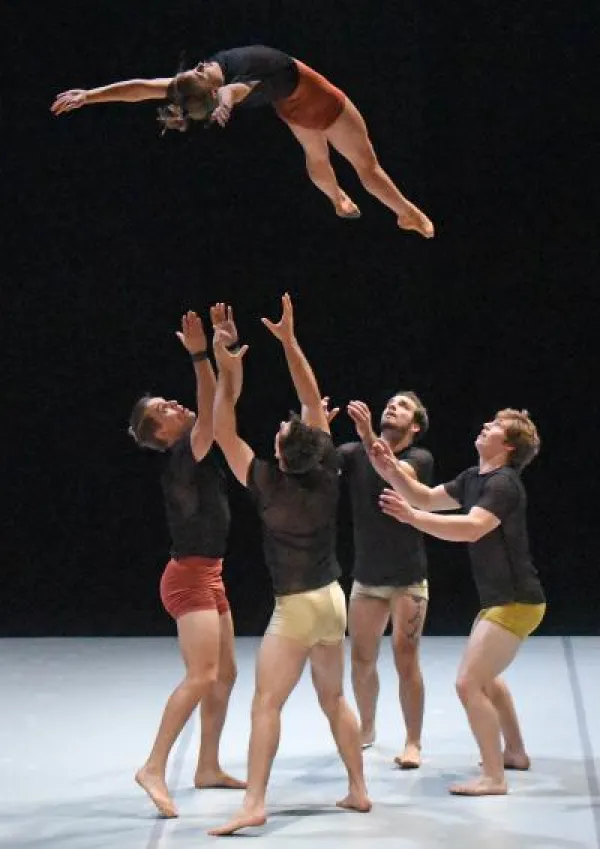
I just reviewed The 7 Stages of Grieving at the Skylight Theatre about Australia’s indigenous people and remarked on how fresh and original that production is. The same holds true for Circa Contemporary Circus, which coincidentally is based in Brisbane (where my daughter, the phenomenal Samoan singer Marina Davis lives) - it seems that people of European ancestry Down Under can be quite singular, too. Perhaps living at the Antipodes imparts a unique sensibility on its inhabitants - Black or white?
Be that as it may, Humans By Circa is completely different from Grieving, a one-woman show about the trials and tribulations of “Oz’s” Aboriginal people. However, both works are short one-acters minus intermission. But the similarities end there.
Image
The 11th annual DTLA Film Festival took place Oct. 23-27. According to the Festival’s website: “Our programming reflects downtown L.A.’s vibrant new urbanism, the unique ethnic and cultural diversity of its neighborhoods, its burgeoning independent film community, its singular blend of late 19th and 20th century architecture, and the seminal role it played in the early days of American cinema (epitomized by the world’s largest group of vintage movie palaces located in the Broadway Theater District).”
DTLAFF screened features, shorts, documentaries etc., at two primary locations: Regal L.A. LIVE1000 West Olympic Blvd., L.A., CA 90015 while the Dome Series is at the Wisdome Immersive Art Park in DTLA’s Arts District, 1147 Palmetto St., L.A. or the Vortex Dome Theater at L.A. Center Studios.Panels, parties, etc., were presented at various Downtown L.A. locations. For info on the DTLA Film Festival see: https://www.dtlaff.com/.
KATHY GRIFFIN: A HELL OF A STORY
The Head of Her Comic Class: Doc Mocks Trump
Image
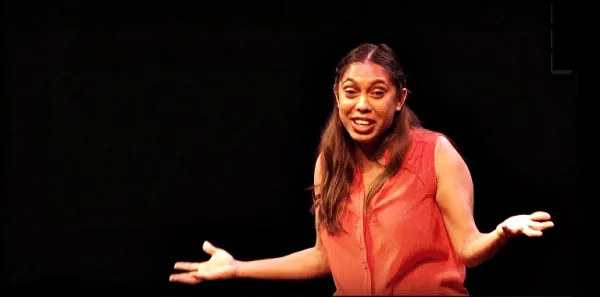
One of my big bugaboos as a cultural historian and critic is originality, and today’s spate of sequels, remakes and copycatting of content from one medium to another usually rubs me the wrong way. But as soon as the proverbial curtain lifts at the Skylight Theatre The 7 Stages of Grieving kicks off with something most American audiences are likely to have never seen before in all of their theatergoing. Phosphorescent rocks glowing in the dark are poured onstage, the only thing visible onstage in the gloom, forming a circle around a mound of dirt which we glimpse, once the lights are turned on.
We also see our storyteller, Chenoa Deemal, a full-figured, pretty, youthful brown-skinned woman with long straight hair in a colorful dress. A sort of Down Under counterpart to African griots, Ms. Deemal proceeds to lead us through seven vignettes that shed light on the Aboriginal experience, after she has recognized the Traditional Custodians of the land here in Los Angeles - the Gabrielina, Tongva and Kich tribal peoples.